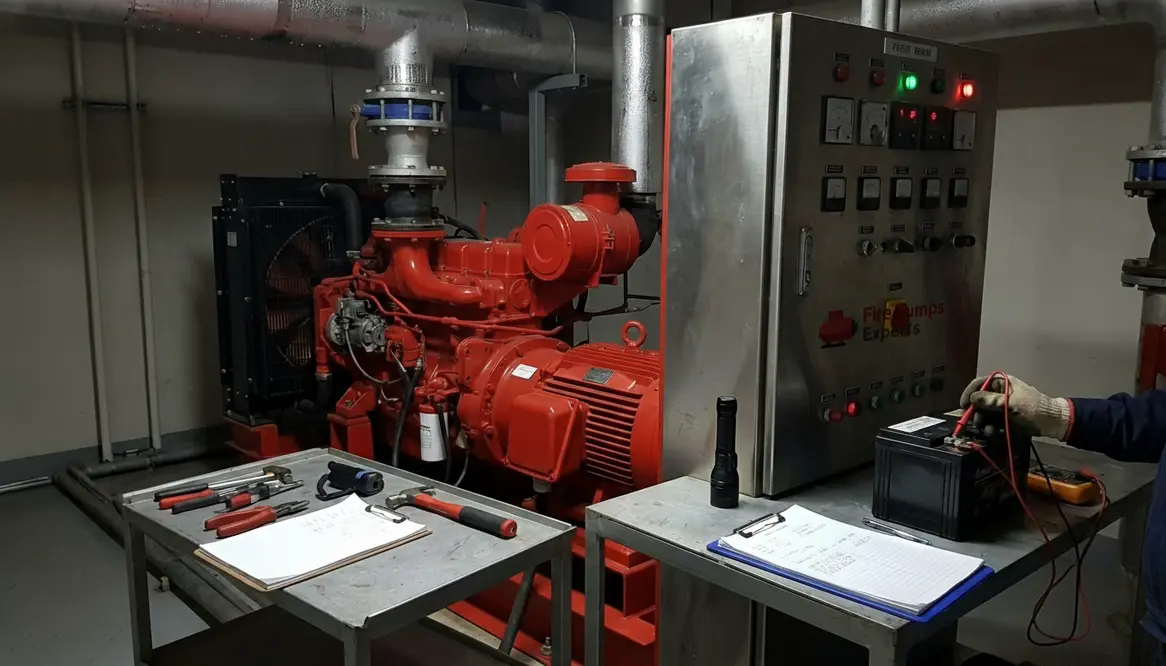
Fire Pump Not Starting Causes and Troubleshooting
I have walked into more pump rooms than I can count, and there is a certain silence that feels heavier than it should. The kind of silence where a fire pump not starting turns from a minor inconvenience into a serious risk. In commercial and industrial facilities, that moment matters. It is the difference between readiness and exposure. So let me take you through the real reasons this happens, in a way that feels less like a manual and more like a conversation you would actually want to stay in.
Why is my fire pump not starting when it matters most
The short answer is this. Something in the chain of command failed. A fire pump system relies on power, signal, and mechanical readiness. If any one of those steps breaks, the system stalls.
Most often, I see three culprits. First, power issues. Second, controller problems. Third, mechanical resistance inside the pump itself. And while that sounds simple, the details are where things get interesting. Or frustrating, depending on your mood that day.
For instance, a breaker might look fine at a glance. However, under load, it trips faster than a plot twist in a thriller. Likewise, a pressure switch may quietly drift out of calibration, waiting for the worst possible moment to reveal its betrayal.
Power supply failures that quietly shut everything down
Let us start with the obvious, because sometimes the obvious hides in plain sight. No power means no pump. Yet in large facilities, power systems are layered and complex.
I have seen situations where the main supply is active, but the transfer switch fails to engage. In diesel systems, the batteries might be weak or improperly maintained. And yes, batteries have a talent for choosing the worst day to retire.
Key checks I always prioritize
- Incoming voltage at the controller
- Condition of breakers and fuses
- Battery charge levels and connections
- Transfer switch operation
Additionally, corrosion on terminals can quietly interrupt flow. It is not dramatic, but it is effective. Like a villain who never raises their voice.
Controller issues that stop the signal before it begins
The controller is the brain of the operation. If it does not send the start command, the pump will sit there like it is waiting for applause that never comes.
Modern controllers are reliable, but they are not immune to misconfiguration. I often find incorrect settings, disabled auto modes, or fault conditions that operators overlooked. And yes, sometimes someone pressed the wrong button and walked away. It happens more than people admit.
Moreover, wiring faults between the controller and sensors can block communication. A loose wire may not seem like much, yet it can stop the entire system cold.
Common controller problems
- Auto mode turned off
- Fault alarms not cleared
- Damaged wiring
- Software or relay failure
What I check first
- Status lights and alarms
- Event logs for recent faults
- Manual start function
- Sensor input signals
Mechanical resistance inside the pump system
Now we get into the physical side of things. Even if power and signals are perfect, the pump itself must be ready to move.
Over time, components wear down. Bearings seize. Shafts misalign. Valves stick. And when that happens, the motor may try to start but cannot overcome the resistance.
I once compared it to trying to run in wet concrete. You are giving it effort, but nothing moves. Not exactly the scenario you want during an emergency.
Regular inspection helps here. Lubrication, alignment checks, and valve testing all play a role. Skipping these steps is like ignoring oil changes in your car and hoping for the best. We all know how that ends.
How do I quickly troubleshoot a fire pump not starting
I keep it simple and methodical. No guesswork. No panic.
My quick approach
- Confirm power is present at the controller
- Check controller status and alarms
- Attempt manual start
- Inspect batteries or fuel system
- Look for mechanical obstruction
Then, I dig deeper based on what I find. Each step tells a story. The key is to listen before jumping to conclusions.
For facilities that want a more structured approach, I often recommend aligning with industry best practices and guidance found through resources like commercial fire pump system standards and support. It helps keep everything grounded in proven methods.
Preventing future startup failures in critical systems
Prevention is where real confidence comes from. And in large buildings, confidence is not optional.
Routine testing is essential. Weekly churn tests, monthly inspections, and annual full flow testing all serve a purpose. They reveal small issues before they grow into big ones.
Additionally, I always encourage facilities to document everything. Trends matter. If voltage fluctuates or batteries degrade faster than expected, those patterns tell you something important.
And let us be honest. A well maintained system is a quiet system. It does its job without drama, which is exactly what you want when the phrase fire pump not starting never needs to appear in an incident report.
FAQ
Conclusion
When I think about a fire pump not starting, I do not see just a technical issue. I see a preventable risk. The good news is that every cause we discussed can be managed with the right attention and routine care. If you are responsible for a commercial or industrial facility, now is the time to act. Review your system, test it properly, and bring in experienced support if needed. Because when the moment comes, your system should respond instantly, without hesitation.