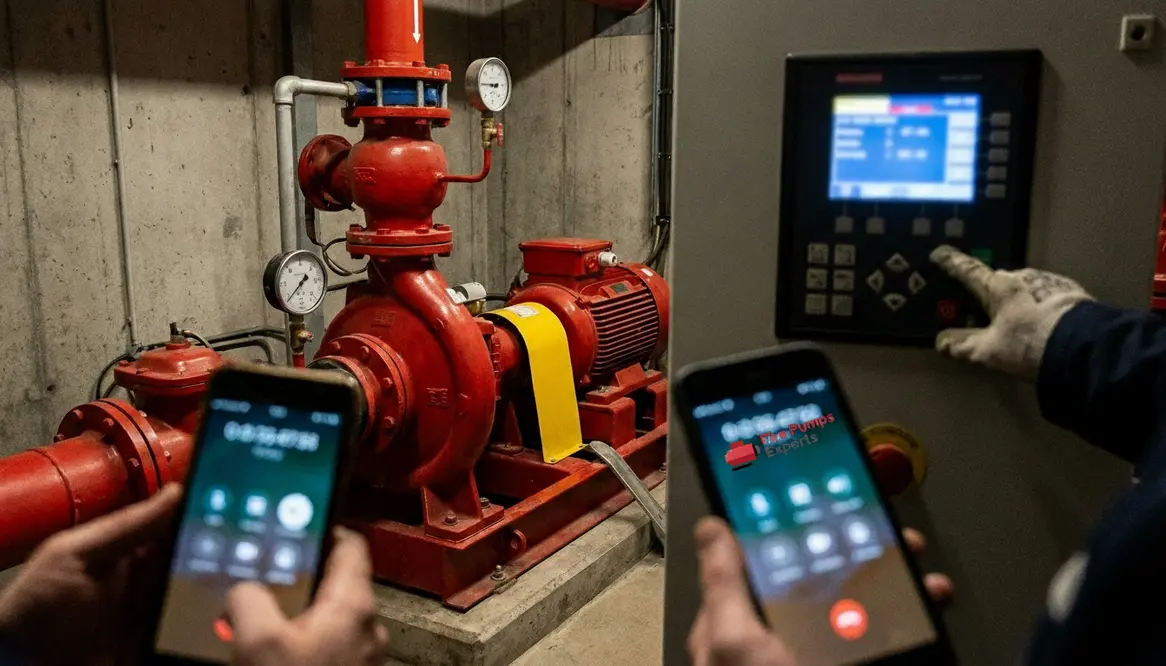
Why Your Fire Pump Keeps Running and How to Fix It
I have seen it happen more times than I can count. A facility manager calls me, voice calm on the surface but carrying that quiet urgency underneath, and says, “My fire pump keeps running… and it won’t stop.” Now, that might sound like dedication. A pump that refuses to quit. Rocky Balboa in mechanical form. But in reality, a continuously running fire pump is not heroic. It is a signal. And like most signals in a commercial or industrial building, it deserves attention before it turns into a very expensive lesson.
So let me walk you through what is really going on, what it means, and what you should do next.
Why My Fire Pump Keeps Running Even When There Is No Fire
Let’s get straight to it. A fire pump is not designed to run endlessly. It activates when system pressure drops. That usually happens during a fire event or a system demand. However, when there is no fire and the pump still runs, something else is pulling the strings.
In many cases, the issue starts with a pressure drop in the system. Even a small leak can trick the pump into thinking it is needed. Over time, that small leak becomes a big problem, quietly wasting water and energy.
Additionally, faulty pressure sensors or controllers can misread the system. When that happens, the pump receives the wrong signal and keeps going. It is a bit like your phone thinking you are still on a call when you hung up ten minutes ago. Annoying, and slightly concerning.
Therefore, when I hear that a fire pump keeps running, I immediately think about pressure integrity and control system accuracy.
Common Causes Behind Continuous Fire Pump Operation
Hidden leaks in the system
Even a minor leak in sprinkler piping or valves can drop pressure enough to trigger the pump.
Faulty pressure relief valve
If this valve sticks open, pressure never stabilizes, so the pump never gets the signal to stop.
Controller malfunction
Modern fire pump controllers are smart, but when they fail, they can send continuous run commands.
Improper system design or calibration
Sometimes the issue dates back to installation. Incorrect pressure settings can cause cycling or nonstop operation.
Jockey pump failure
This small pump maintains system pressure under normal conditions. When it fails, the main fire pump takes over and refuses to rest.
Each of these causes points to a deeper truth. Fire protection systems are interconnected. When one piece slips, the rest feel it.
What Happens If You Ignore It
I understand the temptation. The building is still operational. Nothing is visibly on fire. So maybe it can wait until next week.
However, that is where things get risky.
First, continuous operation puts serious wear on the pump. Bearings, seals, and motors do not enjoy marathon sessions. Eventually, they fail. And they tend to fail at the worst possible moment.
Second, energy costs climb. A fire pump running non stop is like leaving every light in a stadium on during the day. It adds up quickly.
Third, and most important, system reliability drops. If the pump burns out before an emergency, your building loses a critical layer of protection.
In other words, ignoring the issue does not save time. It borrows trouble.
How I Diagnose a Fire Pump That Will Not Shut Off
When I step into a facility with this issue, I do not guess. I follow a sequence.
Step 1
Check system pressure readings and compare them to controller settings.
Step 2
Inspect for visible and hidden leaks across the network.
Step 3
Test the jockey pump to confirm it is doing its job.
Step 4
Evaluate the pressure relief valve for proper operation.
Step 5
Review controller logs and signals for irregular behavior.
Step 6
Run a controlled shutdown test to observe system response.
Each step builds on the last. And importantly, I do not rush. Fire systems demand respect. You move too fast, you miss something.
For facilities looking to align with best practices, I often recommend reviewing guidance from trusted industry resources like commercial fire pump system standards and services. It helps ground decisions in proven frameworks.
Can a Fire Pump Running Constantly Be Dangerous?
Short answer? Yes.
Not in a dramatic, movie explosion kind of way. This is not an action scene from Die Hard. But it is dangerous in a quieter, more expensive sense.
Overheating components can lead to mechanical failure. Electrical systems can experience strain. And if the pump fails during an actual emergency, the consequences are severe.
So while the pump itself is doing what it thinks is right, the situation as a whole is far from safe. When a fire pump keeps running for hours or days, the real risk is that it will not be there when you actually need it.
Smart Prevention for Commercial and Industrial Facilities
Fortunately, this is one of those problems you can stay ahead of.
Regular inspection and testing is your first line of defense. Not just checking boxes, but actually verifying performance under real conditions.
Next, invest in proper calibration. Pressure settings should match the building’s design and operational needs. Too high or too low, and you invite problems.
Also, keep an eye on your jockey pump. It is small, but it carries a big responsibility. When it fails, the main pump steps in like an overworked understudy.
Finally, document everything. Trends in pressure loss or pump activity often reveal issues before they become emergencies. If a fire pump keeps running unexpectedly, those records make it much easier to pinpoint when the behavior started and what changed around that time.
Conclusion: Take Control Before the Pump Does
If your fire pump keeps running, do not treat it like background noise. It is a message from your system asking for attention. Address it early, and you protect your equipment, your budget, and your building. Bring in experienced professionals, run a full evaluation, and restore balance to your system. Because when it comes to fire protection, control is everything. And it is always better when you are the one holding it.