Fire Pump Room Inspection Issues and Fixes
I have walked into more pump rooms than I can count, and let me tell you, the story is often the same. Somewhere between good intentions and routine neglect, fire pump room inspection issues quietly stack up. At first glance, everything may look solid. The pump sits there like a loyal bodyguard. However, a closer look usually reveals the truth. Valves drift out of position. Controllers flash warnings like a low budget sci fi movie. And suddenly, what should be a life saving system feels more like a crossed fingers situation.
So today, I am pulling back the curtain on what really goes wrong inside these critical spaces and how I approach fixing it.
What are the most common fire pump room inspection issues I encounter?
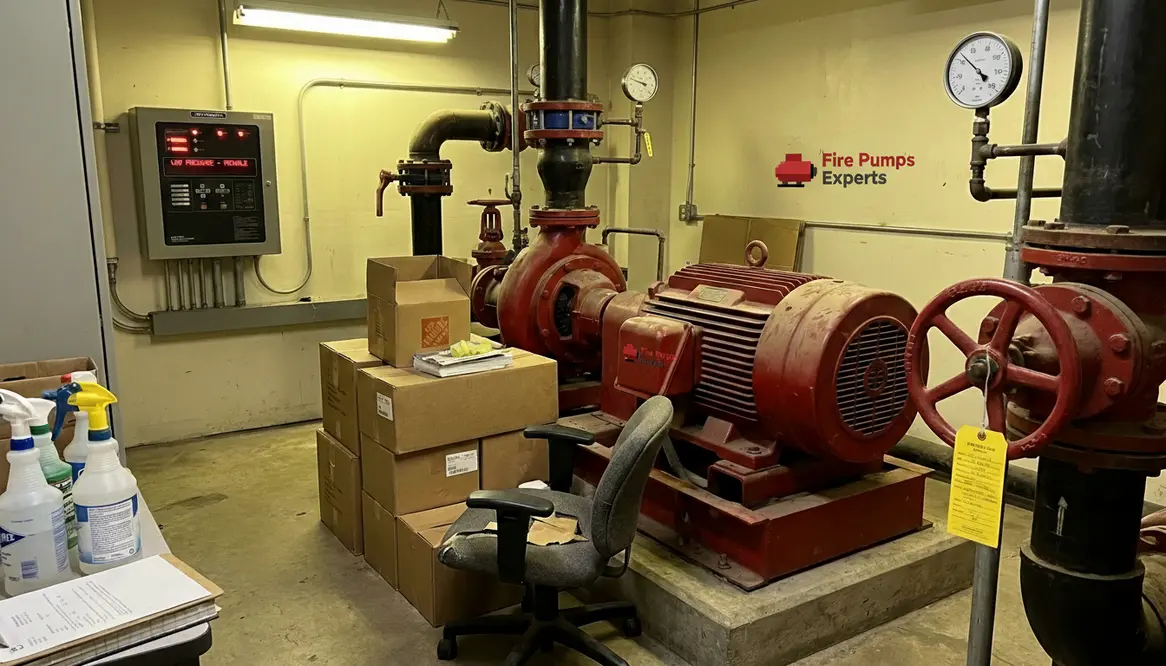
Right away, I look for the basics. Surprisingly, that is where things often fall apart. For example, I frequently find closed or partially closed valves. That alone can cripple the entire system. Meanwhile, gauges tell stories people ignore. If pressure readings look off, they usually are.
In addition, controllers often show trouble signals that no one has addressed. It is like ignoring a check engine light for months and hoping the car just believes in itself. Unfortunately, fire pumps do not run on optimism.
Then there is housekeeping. I have seen pump rooms used as storage closets. Boxes, cleaning supplies, even spare furniture crowd the space. Consequently, access becomes limited, and response time suffers.
All of these fire pump room inspection issues share one theme. They are preventable with attention and routine oversight.
Why do small maintenance gaps turn into major system failures?
This is where things get interesting. A fire pump system is not complicated in theory. However, it depends on precision. When one small component drifts out of spec, it creates a chain reaction.
For instance, a neglected relief valve may start to leak. Over time, that leak affects pressure stability. As a result, the pump cycles improperly. Eventually, wear increases, and failure becomes likely. It is a slow burn problem, until it suddenly is not.
Moreover, human nature plays a role. If a system appears to work during a quick glance, it gets a pass. But inspections are not about appearances. They are about performance under pressure. Literally.
Therefore, I treat every minor issue like it has the potential to grow teeth. Because eventually, it will.
How I evaluate fire pump room inspection issues step by step
I follow a deliberate rhythm when I inspect a pump room. First, I check accessibility. If I cannot move freely, that is already a problem. Then, I verify valve positions and lock statuses.
Mechanical Focus
- Pump alignment and vibration
- Seal condition and leaks
- Pressure readings and flow consistency
- Relief valve operation
Electrical and Control Focus
- Controller alarms and logs
- Power supply stability
- Automatic start functionality
- Battery condition where applicable
After that, I simulate conditions when possible. I want to see how the system behaves, not just how it sits. Because sitting still is easy. Performing under demand is the whole point.
In many cases, this process reveals hidden fire pump room inspection issues that would never show up on a clipboard only walkthrough.
Hidden risks inside commercial and industrial pump rooms
Now let us talk about the problems that do not announce themselves. In large commercial and industrial facilities, complexity adds layers of risk. Multiple pumps, backup systems, and integration with building controls can create blind spots.
For example, I have seen systems where the jockey pump masks pressure loss. Everything looks stable until the main pump is needed. Then, performance drops. It is like bringing a spoon to a sword fight.
Additionally, corrosion is a quiet villain. It creeps in, weakens fittings, and waits. By the time it becomes visible, damage is already done.
This is why I always recommend working with specialists who understand these environments. Resources like expert fire pump inspection services for commercial facilities provide the depth needed to catch what others miss.
How I keep fire pump rooms inspection ready year round
Consistency beats intensity every time. Instead of scrambling before an inspection, I build routines that keep systems ready at all times.
First, I schedule regular internal checks. Not just once a year, but throughout the year. Then, I document everything. Patterns matter, and data tells the truth.
Next, I train staff to recognize early warning signs. Even a small change in sound or pressure can signal a problem. When people know what to look for, response becomes faster.
Finally, I keep the room clean and accessible. It sounds simple, yet it makes a huge difference. A clear space supports clear thinking and faster action.
Because at the end of the day, preparation is not dramatic. It is steady, quiet, and incredibly effective.
Spotting patterns in fire pump room inspection issues
After enough walkthroughs, patterns become impossible to ignore. The same fire pump room inspection issues show up in different buildings, different cities, and different teams. It is rarely about bad people. It is usually about stretched staffing, rushed checklists, and systems that only get attention when something squeals or leaks.
When those patterns are tracked, they become a roadmap for better maintenance. When they are ignored, they quietly become the reason a pump does not start when everything is on the line.
FAQ about fire pump room inspection issues
Stay ready before the pressure hits
I have seen what happens when preparation meets opportunity, and when neglect meets reality. Only one of those ends well. If you manage a commercial or industrial facility, now is the time to take control of your fire pump room. Address fire pump room inspection issues before they become failures. Partner with experts, stay consistent, and keep your system ready. Because when the moment comes, there is no time for second guesses.