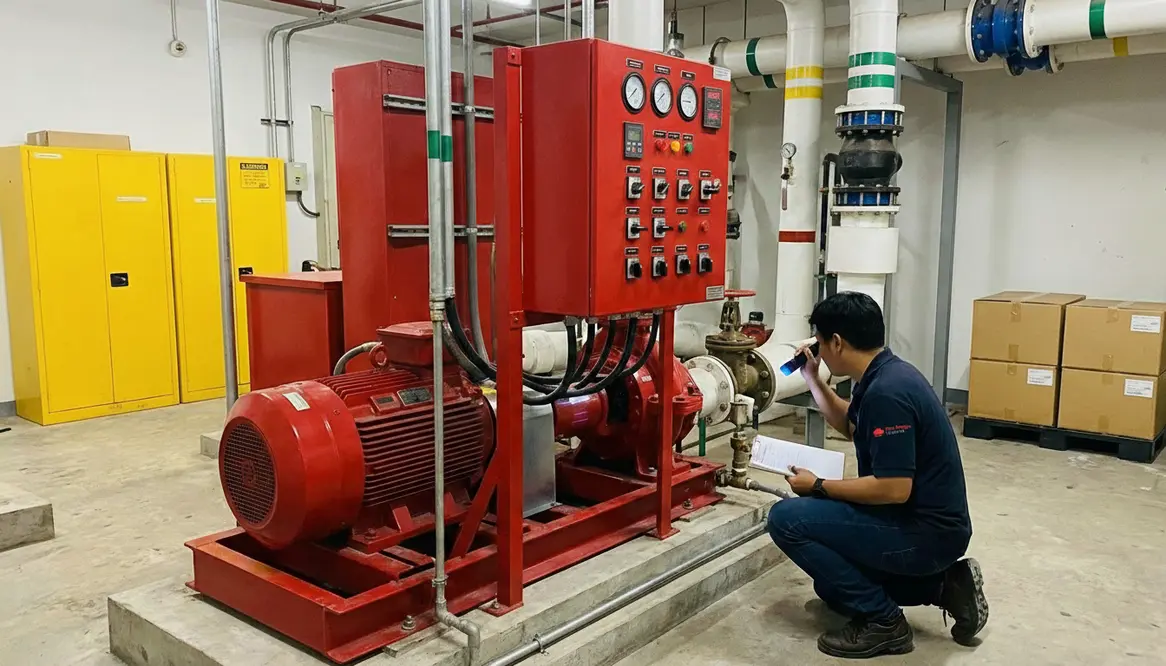
Fire Pump Room Inspection Checklist Guide
I’ve walked into more pump rooms than I can count, and I can tell you this right now: a solid fire pump room inspection checklist is the difference between quiet confidence and sheer panic when something goes wrong. Within the first few minutes, I can usually tell if a facility treats its fire protection system like a priority or like that gym membership nobody uses. So, in this guide, I’ll walk you through what actually matters, what gets overlooked, and how to keep your system ready without turning inspections into a full blown detective movie.
What should I include in a fire pump room inspection checklist?
Let’s get straight to it. When I build or review a fire pump room inspection checklist, I focus on function first, paperwork second. Because in an emergency, nobody is asking if your binder looks nice.
Core areas I always check:
- Access and environment: Clear pathways, proper lighting, no storage clutter. If I have to dodge boxes like it’s an action scene, we already have a problem.
- Pump condition: No leaks, no unusual vibration, and definitely no mystery noises. Pumps should hum, not audition for a horror film.
- Controller status: Panels should show normal operation with no active alarms or trouble signals.
- Valves and piping: All valves locked or supervised in the correct position. Misaligned valves are a silent system killer.
- Power supply: Reliable and clearly labeled. Backup systems must be ready, not theoretical.
Additionally, I make sure everything aligns with industry standards. For facilities that want a deeper view into the details, I often point them toward commercial fire pump system inspection standards, which provide a solid foundation for ongoing maintenance.
Translating standards into everyday checks
Standards and codes are great reference tools, but a fire pump room inspection checklist only works if it feels usable in real life. I translate those dense requirements into practical items: what to touch, what to read, what to listen for, and what to write down. The goal is simple: anyone using your checklist should know exactly what “done right” looks like every single time.
Inside the pump room: what I actually look for step by step
Now, let me slow this down and walk you through how I personally approach an inspection. Because checklists are great, but execution is where the magic happens.
First, I pause at the door. Yes, really. I listen. A healthy system has a rhythm. If something sounds off, I already know where I’ll be spending extra time.
Then, I move clockwise. It keeps me consistent and prevents missed steps. I visually inspect the pump, checking seals, couplings, and alignment. After that, I shift to the controller and confirm readings. Voltage, phase, and status lights all tell a story if you know how to read them.
Finally, I test. Because looking is good, but verifying is better. A proper test ensures the system performs under real conditions, not just in theory.
Turning observation into a repeatable routine
Here’s where a strong fire pump room inspection checklist earns its keep: it turns what an experienced inspector does almost automatically into a repeatable route that anyone on the team can follow. Step order, measurement ranges, and pass/fail criteria all live on paper so you are never relying on memory when the room feels busy or distracting.
Fire pump room inspection checklist for large commercial facilities
When dealing with high rise buildings, industrial plants, or massive commercial properties, the stakes rise fast. Consequently, the inspection process needs to scale with complexity.
Operational Focus
- Weekly churn tests with recorded results
- Pressure consistency across multiple zones
- Fuel levels for diesel pumps
- Redundancy system readiness
Compliance Focus
- Up to date inspection logs
- Code adherence for commercial systems
- Alarm integration with building systems
- Documented maintenance history
However, what I emphasize most is consistency. A single missed inspection in a large facility is like skipping a scene in a movie and hoping the ending still makes sense. It rarely does.
Scaling your checklist without overcomplicating it
For complex sites, I often split the fire pump room inspection checklist into two sections: one for quick, frequent rounds and one for deeper, scheduled reviews. That keeps daily or weekly visits lean while ensuring that full performance, documentation, and code alignment still get their moment in the spotlight.
Common mistakes I see and how to avoid them
I’ve seen some things. And not all of them inspire confidence.
One of the biggest issues is treating inspections like a checkbox exercise. People rush through steps, assuming everything is fine because it was fine last time. That mindset is how small issues quietly grow into expensive failures.
Another common slip is ignoring environmental conditions. Heat, humidity, and dust all affect performance. Yet somehow, I still walk into rooms that feel like a forgotten storage closet.
Then there’s documentation. Or rather, the lack of it. If it’s not recorded, it didn’t happen. And in commercial settings, that can lead to compliance headaches no one wants to deal with.
So what do I do instead? I slow down. I stay consistent. And I treat every inspection like it actually matters. Because it does.
Using your checklist to catch these problems early
A well crafted fire pump room inspection checklist forces you to look at the things that are easiest to ignore: the subtle noise changes, the slowly rising temperature in the room, the “I’ll log it later” habits. When your form asks specific questions instead of vague yes/no boxes, it becomes much harder for these problems to sneak by unnoticed.
How often should I inspect and test my system?
This is where I see a lot of confusion, so let’s clear it up.
Different components require different frequencies. Weekly checks ensure the pump starts and runs properly. Monthly inspections go deeper into system condition. Annual testing, on the other hand, verifies full performance under load.
However, frequency alone is not enough. Quality matters just as much. A rushed weekly check is about as useful as a coffee machine with no coffee. Technically present, but not doing much.
I recommend building a schedule that matches your facility’s size and risk level. Large commercial and industrial properties should always lean toward more frequent, thorough inspections.
Matching your schedule to your checklist
Instead of one oversized form that nobody loves, I prefer a tiered approach: a short fire pump room inspection checklist for quick rounds, a more detailed version for monthly or quarterly checks, and a comprehensive performance and documentation review annually. That way the right level of effort shows up at the right time.
FAQ: fire pump room inspection essentials
What is a fire pump room inspection checklist?
It is a structured list of steps used to verify that a fire pump system operates correctly and meets safety standards.
How long does an inspection take?
Most inspections take between 30 minutes and a few hours, depending on system size and complexity.
Who should perform the inspection?
Qualified professionals with experience in commercial or industrial fire protection systems should handle it.
What happens if issues are found?
Problems should be documented and repaired immediately to maintain system readiness and compliance.
Are inspections required by code?
Yes, most commercial and industrial facilities must follow strict inspection and testing requirements.
Final thoughts and next steps
At the end of the day, a well executed inspection is not about paperwork. It is about readiness. When I walk out of a pump room, I want to know that if the worst happens, the system will respond without hesitation. If you are managing a commercial property, now is the time to refine your process, tighten your routine, and make your inspections count. Because when it comes to fire protection, close enough is never enough.