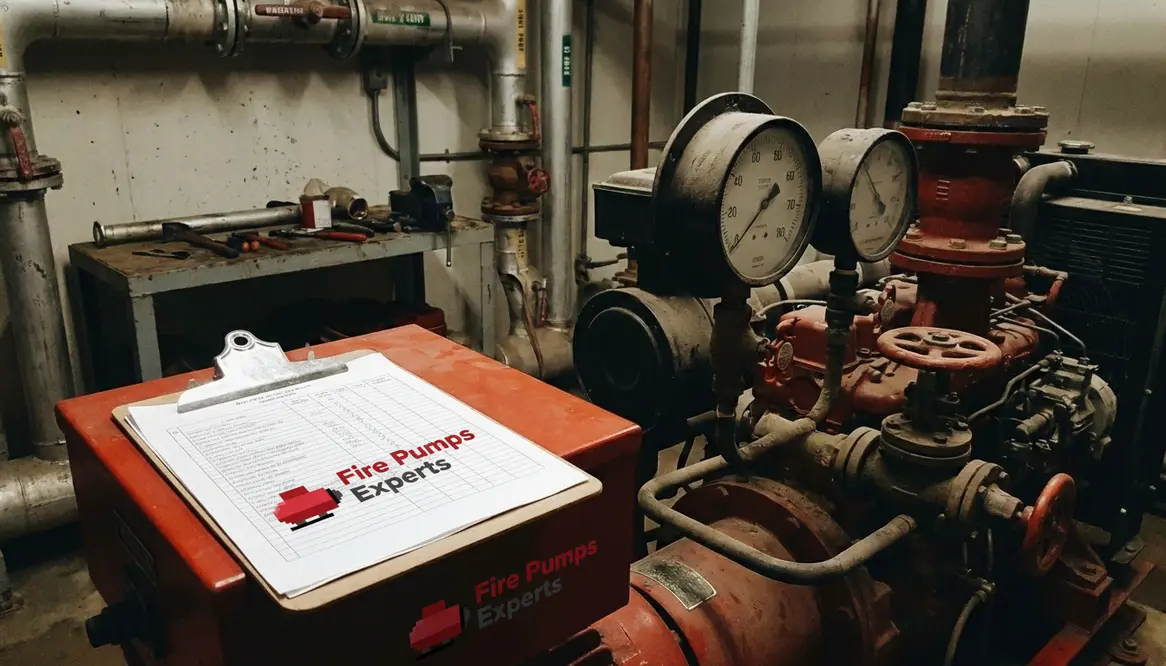
Fire Pump Room Maintenance Checklist for Facilities
I have walked into more pump rooms than I can count, and I can tell you this much with a calm certainty: the difference between order and chaos often comes down to a solid fire pump room maintenance checklist. In large commercial and industrial buildings, that checklist is not paperwork. It is your quiet insurance policy, your unseen hero, your “call me maybe” moment before things go sideways. So today, I will walk you through how I approach it, step by steady step, with just enough humor to keep us both awake.
What Should a Fire Pump Room Maintenance Checklist Include?
I like to think of a checklist as a conversation with the equipment. It tells you what to ask, and more importantly, what answers you should expect.
First, I always start with the basics. Visual inspections matter more than people admit. I look for leaks, unusual vibrations, and anything that feels out of place. If something looks like it belongs in a disaster movie, it probably does not belong in your pump room.
Next, I check pressure gauges and valves. They should read within expected ranges and respond properly. Then, I verify that controllers are powered and free of faults. A silent alarm panel is not peace and quiet. It is suspense music.
After that, I move into weekly churn tests. The pump should start smoothly and run without hesitation. Think of it like stretching before a workout. Skip it, and you will feel it later.
Finally, I review documentation. Logs should be accurate and current. If your records look like they were last updated during the era of flip phones, we have a problem.
How I Structure My Fire Pump Room Maintenance Checklist for Large Facilities
In commercial and industrial buildings, scale changes everything. A small oversight becomes a big problem very quickly. So I structure my fire pump room maintenance checklist with layers.
Daily awareness layer
First comes the daily awareness layer. This includes quick walkthroughs and basic checks. Then, I build in weekly functional tests to ensure the system performs under simulated demand.
Deeper inspections and standards
After that, I schedule monthly and quarterly inspections that go deeper into mechanical and electrical components. These are not rushed. I take my time because shortcuts here tend to show up at the worst possible moment.
Finally, I align everything with standards like NFPA 25. If you want a reliable reference point, I often recommend reviewing guidance from fire pump system maintenance experts at https://firepumps.org. Their focus on commercial and industrial facilities keeps things grounded in real world conditions.
Core Maintenance Tasks That Actually Prevent Failure
Now, let me be honest. Not all tasks carry equal weight. Some are the backbone of your system.
Lubrication
Lubrication is one of them. Pumps are not fans of friction. Regular lubrication keeps moving parts happy and prevents wear that can sneak up on you.
Battery checks
Battery checks come next. Backup power systems must be ready. I have seen batteries fail at the exact moment they were needed most. It is almost poetic, if it were not so inconvenient.
Flow testing
Flow testing is another critical step. It confirms that your system can deliver water at the required pressure and volume. Numbers do not lie, and in this case, they do not forgive either.
Piping inspections
Lastly, I inspect suction and discharge piping. Obstructions or corrosion can quietly reduce performance. And quiet problems are the ones that tend to linger.
A Practical Breakdown You Can Actually Follow
Column One: Weekly Focus
- Run pump churn test and observe startup
- Check pressure readings and controller status
- Inspect for leaks or unusual sounds
- Verify fuel levels for diesel systems
Column Two: Monthly Focus
- Test alarm signals and supervisory systems
- Inspect valves for proper positioning
- Clean pump room and remove obstructions
- Review and update maintenance logs
This dual approach keeps things manageable. It also ensures that nothing slips through the cracks while you are busy running a large facility. When you turn this into your own fire pump room maintenance checklist, those weekly and monthly habits become the backbone of a system you can trust.
Common Mistakes I See in Pump Room Maintenance
Let me save you some trouble. I have seen patterns, and they are surprisingly consistent.
Over-reliance on automation
First, people rely too heavily on automation. Yes, modern systems are smart. But they are not psychic. You still need human oversight.
Postponed maintenance
Second, maintenance gets postponed. It is always “next week” until next week turns into a very expensive lesson.
Neglected documentation
Third, documentation is treated as an afterthought. In reality, records are your proof of compliance and your roadmap for future work. When your fire pump room maintenance checklist is paired with clean, accurate records, you can show exactly how your system has been treated over time.
Using the pump room as storage
Finally, some teams treat the pump room like storage space. If your fire pump shares a room with old boxes and forgotten equipment, it is time for a cleanup montage. Preferably set to something dramatic.
FAQ: Fire Pump Room Maintenance Checklist
Before we wrap up, here are a few quick answers to questions that come up every time someone starts tightening up their fire pump room maintenance checklist.
Final Thoughts That Might Just Save You a Headache
I will leave you with this. A well maintained pump room does not ask for attention. It quietly does its job, day after day. But getting there takes discipline, consistency, and a reliable fire pump room maintenance checklist. When you treat that checklist as non-negotiable instead of “nice to have,” the entire building gets safer without anyone outside the room ever noticing.
If you manage a commercial or industrial facility, now is the time to tighten your process, refine your routine, and treat your system like the lifeline it is. Build a fire pump room maintenance checklist that blends visual checks, testing, documentation, and housekeeping into one smooth routine, and then protect it from shortcuts. Because when the moment comes, it is already too late to prepare.