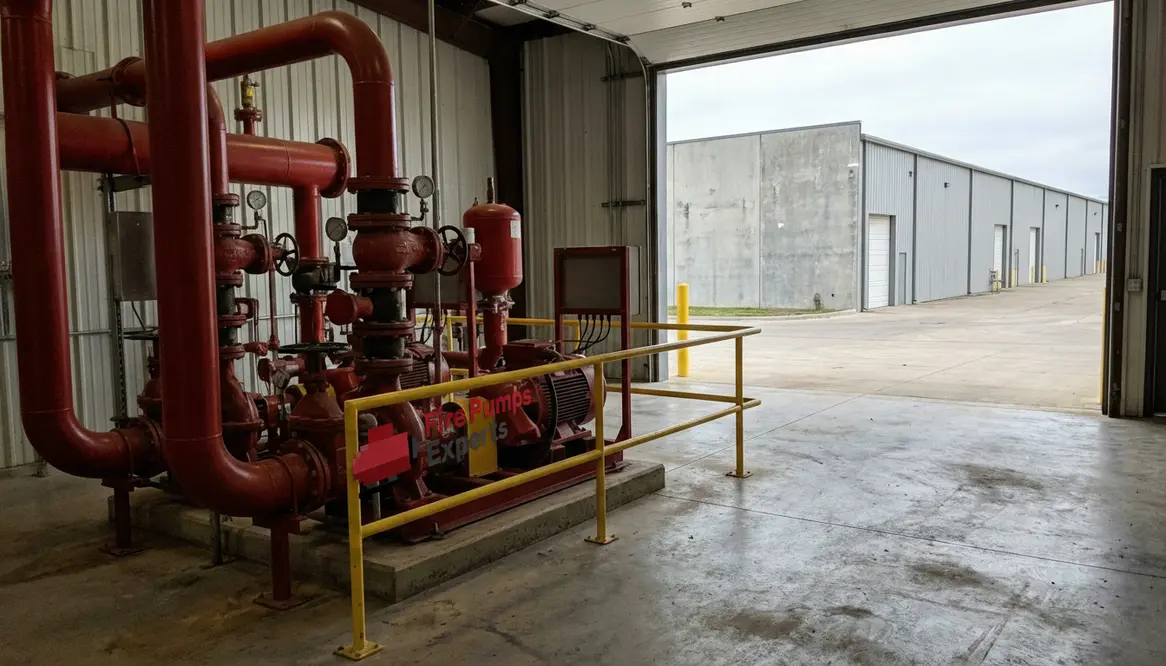
Fire Pump Planning for Shared Industrial Properties
I have spent enough time around industrial parks to know one simple truth. When everything runs smoothly, nobody notices. But when fire protection fails, everyone notices. That is where Fire pump planning for shared industrial properties steps in, quietly doing the heavy lifting long before any alarm sounds. In large commercial zones where multiple tenants rely on a single infrastructure, coordination is not just helpful, it is survival. And while fire pumps may not get the spotlight like a superhero in a Marvel film, they are very much the steady, unshakable Captain America of your fire protection system.
Why Industrial Parks Depend on Coordinated Fire Pump Systems
I have seen firsthand how industrial parks operate like small cities. Multiple buildings, different operations, and a shared risk profile. Therefore, a single, well planned fire pump system becomes the backbone of protection. It ensures that water reaches every corner, even during peak demand.
Moreover, shared systems reduce redundancy. Instead of each facility installing its own equipment, a centralized approach offers efficiency and reliability. However, this only works when the design accounts for pressure zones, flow demand, and future expansion. Otherwise, you end up with a system that looks good on paper but struggles in real life.
And trust me, fire does not care about paperwork.
How do fire pumps ensure consistent pressure across large properties?
I like to explain it simply. Fire pumps act as the muscle behind your water supply. While municipal systems provide baseline pressure, they often fall short during high demand. That is where pumps step in and boost flow exactly when needed.
In industrial settings, consistency matters more than raw power. A sudden drop in pressure can compromise sprinkler systems across multiple buildings. Therefore, modern fire pump configurations use intelligent controls to maintain steady output, even when several systems activate at once.
Think of it like a good DJ. You do not notice them when everything sounds right, but the moment the music cuts out, the party is over.
Designing for Scale Without Losing Precision
When I approach fire protection planning for multi tenant industrial sites, I focus on balance. Large scale does not mean guesswork. Every pipe, valve, and pump must align with calculated demand.
Additionally, engineers consider building height, hazard classification, and storage materials. A warehouse storing electronics behaves very differently from one storing flammable liquids. Therefore, pump capacity must reflect real risk, not just square footage.
Because of this, scalable design becomes essential. You want a system that works today but also adapts tomorrow. Industrial parks grow. Tenants change. Risk evolves. Your fire pump system should keep up without needing a complete overhaul.
Two Sides of Smart Fire Pump Planning
Operational Reliability
I always prioritize uptime. Redundant pumps, backup power, and routine testing ensure the system performs under pressure. After all, a fire pump that fails is about as useful as a screen door on a submarine.
Furthermore, automation allows seamless switching between units. This keeps performance stable and reduces manual intervention during emergencies.
Cost Efficiency Over Time
At the same time, shared infrastructure lowers long term costs. Maintenance becomes centralized, and energy use can be optimized across the entire property. Therefore, owners see both safety and financial benefits.
It is not about cutting corners. It is about building smarter systems that deliver consistent value.
Fire Pump Planning for Shared Industrial Properties in Practice
Now, let me bring this down to ground level. Fire pump planning for shared industrial properties is not just theory. It is a coordinated effort between engineers, property managers, and safety professionals.
First, demand calculations define system requirements. Next, layout planning ensures coverage across all buildings. Then, installation integrates pumps with alarms, sprinklers, and backup systems. Finally, ongoing testing keeps everything ready.
However, what truly makes the difference is foresight. Planning must consider peak usage scenarios, simultaneous incidents, and even future tenant needs. Because in industrial parks, one weak link can affect everyone.
And nobody wants to be that building.
Technology Is Changing the Way Fire Pumps Perform
I have watched fire protection evolve, and it is impressive. Modern fire pump systems now include real time monitoring, remote diagnostics, and predictive maintenance.
As a result, facility managers can detect issues before they become failures. Sensors track pressure, flow rates, and system health continuously. Therefore, response times improve, and downtime decreases.
It is almost like having a health tracker for your entire fire protection system. Except instead of counting steps, it saves buildings.
Additionally, integration with building management systems allows seamless control. This creates a unified safety network across the industrial park, reinforcing reliability at every level.
Real-World Payoffs of Getting Planning Right
Shared risk, shared protection
In a shared park, one tenant’s fire can quickly become everyone’s problem. That is why Fire pump planning for shared industrial properties is not just a technical checkbox, it is a business continuity strategy. When systems are sized and zoned correctly, a serious incident in one corner does not starve sprinklers or hydrants across the rest of the site.
Growing without breaking the system
Industrial parks rarely stay the same size. New warehouses, higher racking, different commodities, or a new high-hazard tenant can all shift the demand curve. With thoughtful Fire pump planning for shared industrial properties, you can phase in additional capacity, loops, and zoning without ripping out what already works.
Regulators, insurers, and peace of mind
Fire codes, insurance requirements, and standards from groups like NFPA do not just appear to make life difficult. They exist because poorly designed systems fail at the worst possible moment. Solid Fire pump planning for shared industrial properties makes conversations with authorities, insurers, and risk managers much smoother—and often cheaper in the long run.
FAQ: Fire Pumps in Industrial Parks
Conclusion
If you manage or develop a large industrial property, you cannot afford to treat fire protection as an afterthought. Fire pump planning for shared industrial properties delivers the reliability, efficiency, and scalability your operation demands. I encourage you to take a closer look at your current system and ask the right questions. Because when the unexpected happens, preparation is everything. And a well planned fire pump system quietly ensures your business keeps moving forward.