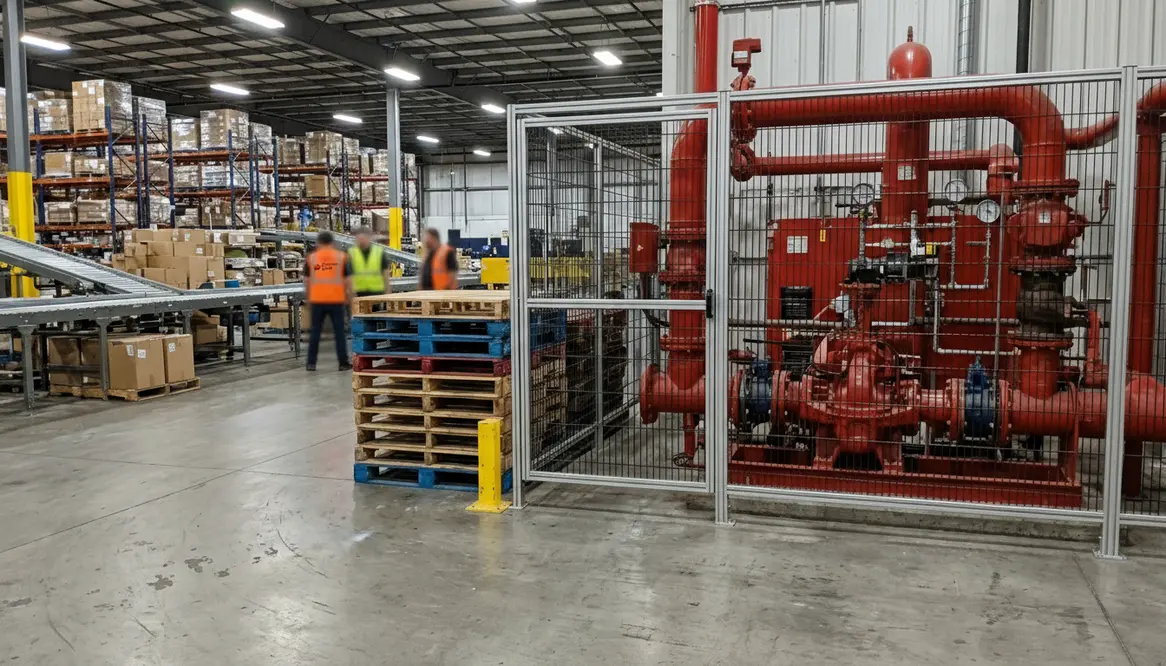
Fire Pumps for High Equipment Use Facilities
I have spent years around industrial spaces where every second counts and every system has a job to do. In these environments, Fire pumps for buildings with high equipment use are not just another line item on a checklist. They are the quiet guardians that stand ready when everything else goes wrong. In material handling facilities, where conveyors hum and forklifts dance like they are auditioning for a Fast and Furious sequel, the risk profile is unique. So, I take a steady approach to understanding how fire pump systems fit into this high energy world.
Why Material Handling Facilities Demand a Different Fire Strategy
Material handling sites move fast. Products shift constantly, machinery runs long hours, and layouts evolve as operations scale. Because of this, fire risks are not static. Instead, they shift with inventory density, equipment load, and workflow design.
So, I always look at three factors first. Fuel, flow, and friction. Pallet racks stacked high create fuel. Conveyor belts create friction. And electrical systems, well, they bring their own drama.
Therefore, a standard fire protection setup often falls short. You need systems that can respond instantly and maintain pressure across large, complex layouts. That is where industrial fire pump systems step in, delivering consistent water flow even when demand spikes across multiple zones.
How Do Fire Pump Systems Actually Support High Equipment Environments?
I get this question a lot, and I like to keep it simple. Fire pumps ensure that water moves where it needs to go, at the pressure required, without hesitation. In facilities packed with machinery, that consistency is everything.
However, it is not just about power. It is about control. Modern systems integrate with alarms, sensors, and suppression networks. As a result, they respond in real time, adjusting output based on demand.
Think of it like a seasoned orchestra conductor. When one section gets loud, the conductor brings balance. Fire pumps do the same, except instead of violins, they are managing sprinkler zones and hydrant lines. Less Mozart, more muscle.
In high equipment environments, especially where Fire pumps for buildings with high equipment use are required, that balance often means supporting layered sprinkler tiers, in-rack systems, and hose stations without losing pressure where it matters most.
Choosing the Right Fire Pumps for Buildings with High Equipment Use
Not all pumps are built for the same job. In fact, choosing the wrong type can create more problems than it solves. I always match the system to the facility’s operational profile.
Here is how I break it down:
Performance Needs
- High flow capacity for large floor areas
- Stable pressure across multiple zones
- Fast startup response
Operational Demands
- Continuous reliability under heavy use
- Compatibility with automation systems
- Ease of maintenance without downtime
In addition, I consider redundancy. Because if one pump fails, the backup should step in without hesitation. No drama, no delays. In facilities that rely on Fire pumps for buildings with high equipment use, that smooth handoff between duty and standby units is non-negotiable.
Integration With Facility Systems Keeps Everything in Sync
A fire pump does not work alone. Instead, it operates as part of a larger ecosystem. When I design or evaluate a system, I look at how well it communicates with detection systems, alarms, and building controls.
For example, when a sensor detects heat or smoke, the system should trigger a coordinated response. Pumps activate, valves open, and water flows exactly where it is needed. Meanwhile, alerts go out to operators and emergency teams.
Because of this integration, response times shrink dramatically. And in fire protection, seconds matter more than most people realize. It is the difference between a controlled incident and a headline nobody wants.
When you look at Fire pumps for buildings with high equipment use, this integration also means tying into production data, shift schedules, and power management so that protection stays aligned with actual risk, not just assumptions on paper.
Maintenance Is Not Glamorous but It Saves the Day
Let me be honest. Maintenance is not exciting. No one is making movies about routine pump inspections. Although if they did, it would probably still outperform some sequels we have seen lately.
Still, consistent testing and servicing are critical. I always recommend scheduled inspections that check pressure levels, flow rates, and system responsiveness. In addition, components like seals, valves, and controllers need regular attention.
Neglect here is costly. A system that fails during an emergency is worse than having no system at all, because it creates a false sense of security. Therefore, I treat maintenance as a core operational priority, not an afterthought.
For facilities built around Fire pumps for buildings with high equipment use, tight maintenance routines are the quiet hero that keeps certifications valid, insurers calm, and operations uninterrupted.
Future Ready Systems for Evolving Industrial Demands
Material handling facilities are evolving fast. Automation, robotics, and data driven operations are becoming the norm. Because of this, fire protection systems must evolve as well.
I see a growing shift toward smart fire pump systems that provide real time diagnostics and remote monitoring. These tools allow facility managers to spot issues before they become problems. In addition, predictive maintenance reduces downtime and extends system life.
So, investing in modern solutions is not just about safety. It is about operational continuity. And in high throughput environments, continuity is king.
If you are exploring upgrades, resources like https://firepumps.org offer standards and guidance that help align Fire pumps for buildings with high equipment use to future regulatory and operational expectations.
FAQ
Final Thoughts and Next Steps
If you are managing a facility filled with moving parts and high value equipment, the right fire pump system is not optional. It is essential. I encourage you to evaluate your current setup, identify gaps, and invest in solutions designed for demanding environments. The right system protects your operations, your assets, and your peace of mind. When everything runs smoothly, you will barely notice it. And honestly, that is the point.