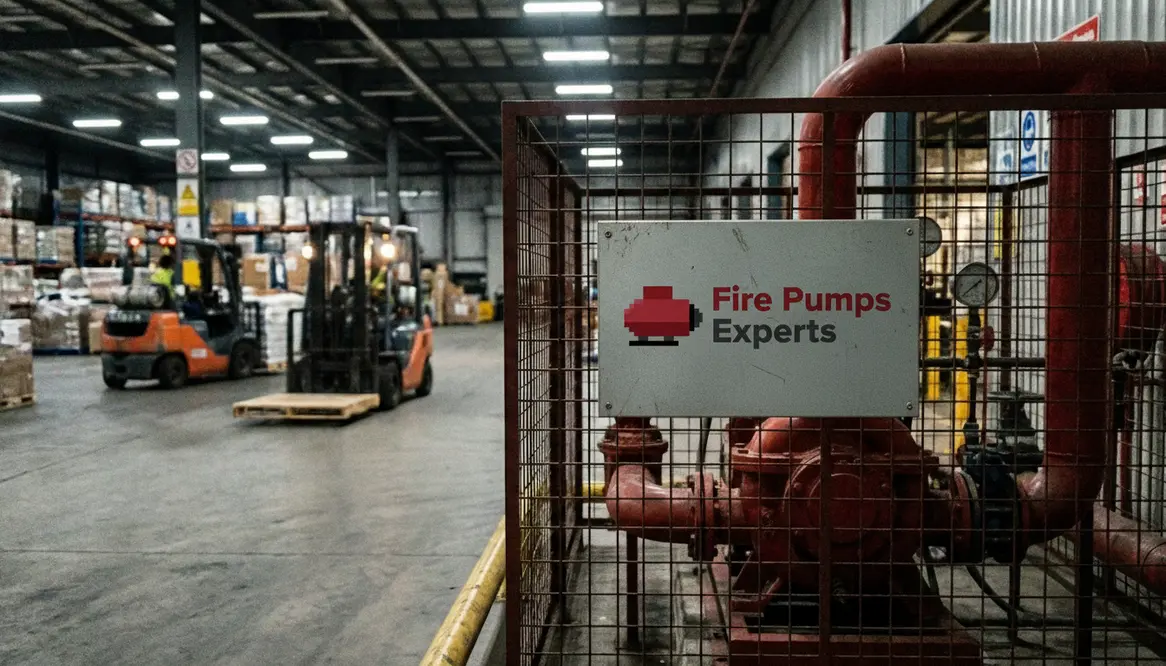
Fire Pump Requirements for Freight Terminals
I have spent years walking through freight terminals that never seem to sleep. Pallets move, forklifts hum, and deadlines hover like storm clouds. In that world, Fire protection for freight handling and staging is not just a code requirement. It is the quiet guardian that stands ready when everything else goes wrong. And at the heart of that protection sits the fire pump, steady as a heartbeat, waiting for the moment it is needed most.
Understanding Fire Pump Requirements in Freight Terminals
First, let me ground this in reality. Freight terminals are not gentle environments. They carry high fuel loads, fast moving equipment, and wide open spaces that can turn a small spark into a headline. Because of that, fire pumps must deliver reliable pressure and flow, even when municipal water supply decides to take a nap.
So, what do I focus on? Capacity, redundancy, and endurance. A proper system aligns with NFPA 20 standards while also accounting for the unique layout of loading docks, staging zones, and storage areas. And yes, if you are wondering, cutting corners here is about as wise as bringing a water pistol to a dragon fight.
Moreover, I always look at peak demand scenarios. Freight terminals often run multiple suppression systems at once. Sprinklers activate in one zone, hose streams in another. The pump must keep up without hesitation. If it cannot, the entire system becomes a suggestion rather than a solution.
How Do I Size a Fire Pump for a Freight Terminal?
I get this question often, and I answer it the same way every time. I start with hazard classification. Freight terminals usually fall under Ordinary Hazard Group 2 or higher, depending on commodities and stacking heights.
Then, I calculate total system demand. This includes sprinkler flow, hose allowances, and any special suppression systems. After that, I add a safety margin because real life rarely behaves like a textbook.
Additionally, I consider future expansion. Freight terminals grow. If your fire pump cannot grow with it, you will face expensive upgrades later. Think of it like buying shoes for a kid. If you do not leave room, you will be back at the store sooner than you hoped.
Linking sizing to Fire protection for freight handling and staging
Sizing is not just a hydraulic exercise; it is a direct extension of Fire protection for freight handling and staging. When pumps are sized with realistic loading patterns, aisle layouts, and staging congestion in mind, the system can support aggressive firefighting operations without dropping pressure at the worst possible moment.
Key Components That Make or Break Performance
Now let us talk about what actually keeps the system alive. A fire pump is only as strong as its supporting cast.
Reliable Power Source
Electric pumps need stable power. Diesel pumps offer independence but require maintenance. I often recommend evaluating both based on site risk.
Controller Systems
Controllers must respond instantly. Delays cost pressure, and pressure is everything.
Water Supply
Whether it is a tank or municipal feed, consistency matters. Fluctuations can cripple performance.
Jockey Pumps
These small units maintain system pressure and prevent unnecessary fire pump starts. Quiet heroes, really.
Furthermore, proper testing ties it all together. Weekly churn tests and annual flow tests are not optional. They are your proof that the system will perform when called upon.
Fire Protection for Freight Handling and Staging in High Traffic Zones
Freight terminals thrive on movement. However, that movement creates risk. Loading docks, conveyor lines, and staging areas concentrate both goods and ignition sources. This is where Fire protection for freight handling and staging becomes highly targeted.
I focus on zoning. Each area should have defined coverage that prevents fire spread between operational sections. In addition, I ensure the fire pump supports simultaneous activation across multiple zones.
Also, I pay attention to clearance. Obstructions can block sprinkler discharge. And if a sprinkler cannot reach its target, it might as well be pointing at the ceiling for decoration.
Coordinating pumps with operational flow
Finally, coordination matters. Fire pumps must integrate seamlessly with alarm systems, detection devices, and emergency response protocols. When everything works together, response time shrinks, and control improves. Done right, Fire protection for freight handling and staging supports business continuity instead of constantly tripping over it.
Common Mistakes I See and How I Avoid Them
Over the years, I have seen patterns. Some are predictable. Others make me pause and wonder who signed off on the plan.
Undersized pumps and optimistic assumptions
One major issue is undersized pumps. Designers sometimes rely too heavily on minimum code requirements without considering operational realities. That approach works until it does not.
Maintenance as an afterthought
Another mistake involves poor maintenance planning. A fire pump without a maintenance strategy is like a sports car without fuel. It looks impressive but does nothing when needed.
Isolated systems that cannot talk to each other
Additionally, I see neglect in system integration. Fire pumps must communicate with the broader fire protection network. When they operate in isolation, efficiency drops.
To avoid these pitfalls, I emphasize detailed planning, regular testing, and clear documentation. It is not glamorous work, but neither is explaining a preventable failure after the fact.
Connecting mistakes back to Fire protection for freight handling and staging
When pumps are undersized, rarely tested, or poorly integrated, Fire protection for freight handling and staging turns into an optimistic story instead of a reliable infrastructure. The goal is not just passing inspection; it is protecting workers, freight, and operations when small problems try to become large disasters.
FAQ
Below are answers to common questions that come up when planning or reviewing fire pump installations for freight terminals.
Closing Thoughts and Next Steps
When I design or evaluate a fire pump system for a freight terminal, I think beyond compliance. I think about continuity, safety, and resilience. If you are planning or upgrading your facility, now is the time to act. Work with experts who understand commercial scale risks and can tailor solutions that hold up under pressure. Reach out today and make sure your fire protection strategy is not just adequate, but truly dependable.