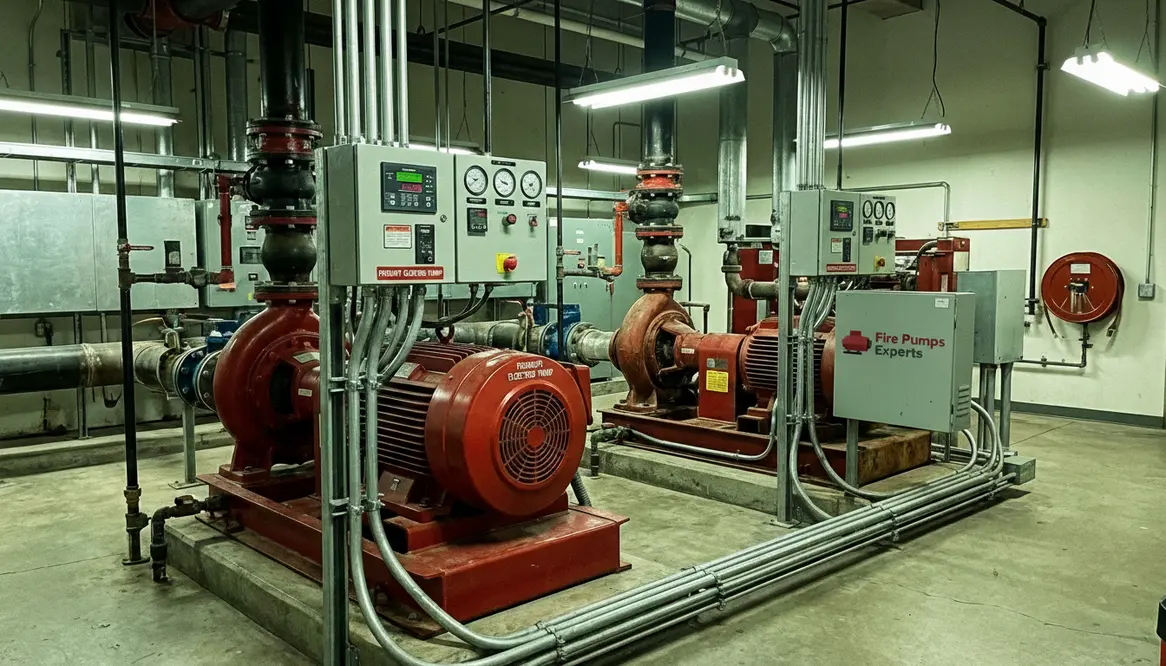
Fire Pump Redundancy System Design for Reliability
I have spent years around commercial fire protection systems, and one truth keeps showing up like a dependable old friend. Redundancy is not a luxury. It is survival. When I talk about fire pump redundancy system design, I am talking about the quiet backbone that keeps water moving when everything else goes sideways. In large facilities, from data centers to high rise complexes, a single failure can ripple fast. So I build systems that assume failure will happen, then calmly refuse to let it win.
What Makes a Fire Pump System Truly Redundant?
Redundancy is not just adding another pump and calling it a day. That is like bringing one extra flashlight into a cave and thinking you are Indiana Jones. Instead, I look at how each component supports the next.
A solid approach includes independent power sources, multiple pumps with separate controllers, and intelligent sequencing. Moreover, I make sure suction and discharge paths do not rely on a single weak point. If one line fails, another carries the load without hesitation.
In commercial and industrial environments, downtime is expensive and dangerous. Therefore, I design systems that maintain pressure even during maintenance or unexpected faults. The goal is simple. No drama. Just water where it needs to be, when it needs to be there.
Layering Protection Beyond Just “One More Pump”
When I map out fire pump redundancy system design, I focus on breaking single points of failure. That means separate power feeds where possible, independent controllers, and suction paths that do not all converge on the same vulnerable tee or valve.
Why I Prioritize Reliability Over Simplicity
I get it. Simpler systems are easier to install and cheaper upfront. But I have seen what happens when simplicity meets reality. It is not pretty, and it does not come with a refund.
Instead, I lean into layered protection. For example, I often specify a primary electric fire pump paired with a diesel backup. If the grid fails, the system does not blink. It pivots. Additionally, I integrate automatic transfer switches and monitoring systems that alert teams before small issues grow teeth.
Think of it like casting a movie. You do not hire one actor to play every role. You build a cast that can carry the story even if one star walks off set.
Matching Redundancy To The Building’s Reality
In critical occupancies, I push harder on redundancy than in low risk buildings. A hospital or data center cannot shrug off downtime. That is where a carefully tuned fire pump redundancy system design pays for itself long before the first alarm ever rings.
Designing for Real World Failure Scenarios
Every design decision I make starts with a question. What happens if this fails at the worst possible moment? Then I answer it with engineering, not hope.
The Failure Modes I Plan For
For instance, I consider:
- Power loss and how quickly backup systems engage
- Mechanical failure in pumps or controllers
- Water supply interruptions or pressure drops
- Human error during maintenance or operation
Because of that mindset, fire pump redundancy system design becomes less about adding parts and more about building resilience. Each layer supports the next, creating a system that adapts instead of collapses.
How Do I Balance Cost and Redundancy Without Overengineering?
This is the question I hear the most, and it is a fair one. Nobody wants to spend like a superhero when the budget says side character.
I approach this by aligning risk with investment. High value facilities like hospitals, manufacturing plants, and large commercial buildings demand higher redundancy. On the other hand, I avoid unnecessary duplication where it does not improve reliability.
Also, I prioritize components that deliver the most impact. A secondary pump with an independent controller often provides more value than duplicating minor accessories. So, the system stays efficient without cutting corners.
High Impact Redundancy Choices
- Dual fire pumps with staggered activation
- Separate power sources
- Advanced monitoring systems
Lower Priority Additions
- Duplicate minor valves
- Non critical sensor backups
- Excessive control panel layering
In short, I spend where failure would hurt the most. Everywhere else, I stay practical.
The Role of Smart Controls and Monitoring
Modern systems are not just mechanical. They are smart, and frankly, they should be. I integrate monitoring tools that track performance in real time. As a result, facility managers can catch issues early instead of reacting during an emergency.
These systems provide alerts for pressure drops, pump performance irregularities, and power disruptions. Additionally, remote access allows teams to respond quickly, even if they are not on site.
It is like having a watchful guardian that never sleeps. Less dramatic than Batman, sure, but far more reliable when it comes to water pressure.
Data As A Design Tool
Over time, monitoring data shapes better fire pump redundancy system design. Trends in runtime, starts, and minor alarms point to weak links long before they show up as full blown failures.
Common Mistakes I Avoid in Redundant System Design
I have seen a few patterns over the years, and they tend to repeat. So I actively steer clear of them.
First, I avoid shared dependencies. If two pumps rely on the same power source or control system, they are not truly redundant. Second, I do not ignore maintenance access. A system that cannot be serviced easily will fail when it matters most.
Finally, I resist the urge to overcomplicate. Yes, redundancy adds layers, but clarity still matters. Operators need to understand the system quickly during high stress moments.
Keeping Redundancy Understandable
A fire pump redundancy system design that only one engineer can explain is a liability. I aim for layouts and sequences that a well trained operator can read and trust under pressure.
FAQ
What is fire pump redundancy system design?
It is the practice of using multiple pumps, power sources, and system paths to ensure continuous fire protection even if one component fails.
Why is redundancy important in commercial buildings?
Large facilities cannot afford system failure. Redundancy ensures consistent water flow during emergencies.
How many fire pumps are needed for redundancy?
Typically at least two, often with different power sources, but the exact number depends on risk and building size.
Does redundancy increase maintenance?
Yes, but it also reduces the risk of total system failure, which is far more costly.
Can older systems be upgraded for redundancy?
Yes, many systems can be retrofitted with additional pumps, controllers, and monitoring tools.
Building Confidence Into Every System
When I design for redundancy, I am not just checking boxes. I am building confidence into every pipe, pump, and control panel. Because when a fire event happens, there is no time for second guesses.
If you manage a commercial or industrial facility and want a system that performs under pressure, now is the time to act. Let us design a solution that stands strong when it matters most. Reach out and take the first step toward a safer, smarter fire protection strategy. If you are looking for deeper technical references or example layouts, resources like https://firepumps.org can be a useful complement to a tailored fire pump redundancy system design review for your building.