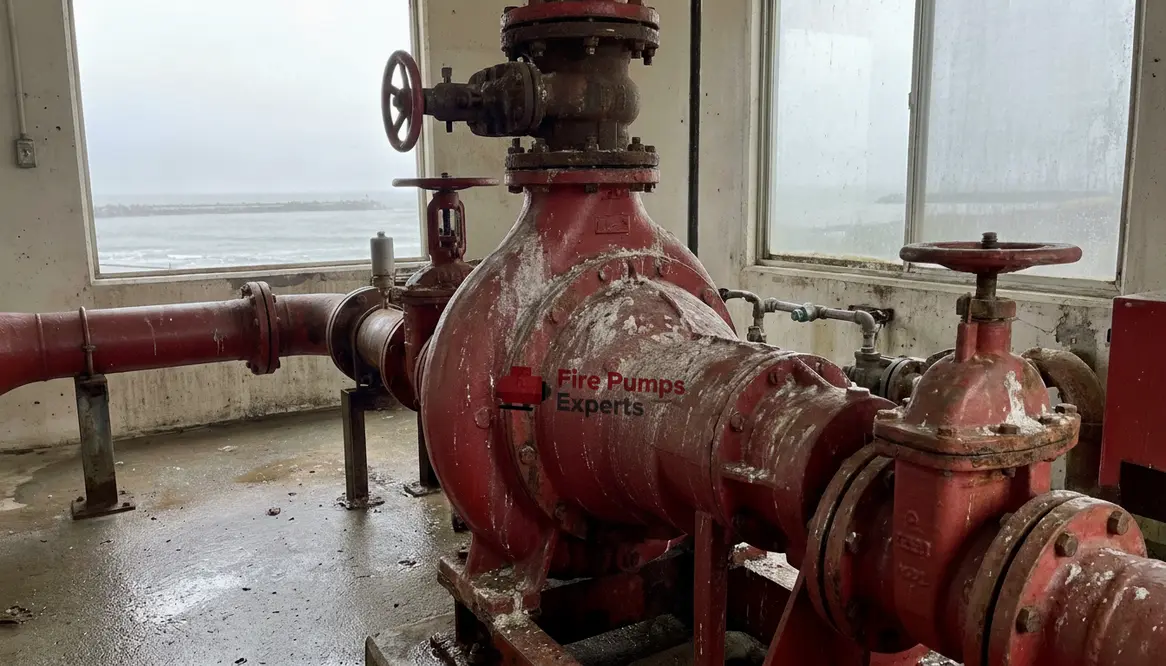
Fire Pump Reliability Challenges in Coastal Facilities
I have seen coastal buildings do a hard job in a hard place. Salt air does not care about your budget, your schedule, or your neat little maintenance plan. It finds its way into metal, seals, wiring, and control gear. That is why fire pump corrosion, steady fire pump maintenance, and smart coastal fire protection matter so much for commercial and industrial facilities, along with major property buildings. In plain terms, if the ocean is your neighbor, then your fire pump has a bigger fight than most. And yes, the sea does act a bit like a rude guest who touches everything and leaves a mess.
When I look at reliability in these settings, I focus on one fact first: a fire pump only helps when it starts, runs, and keeps pressure up under stress. That sounds simple. However, salt, humidity, wind, and heat make simple things difficult. So, I treat the pump room like mission critical space, not a storage closet with a hero badge.
Why coastal facilities put fire pumps at risk
Coastal air carries salt that clings to steel and fasteners. Then moisture joins the party, and corrosion speeds up. Over time, that can weaken casings, damage fittings, and attack electrical parts. I also watch for clogged strainers, worn seals, and blocked test lines. Each one can cut performance when the system needs to wake up fast.
In many commercial and industrial sites, the problem grows quietly. First, a small rust spot appears. Next, a valve gets stiff. Then, a motor or controller shows heat damage, and suddenly the system looks less like protection and more like a warning sign. I have learned that the ocean does not announce its damage. It just keeps working on the equipment, one day at a time.
How I reduce fire pump corrosion before it spreads
I start with materials and layout. Where possible, I choose coated metals, corrosion resistant fittings, and proper room ventilation. I also keep salt entry low by sealing openings and managing airflow. If the pump room pulls in damp air from outside, the system pays the price.
Then I inspect the obvious weak points:
- Flanges and pipe joints
- Motor housings and controller cabinets
- Couplings, bolts, and base plates
- Pressure gauges and test equipment
- Drain lines and valve stems
I do not wait for failure. Instead, I remove surface rust early, replace damaged hardware, and track repeat trouble spots. That gives me a better read on what the building really needs. Also, it saves me from the classic “we thought it was fine” speech, which nobody enjoys at 2 a.m.
What fire pump maintenance should look like in coastal buildings
I keep the routine simple, but never casual. A good program checks the pump, motor, controller, power supply, alarms, and pressure readings on a set schedule. I test for smooth starts and stable flow. I also verify the diesel fuel system if the site uses one, because fuel issues can be just as sneaky as salt damage.
Here is the part many teams miss: maintenance in coastal areas must respond to environment, not just calendar dates. If the site sits near surf spray or sees heavy humidity, I tighten the review cycle. I also compare current readings with past logs, because trends tell the truth faster than guesswork.
Coastal fire protection planning that actually holds up
Good planning does more than protect one pump. It protects the whole system around it. I look at backup power, water supply, access routes, and room conditions. If one part fails, the rest should still carry the load. That is the point of resilient coastal fire protection for major properties and industrial sites.
For example, I make sure the pump room stays easy to reach during storms. I also confirm that spare parts are available and that local service support can respond fast. If a building depends on one critical pump, then downtime is not just an inconvenience. It is a risk that can hit operations, insurance, and life safety at the same time. No pressure, right?
Use this inspection plan for better reliability
Inside the pump room
- Check for rust, leaks, and damp air
- Listen for odd noise or vibration
- Confirm pressure stays within range
- Inspect wiring, seals, and connections
Outside the pump room
- Review access paths and storm protection
- Inspect water supply and valves
- Verify service records and test logs
- Plan repairs before small issues spread
Where I look for expert support
When I need a deeper look at system design or service planning, I rely on trusted resources that focus on commercial fire protection and electrical support for major facilities. For example, I review the los angeles fire pump services page for pump related support, and I also use the commercial fire protection service and electrical system support resources at kordelectric.com when power reliability matters. In addition, I reference the Australian fire sprinkler services page for broader system planning ideas. That kind of support helps me keep the whole protection stack working as one.
FAQ
Conclusion
If you manage a commercial, industrial, or major property building near the coast, I urge you to treat pump reliability as a daily concern, not a yearly task. Salt never takes a day off, and neither should your protection plan. Review your system, tighten your inspection habits, and act before small damage becomes a big failure. If you want stronger performance and fewer surprises, now is the right time to strengthen your fire pump strategy.