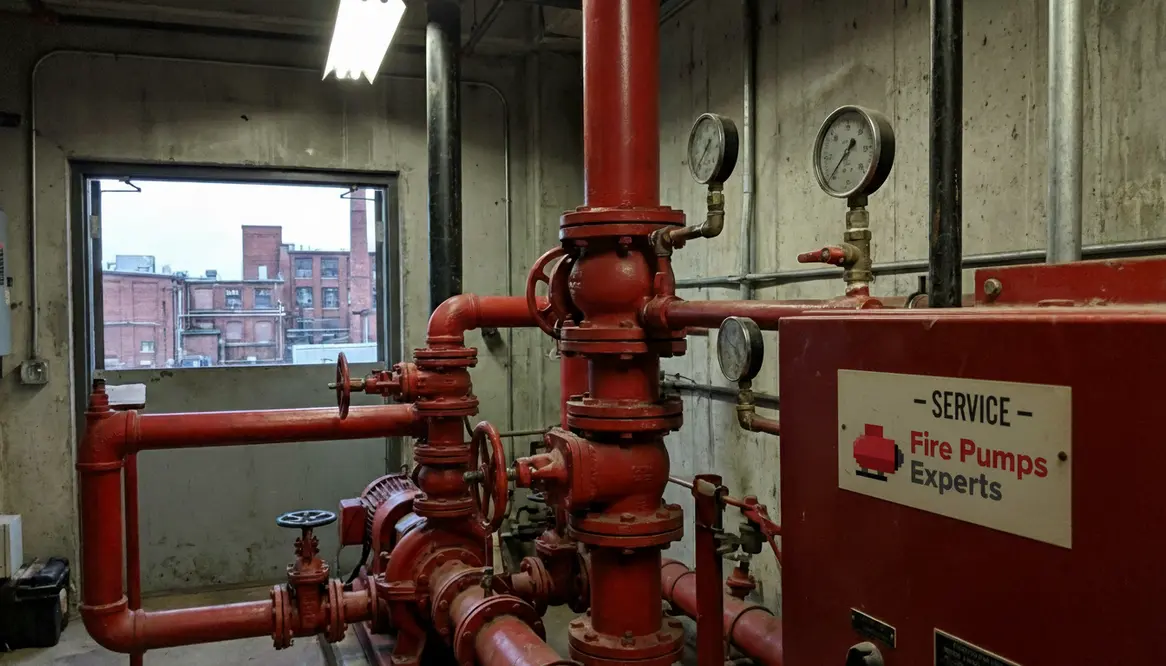
Fire Pump Reliability in NJ Commercial Buildings
In New Jersey’s commercial landscape, the most important life safety systems often sit in quiet rooms behind locked doors. Among them, the fire pump is the uncelebrated workhorse that keeps everything else honest.
I have spent years around commercial properties in New Jersey, and if there is one system that never gets a standing ovation but absolutely should, it is the fire pump. In large facilities, especially where mixed-use building fire pumps support layered occupancy types, reliability is not just a technical requirement. It is the quiet contract between safety and chaos. And yes, much like a great bass line in a song, you only notice it when it disappears. That is when things get uncomfortable fast.
If you manage a high rise in Jersey City, a distribution center near the Turnpike, or a mixed-use development along the Hudson, your fire pump is the bridge between code compliance on paper and real-world performance when a sprinkler head opens.
Treat it as a background utility and it will eventually remind you, very loudly, why that was a mistake.
Why Fire Pump Reliability Shapes Commercial Safety Outcomes
When I walk into a high rise or industrial complex, I immediately think about pressure. Not the kind you feel before a big meeting, but the kind that moves water where it needs to go. Fire pumps ensure sprinkler systems perform as designed. Without them, even the most advanced suppression setup becomes little more than expensive decoration.
Moreover, New Jersey regulations demand strict compliance. Therefore, a poorly maintained pump does more than risk damage. It invites penalties, shutdowns, and liability. I have seen facilities try to cut corners, and it rarely ends well. Think of it like skipping oil changes in a luxury car. It works fine until it really, really doesn’t.
In A Fire, Seconds Become Structure
A reliable pump doesn’t just “help” your sprinklers. It determines whether water reaches remote areas, upper floors, and dense storage racks with enough force and volume to keep a small incident from becoming a headline.
That is especially true for mixed-use building fire pumps supporting everything from underground parking to rooftop amenities. One weak link in that chain and the whole protection strategy starts to wobble.
How Do Mixed Use Building Fire Pumps Support Complex Properties
In mixed occupancy structures, the demands on fire protection systems multiply quickly. Offices, retail spaces, and residential units each place different loads on the system. So, the pump must respond dynamically.
As a result, mixed-use building fire pumps must deliver consistent pressure across varying zones. I often explain it like streaming services during peak hours. If the system cannot handle demand, someone ends up buffering, and in fire safety, buffering is not an option.
Additionally, zoning requirements in New Jersey mean systems must adapt to vertical and horizontal layouts. That complexity makes reliability less of a feature and more of a necessity.
When you stretch fire protection from underground parking to street level retail, then up through residential floors and amenity decks, mixed-use building fire pumps become the central nervous system. The building may have multiple tenants and uses, but it only gets one chance to move water correctly when it matters.
What Makes a Fire Pump System Truly Reliable
Reliability is not luck. It is built through design, maintenance, and testing. First, proper sizing ensures the pump meets peak demand without strain. Then, regular inspections confirm each component performs under pressure.
However, I have learned that testing under real conditions is where the truth shows up. Weekly churn tests and annual flow tests are not just checkboxes. They are performance rehearsals. And just like a Broadway show, you do not want opening night to reveal all the flaws.
Key Reliability Drivers
- Consistent water supply verification
- Routine performance testing
- Accurate system calibration
- Backup power integration
Common Risk Factors
- Deferred maintenance schedules
- Improper installation
- Aging components
- Undetected pressure drops
Furthermore, modern monitoring systems now allow real time diagnostics. This means facility managers can catch small issues before they turn into big, expensive problems. Tie that with frequent inspections and clear testing documentation, and your mixed-use building fire pumps move from “probably fine” to “proven under pressure.”
If you want a deeper dive into testing expectations, articles like fire pump testing requirements and best practices lay out how weekly, monthly, and annual tests should be structured so your system is ready when the alarm sounds.
The Role of Compliance in New Jersey’s Commercial Market
New Jersey does not play around when it comes to fire safety. And honestly, that is a good thing. Codes are designed to protect lives and assets, not to create paperwork headaches.
Because of this, commercial and industrial properties must adhere to NFPA standards and local regulations. Inspections are frequent, and documentation must be airtight. I have seen facilities scramble during audits, and it is never a fun scene. Picture a last minute group project, except the stakes are much higher.
Therefore, staying ahead of compliance through proactive service is not optional. It is strategic. It protects both the building and the business operating inside it. For large or complex facilities, that means treating your mixed-use building fire pumps as compliance-critical infrastructure, not just mechanical equipment in the basement.
Why Preventive Maintenance Beats Emergency Repairs Every Time
I always tell clients the same thing. Emergencies are expensive teachers. Preventive maintenance, on the other hand, is a calm and patient guide.
Regular servicing keeps fire pump systems in peak condition. It also extends the lifespan of equipment and reduces the likelihood of failure during critical moments. In contrast, emergency repairs often involve downtime, higher costs, and operational disruption.
Additionally, a well maintained system builds confidence. Facility managers can focus on operations instead of worrying about what might go wrong. And peace of mind, while not listed on a balance sheet, is incredibly valuable.
Preventive Mindset For Mixed-Use Properties
In layered occupancies, everything is interconnected. A maintenance miss on a pump doesn’t just put one tenant at risk; it affects residences, businesses, parking, and common areas all at once.
That is why mixed-use building fire pumps deserve a defined maintenance plan: scheduled inspections, documented tests, clear responsibilities, and a budget line item that does not disappear when times get tight.
FAQ: Fire Pump Reliability in Commercial Buildings
What is the main purpose of a fire pump?
It boosts water pressure to ensure sprinkler systems operate effectively during a fire.
How often should fire pumps be tested?
Weekly churn tests and annual flow tests are standard for commercial systems.
Why is compliance important in New Jersey?
It ensures safety, avoids penalties, and keeps facilities operational under state regulations.
What happens if a fire pump fails?
Sprinkler systems may not deliver adequate water, increasing fire damage risk.
Are modern monitoring systems worth it?
Yes, they detect issues early and improve overall system reliability.
Conclusion: Reliable Systems Protect More Than Property
When I think about fire pump reliability, I think about continuity. Business continuity, safety continuity, and operational continuity. A dependable system does not just respond to emergencies. It prevents them from escalating.
If you manage a commercial or industrial facility in New Jersey, now is the time to evaluate your system, invest in proper service, and ensure your fire protection strategy stands strong when it matters most. Whether your building is straightforward or a vertical village with parking, retail, and residential stacked together, your mixed-use building fire pumps are central to that strategy.
Because in this line of work, reliability is everything. And the day you need that pump to run is not the day you want to find out it was treated like an afterthought.