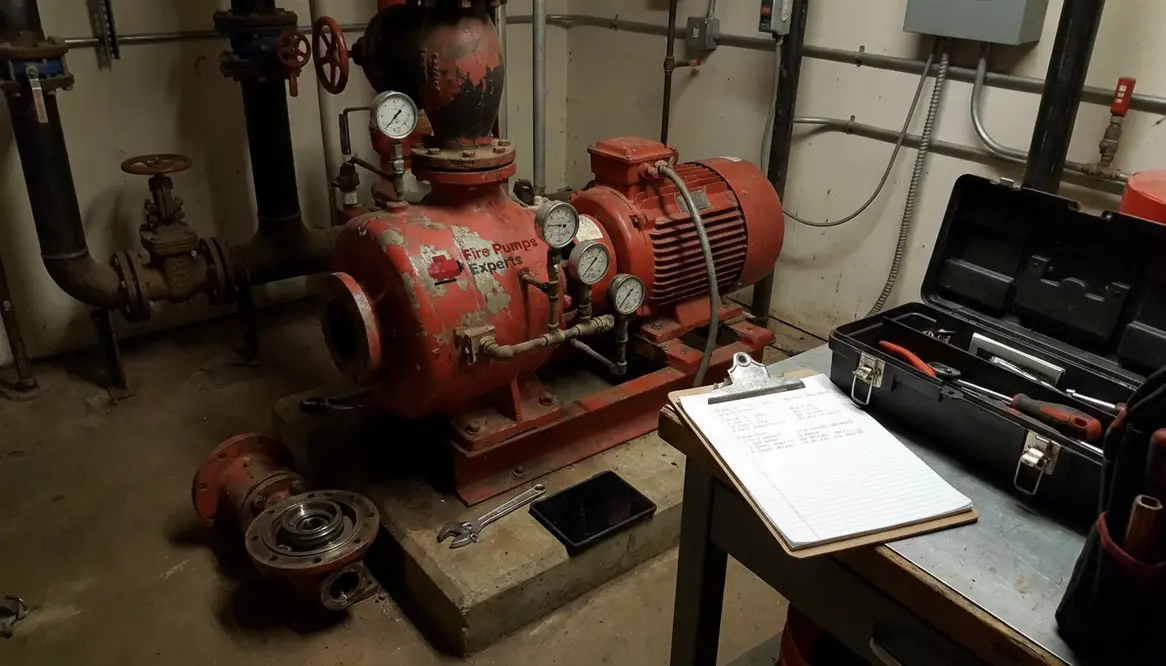
Fire Pump Repair vs Replacement: What Should You Choose?
How to decide whether to fix the workhorse of your fire protection system or bring in a new one without guessing like you are picking a streaming show at midnight.
When a fire pump starts acting up, I do not panic, but I do pay attention. In a commercial or industrial building, that pump is not a side character. It is the bouncer at the front door when fire decides to show up uninvited. So, when I look at fire pump repair vs replacement, I focus on risk, cost, downtime, and long term reliability. The choice is not always obvious. However, with the right checkup and a clear plan, I can separate a simple fix from a full system change without guessing like I am picking a streaming show at midnight.
This guide walks through what I look at, what matters most, and how I make a smart call for major properties, industrial sites, and other commercial buildings.
Quick view: fire pump repair vs replacement
- Repair: Lower initial cost, faster turnaround, best when damage is limited and performance is still solid.
- Replacement: Higher upfront cost, higher long term reliability, best when failures repeat or demand has grown.
- Your goal: Match the option to risk, code, and long term cost, not just the cheapest line on a quote.
How I decide if repair is enough
I start with the basics. If the pump still has a strong frame, the motor is stable, and the main damage is limited, repair often makes sense. For example, a worn seal, a bad bearing, a pressure switch issue, or minor corrosion can often be fixed without ripping out the whole unit. That is good news, because repair usually costs less and keeps downtime lower.
Still, I never stop at the surface. I check performance history, vibration, leaks, pressure loss, and any signs that the pump has been limping along for too long. If the same issue keeps coming back, then repair starts to feel less like a solution and more like a reset button that nobody asked for.
Signs repair is the smart move
- The pump casing and frame are structurally sound.
- Damage stays local to one part, like seals, bearings, couplings, or a single controller component.
- The pump still meets performance needs at required flow and pressure.
- Parts are easy to get, with reasonable lead times.
- The unit has a solid service history without a pattern of recurring breakdowns.
- Downtime must stay short, and the repair can be done quickly and safely.
When replacement makes more sense
I move toward replacement when the pump has major wear, serious internal damage, or repeated failures that keep eating time and money. If the unit no longer meets system demand, or if parts are hard to find, replacement often becomes the cleaner choice. Older pumps can also fall behind current code needs or building demands, especially in large facilities with changing fire protection loads.
In those cases, I ask a simple question: will another repair truly restore dependable service, or will it only buy a little time? If the answer leans toward “a little time,” replacement usually wins. Nobody wants a fire pump with the reliability of a clunky movie sequel that nobody asked for.
Clues that it is replacement time
- Core parts fail or wear out together, not just one or two components.
- Pressure or flow drops below demand during testing.
- Parts are old, rare, or costly to source.
- Breakdowns keep coming back despite previous fixes.
- The pump cannot support new or expanded fire protection loads.
- The unit struggles to meet updated code or insurance requirements.
Why replacement can be the safer bet
When thinking through fire pump repair vs replacement, the safe choice is the one that delivers reliable performance during a real emergency, not just during a quick inspection. A modern replacement pump can offer:
- Improved efficiency and performance.
- Better compatibility with updated controllers and monitoring.
- Shorter future repair times with easier-to-source parts.
- Stronger backup for life safety and property protection.
What I check before I choose
I never decide from one issue alone. I look at age, maintenance records, water supply, system load, and the facility’s safety goals. Then I match the fix to the real need, not the cheapest number on paper.
| Repair often fits when | Replacement often fits when |
| Damage stays local to one part | Core parts fail or wear out together |
| The pump still meets performance needs | Pressure or flow drops below demand |
| Parts are easy to get | Parts are old, rare, or costly |
| The unit has a solid service history | Breakdowns keep coming back |
| Downtime must stay short | A full upgrade saves more money long term |
Key questions before choosing repair or replacement
- How old is the pump, and how has it been maintained?
- Has the building’s fire protection load increased since installation?
- Are failures sudden and severe, or minor and predictable?
- How quickly can parts be sourced today and five years from now?
- What are the code, insurance, and safety expectations for this facility?
- How much unplanned downtime can the operation realistically tolerate?
Why long term cost matters more than the first bill
A low repair quote can look attractive. However, if the pump fails again in six months, the real cost climbs fast. I think about labor, lost time, emergency service, and the headache of another shutdown. Replacement may cost more up front, but it can reduce repeat calls and improve system reliability for years.
For commercial and industrial properties, the budget question should not stop at today. Instead, I look at the next five to ten years. If a replacement gives better performance, simpler maintenance, and fewer surprises, it may save far more than patching the same problem again and again.
Cost lens for fire pump repair vs replacement
- Repair works best when it meaningfully extends pump life and reliability.
- Replacement wins when repeated repairs slowly add up to more than the cost of a new, dependable unit.
- The right choice balances direct costs with risk, safety, and how often you want to see a fire pump technician at the building.
How I use safety, code, and downtime in the final call
Safety always sits at the top of the list. A fire pump supports life safety, so I treat weak performance as a serious issue, not a routine maintenance note. If the pump cannot support the system during a real event, repair becomes the wrong answer very quickly.
Downtime matters too. Some facilities can tolerate a short repair window. Others cannot. If the building runs around the clock, or if the fire protection system must return to service fast, I weigh how quickly each option restores full protection. I also check whether the repair would require several follow up visits. Multiple shutdowns can turn a simple plan into a circus, and not the fun kind.
Safety checklist before deciding
- Does the pump consistently meet required flow and pressure during tests?
- Are controllers, alarms, and monitoring devices working reliably?
- Would another failure put occupants, critical operations, or insurance coverage at risk?
- Is the system in line with current codes and standards that apply to the facility?
Get the right answer for your facility
If you manage a commercial or industrial property, I would not guess when it comes to fire pump repair vs replacement. I would inspect the system, review the history, and compare the true cost of each path. That comparison should include reliability, safety, code compliance, and how often you want to roll the dice on surprise downtime.
A thoughtful approach to fire pump repair vs replacement means using real inspection data, performance tests, and long term planning instead of quick patch work. When in doubt, I recommend working with a specialist who focuses on major properties and fire protection systems and can walk through options in clear, non-technical language.
If you want a trusted place to start, see this commercial fire pump service resource for more guidance and context on what a professional review should include.
Putting it all together
In the end, choosing between repair and replacement is about more than fixing what is broken today. It is about how the pump will perform when it is needed most, how it fits the building as it operates now, and how it will hold up over the next decade. With a clear look at performance, cost, risk, and code, the right path between fire pump repair vs replacement usually becomes obvious long before the next emergency test.