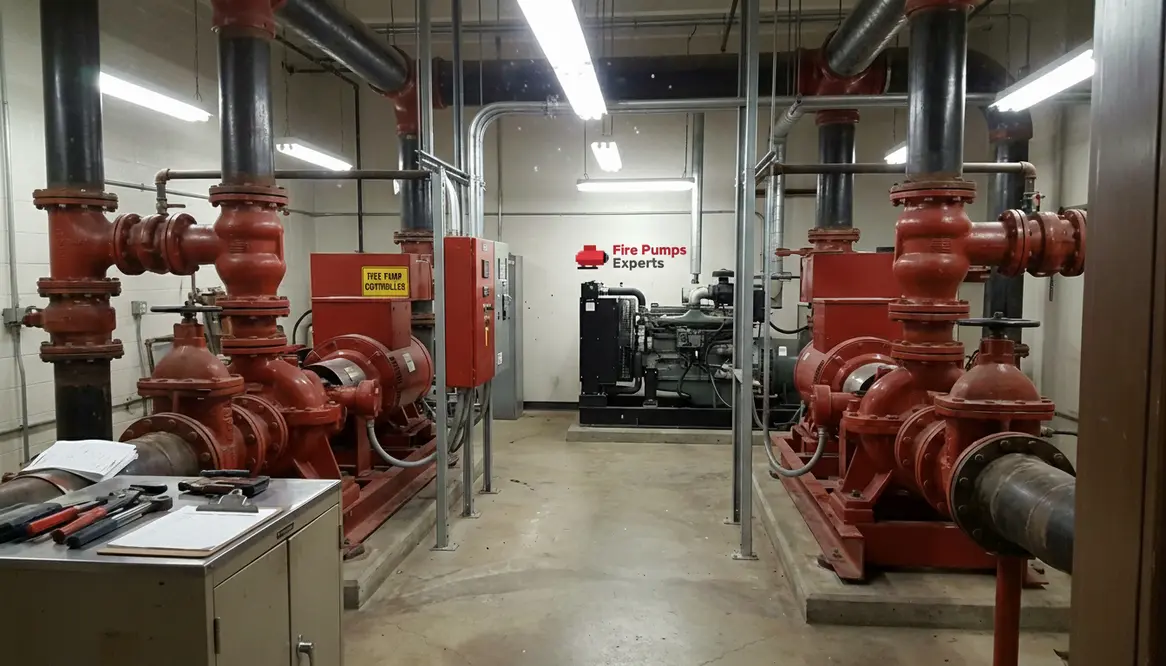
Fire Pump Requirements for Courthouses Design Guide
I have spent years thinking about how buildings breathe, react, and ultimately protect the people inside them. When it comes to sensitive civic structures like courthouses, the stakes rise quickly. The Fire Pump Requirements for Courthouses are not just technical checkboxes. They are the quiet guardians behind the walls, ready to perform when everything else fails. And while the topic might sound as thrilling as watching paint dry, I promise there is more drama here than a courtroom finale in a legal thriller.
So let us walk through what really matters, why it matters, and how to plan fire pump systems that do their job without asking for applause.
Why Sensitive Civic Buildings Demand Precision
Courthouses are not ordinary buildings. They hold people, records, evidence, and at times, tension thick enough to cut with a butter knife. Because of this, I approach fire protection with a sharper lens.
First, these facilities operate under strict uptime expectations. Therefore, any failure in fire suppression systems is not just inconvenient, it is unacceptable. In addition, evacuation can be complex due to security zones and restricted access areas.
Moreover, the fire pump standards for judicial buildings must account for both high occupancy and structural complexity. Long corridors, secure holding areas, and multiple floors all influence pressure requirements and water flow.
And let us be honest. If anything goes wrong in a courthouse, it will not be a quiet headline. It will be front page news.
Fire Pump Requirements for Courthouses Explained Simply
When I break down the Fire Pump Requirements for Courthouses, I focus on reliability, redundancy, and control. These three pillars guide every decision.
To begin with, redundancy is not optional. Most courthouse fire pump systems require backup pumps or secondary power sources. Because when the main system fails, there is no time for a polite retry.
Next, I ensure the pump capacity aligns with peak demand scenarios. This includes sprinkler systems, standpipes, and hose connections operating simultaneously. It is not about average use. It is about worst case performance.
Then comes power supply. I often recommend diesel driven pumps or dedicated emergency generators. After all, relying on standard power during a fire is like trusting your phone battery at 2 percent during a road trip. Bold, but risky.
Finally, control systems must be accessible yet secure. In civic buildings, not everyone should have access, but the right people must act fast.
What Should I Consider When Planning Fire Pumps for a Courthouse?
I get this question often, and the answer is both simple and layered.
Start with building layout. The size, height, and zoning of the courthouse directly affect pump sizing and placement. Then consider water supply. Municipal systems are not always reliable under emergency demand, so I frequently plan for on site storage tanks.
In addition, I look at compliance codes. Local fire regulations, national standards, and insurance requirements all intersect here. Missing one is like forgetting a key ingredient in a recipe. It will not end well.
Another factor is future expansion. Civic buildings evolve, and fire pump systems should be ready to scale without requiring a complete overhaul.
Key Planning Factors
- Water supply reliability
- System redundancy
- Access for maintenance
- Integration with alarms
Common Pitfalls
- Undersized pumps
- Poor power backup
- Limited testing access
- Ignoring future expansion
Designing for Real World Emergencies
I always say a fire pump system should perform like a seasoned actor. Calm under pressure and flawless in execution.
That means designing for real scenarios, not just code compliance. For example, simultaneous fire events, delayed emergency response, or partial system failures.
Additionally, I incorporate routine testing access into every design. Because a system that cannot be tested easily will not be tested often. And that is where problems begin.
Furthermore, vibration control, noise reduction, and system monitoring all play a role. Courthouses are active environments. The fire pump should not sound like a rock concert every time it runs.
And yes, I have seen systems that did exactly that. Let us just say it did not win any fans.
Fire Pump Requirements for Courthouses in Modern Infrastructure
Today, the Fire Pump Requirements for Courthouses extend beyond basic functionality. Technology now allows smarter monitoring, predictive maintenance, and faster response times.
For instance, I often integrate remote monitoring systems that alert facility managers before issues escalate. This proactive approach reduces downtime and increases reliability.
In addition, energy efficiency has become a growing focus. While fire pumps are not running daily, their supporting systems can still benefit from optimized design.
Moreover, coordination with other building systems is essential. Fire alarms, suppression systems, and emergency lighting must work together seamlessly. Think of it as an orchestra. Every section matters, but timing is everything.
Connecting Design Decisions to Real Risk
Behind every line in the Fire Pump Requirements for Courthouses is a very real scenario someone has already lived through in another building. A hallway that filled with smoke faster than expected. A holding area that was harder to evacuate than the drawings suggested. A stairwell where pressure dropped right when firefighters needed it most.
Designing for courthouses means translating those lessons into practical decisions about pump sizing, pipe routing, test headers, and valves. It means coordinating with security, IT, and facility operations so that the fire pump system is not treated as a separate universe but as one more critical part of an interlocked safety strategy.
That is why I treat Fire Pump Requirements for Courthouses as more than just NFPA references or checklist items. They are the through line tying together engineering, operations, and the very human reality of moving people out of harm’s way on a difficult day.
FAQ
Conclusion
If you are planning fire protection for a courthouse or any major civic facility, do not treat it as a routine task. Take the time to design with intention, test with discipline, and build with resilience. The right fire pump system will not just meet code, it will protect lives and preserve critical infrastructure. When you are ready to elevate your approach, partner with experts who understand the stakes and deliver systems that perform when it matters most.