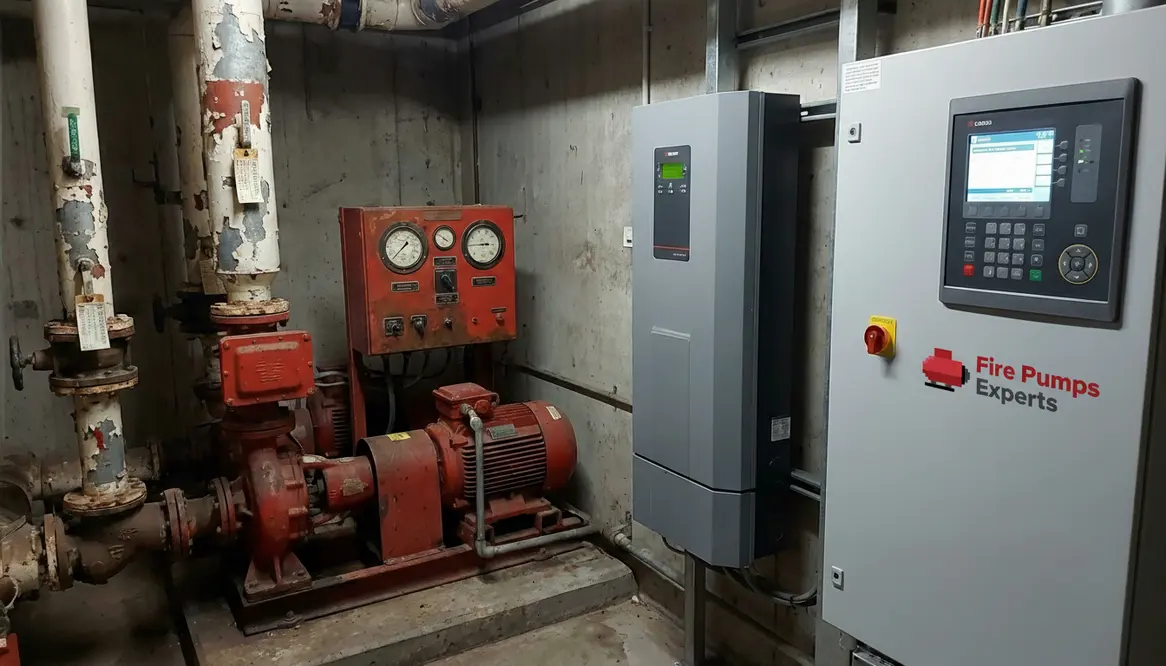
Fire Pump Retrofit Australia for Aging Buildings
I have spent years walking through plant rooms that hum like old jazz records, steady but tired, still playing long after their prime. In many Australian cities, aging infrastructure tells the same story. Pipes that have seen better days. Control panels that look like they remember dial up internet. And right in the middle of it all, the quiet hero, the fire pump. That is where fire pump retrofit Australia steps in, not as a flashy upgrade, but as a necessary evolution to keep commercial and industrial properties safe, compliant, and ready for whatever comes knocking.
Why Aging Infrastructure Demands Smarter Fire Pump Design
Older buildings were not designed for today’s risk profile. Back then, systems were built for simpler layouts, lower occupancy loads, and frankly, fewer regulations. However, cities like Sydney, Melbourne, and Brisbane have grown denser, taller, and more complex.
As a result, I often see fire pumps struggling to meet modern pressure and flow requirements. They work, sure, but only in the same way an old ute still starts after a few kicks. Reliable? Not quite.
Therefore, modern fire pump system design focuses on adaptability. We are not just replacing parts. We are rethinking how water moves through a building, how quickly pressure stabilizes, and how redundancy protects lives and assets. And yes, sometimes it feels like giving an old building a new heartbeat.
How Do I Design a Fire Pump System for Older Buildings?
I start with a simple rule. Respect the past, but do not be trapped by it.
First, I assess existing infrastructure. Pipe sizes, available power supply, water storage capacity. Then, I look at compliance gaps. Australian standards have evolved, and ignoring that is like pretending flip phones are still cutting edge.
Next, I design with efficiency in mind. Variable speed drives often replace outdated constant speed systems. This not only improves performance but also reduces wear and energy use. Additionally, I ensure the system integrates smoothly with modern fire detection and building management systems.
Finally, I plan for access and maintenance. Because a system that cannot be serviced easily is just a future problem waiting patiently.
fire pump retrofit Australia Strategies That Actually Work
Now, this is where things get interesting. Retrofitting is not about ripping everything out. It is about precision.
In many projects, I retain usable infrastructure while upgrading critical components. For example, I might keep existing pipe networks but install a new pump set with advanced controllers. This approach reduces downtime, which matters a lot when dealing with commercial facilities that cannot afford to pause operations.
Moreover, staged upgrades often make financial sense. Instead of one massive overhaul, I break the project into manageable phases. That way, building owners can breathe a little easier, and budgets stay under control.
And yes, sometimes I feel like a surgeon performing a delicate operation, except the patient is made of steel and concrete.
Key Components I Prioritize in Modern Fire Pump Systems
Performance Essentials
- High efficiency pump assemblies
- Variable speed drives for pressure control
- Redundant backup pumps
- Accurate flow and pressure sensors
Operational Intelligence
- Smart control panels with diagnostics
- Integration with building systems
- Remote monitoring capabilities
- Predictive maintenance alerts
Because at the end of the day, a fire pump system should not just respond. It should anticipate.
Balancing Compliance, Cost, and Common Sense
Let me be honest. Compliance can feel like a maze. Standards evolve, local codes shift, and documentation piles up faster than emails on a Monday morning.
However, I approach it with clarity. I align every design decision with Australian fire safety standards while also considering operational realities. For instance, I avoid overengineering. Bigger is not always better. Sometimes, it is just more expensive and harder to maintain.
Additionally, I work closely with facility managers and stakeholders. Their input matters. After all, they are the ones living with the system long after I leave the site.
So yes, there is a balance. And when done right, it feels less like a compromise and more like a well tuned orchestra.
fire pump retrofit Australia for High Demand Facilities
In large commercial and industrial properties, the stakes are higher. Think data centres, manufacturing plants, and high rise complexes. These are not places where failure is an option.
Therefore, I design systems with layered redundancy. Backup power sources, duplicate pumps, and fail safe controls all play a role. Furthermore, I ensure systems can handle peak demand without hesitation.
Because in these environments, seconds matter. And a fire pump system should respond faster than you can say “that escalated quickly.”
FAQ
Conclusion
If your facility relies on aging infrastructure, now is the time to act. I design fire pump systems that respect your building’s past while preparing it for the future. With the right strategy, you gain reliability, compliance, and peace of mind without unnecessary disruption. Reach out today, and let us bring your system up to speed, because when it comes to fire protection, standing still is not an option.