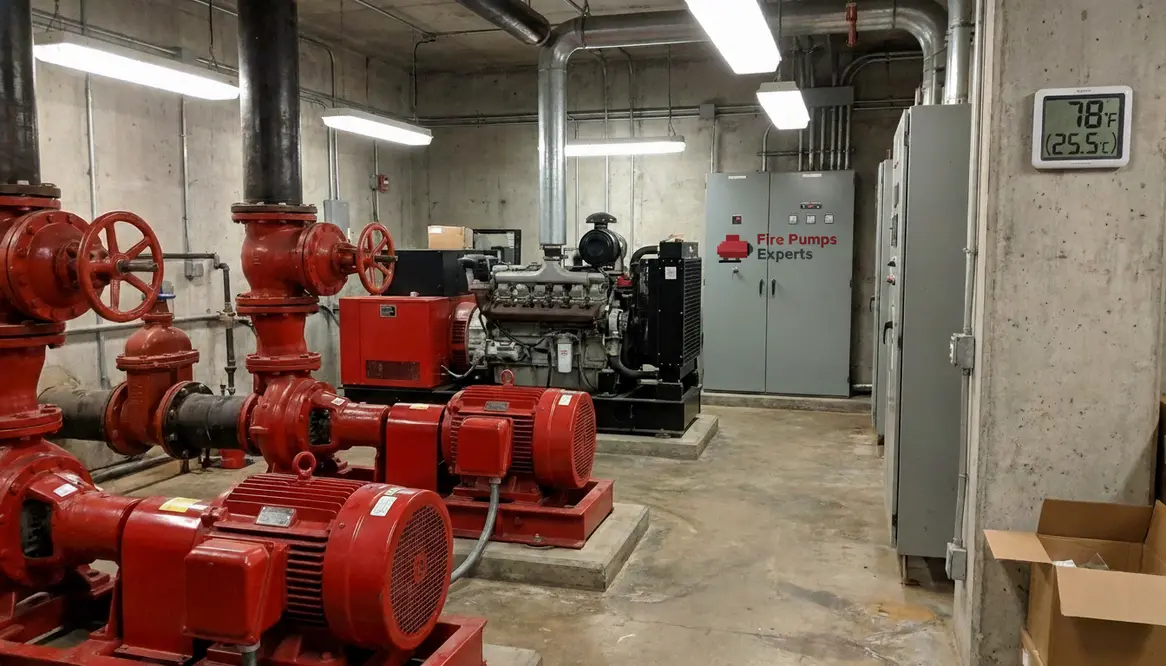
Fire Pump Room Temperature: Protect Pumps, Controllers
I have seen a lot of facility problems start with one simple thing: the room around the fire pump. When fire pump room temperature drifts out of range, pumps lose reliability, controllers act up, and diesel engines can turn moody fast. And yes, that is a polite way to say expensive. In commercial and industrial facilities, plus major property buildings, this is not a side detail. It is part of life safety. If the room gets too hot, too cold, or too damp, the whole system can suffer when people need it most.
That is why I treat temperature control like a quiet guardian. It does not get applause, but it keeps the system ready. In the sections below, I will break down what to watch, what to fix, and how to keep the room steady without turning it into a science fair project.
What the right temperature range means for a fire pump room
I start with the basics. A fire pump room needs a stable environment so the pump, controller, and engine can all do their jobs. Most rooms should stay warm enough to protect against freezing, yet cool enough to prevent stress on electrical gear and engine parts. When the room swings too far in either direction, the system may still look fine on the surface, but hidden wear starts building.
Heat can shorten the life of control components. Cold can thicken fluids and make diesel engines harder to start. Humidity can add another layer of trouble by causing rust, corrosion, and electrical issues. So, when I check a room, I do not just ask, “Is it warm?” I ask whether the space stays steady enough for dependable operation.
How I protect pumps, controllers, and engines
I like to think of the fire pump room as a backstage crew. The pump is the lead actor, the controller runs the cues, and the engine keeps the show moving. If the room is off, the performance gets shaky.
Here is how I keep the system protected:
- I keep the room above freezing so pipes, fittings, and valves stay safe.
- I avoid excess heat because it can strain electrical parts and engine components.
- I watch humidity since damp air can cause rust and poor contacts.
- I make sure vents, heaters, and cooling devices work as intended.
- I inspect the room often so small issues do not turn into full drama.
Controllers need clean power and a stable setting. If the room gets too hot, relays and electronics may age faster. Engines also dislike surprise weather, even indoors. They need proper air, clean fuel conditions, and room temperatures that support fast starting. Nobody wants a fire pump engine behaving like it just woke up from a nap in a snowstorm.
Fire pump room temperature checks I use on site
When I walk a facility, I keep my checks simple but sharp. I look at the room first, then the equipment. That order matters. A strong system can still struggle in a poor space.
Dual column view of what I check and why it matters
Room air, humidity, heating, ventilation, and controller conditions. The usual suspects.
And yes, fire pump room temperature is on the list every time. Consistency wins.
- Room air temperature Why it matters: It tells me if the space can protect the equipment
- Humidity level Why it matters: It helps me spot rust and moisture risk
- Heater operation Why it matters: It helps prevent freezing in cold months
- Ventilation flow Why it matters: It removes trapped heat and stale air
- Controller cabinet condition Why it matters: It shows if electrical parts face heat or moisture stress
I also listen for signs that something is off. A fan running too long, a heater cycling too often, or condensation on surfaces all point to trouble. In the real world, equipment rarely fails with a neat warning label. It usually drops hints, then expects us to notice. Very considerate, right?
Why commercial and industrial buildings need tighter control
Commercial and industrial facilities face bigger loads, longer operating hours, and more complex systems. Because of that, the fire pump room temperature must stay under tighter control. A warehouse, hospital, high rise, data center, or manufacturing site cannot afford weak performance from life safety equipment. The stakes are too high.
In these buildings, I think in terms of risk. Heat from nearby mechanical spaces can creep in. Cold air can enter through poor insulation. Moisture can come from leaks, outside air, or bad drainage. So I look at the room as part of the building system, not as an isolated box with a pump inside.
For a deeper look at system design and service support, I recommend reviewing los angeles fire pump service for commercial facilities. It gives useful context for owners and managers who need dependable protection in major properties.
How I keep the room stable all year
I do not chase perfection. I chase consistency. That is the real goal. A stable room protects the gear and reduces surprise maintenance calls, which is always a nice bonus because no one misses those.
Here is my year round approach:
- I test heaters before cold weather arrives.
- I inspect insulation and seal gaps that let in outside air.
- I confirm ventilation systems move heat away from the room.
- I check for water leaks near walls, drains, and ceilings.
- I keep the room clear so air can move around the equipment.
- I log readings so I can spot small changes before they grow.
Good records matter. If a room keeps getting warmer each summer or damper each winter, the trend tells me where the real problem lives. That is far better than waiting for a failure and then acting surprised, like a sitcom character who keeps opening the same haunted door.
FAQ: fire pump room temperature basics
Conclusion
I treat fire pump room temperature as a core part of system reliability, not an afterthought. If you manage a commercial, industrial, or major property building, now is the time to review your room conditions, check the equipment, and fix weak spots before they become costly problems. Keep the space stable, keep the system ready, and keep life safety equipment working when it matters most. If you need help, take the next step and get your facility checked.