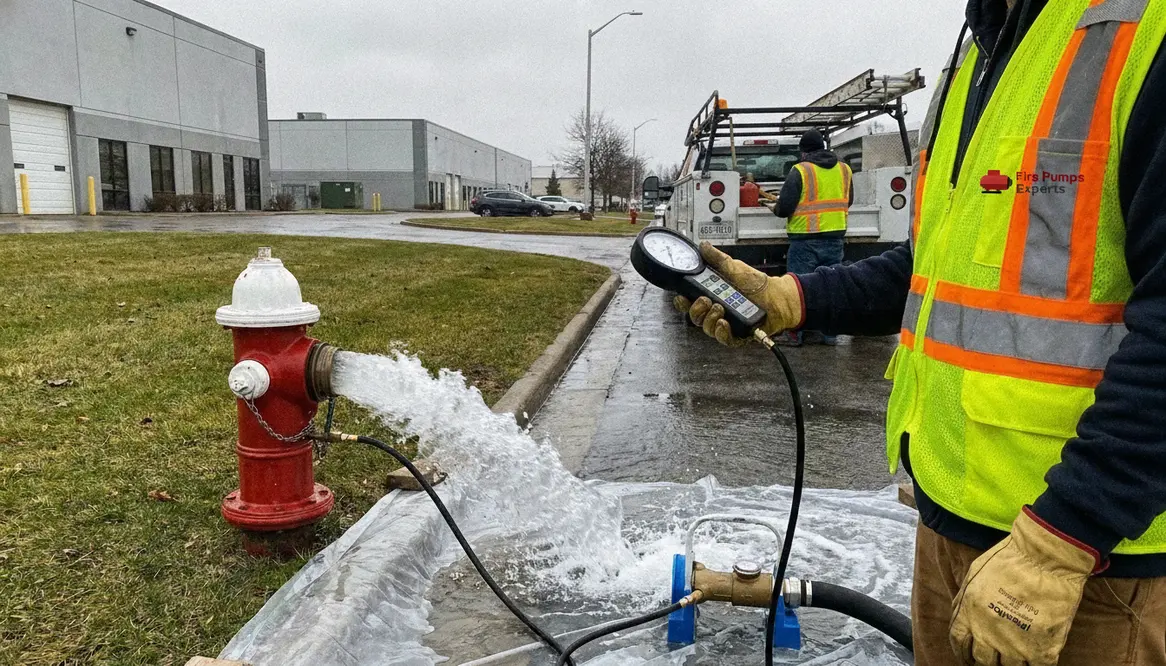
Fire Sprinkler Flow Test Results and Implications
Fire Sprinkler Flow Testing: What the Results Tell You
When I look at a fire sprinkler flow test, I do not see a boring log sheet. I see a system telling the truth. Quietly. Clearly. Sometimes, a little too clearly. The test shows whether water can reach the sprinklers fast enough, at the right pressure, and in the right amount to protect a commercial or industrial building when seconds matter. That matters because a system can look fine on paper and still fall apart under real demand. So, in this article, I will break down what the results actually mean and why they matter for major properties, not just in theory, but in the real world where alarms, pumps, and pipes do not care about wishful thinking.
What a Fire Sprinkler Flow Test Measures
A fire sprinkler flow test checks how the water supply performs under demand. In simple terms, I want to know how much water flows, what pressure holds, and whether the system can support the hazard level in the building. The results tell me if the supply matches the design needs or if it needs help from a fire pump, pipe upgrade, or valve correction.
In commercial and industrial buildings, this matters even more because water demand can be high and the risks can climb fast. A warehouse, plant, or large office tower does not get a second act if the system underperforms. So, when I read the numbers, I look for flow rate, residual pressure, static pressure, and loss in pressure during the test. Each one gives me a piece of the story.
How I Read the Numbers in the Report
The report may look dry at first, but it speaks volumes. If the static pressure starts strong and drops too far during flow, I know the supply may struggle under real fire conditions. If the flow rate stays low, I know the system may not deliver enough water to control a fire. And if the residual pressure falls below the needed level, that is the system waving a red flag, politely but firmly.
Here is the simple truth: numbers do not lie, but they do need context. For example, a good reading in one building may be poor in another, depending on the hazard class, pipe layout, and water source. That is why I never judge a test by one number alone. I look at the full picture, like a detective with better shoes.
What the Results Mean for Your Building
The results tell me whether the sprinkler system can do its job during a fire event. If the test passes, I gain confidence that the water supply supports the current demand. If it fails, I know the building may face delayed sprinkler response, poor coverage at peak demand, or a need for design changes.
For major properties, that can affect more than safety. It can affect compliance, insurance, operations, and risk planning. A weak result may lead to fire pump issues, supply limits, or aging equipment problems. By the way, a system that only works on a good day is not much of a system. It is more of a rumor.
What I Check Beyond the Flow Test
The test itself matters, but I always look beyond it. I check whether the pump supports the system properly, whether the water source remains stable, and whether valves, gauges, and backflow devices work as they should. I also review the building’s current use, because a property can change over time while the sprinkler design stays frozen in the past like a TV sitcom set.
Here is a quick look at the main items I review:
Water supply strength
Residual pressure at demand
Flow rate compared to design
Pump support and performance
Valve position and condition
Changes in building risk or use
That review helps me understand whether the test result reflects a small issue or a larger system concern. In many cases, the answer is not “replace everything.” More often, it is “fix the weak link before it becomes a headline.”
Why Pump Performance Changes the Outcome
A sprinkler system is only as strong as its water supply. If the pressure drops too much, a fire pump may need to step in and keep the system alive. That is why pump performance sits right at the center of the conversation. If you want a deeper look at the equipment side, I recommend this internal resource on AS 2118 fire pump requirements for sprinkler systems. It gives useful context for how pumps support sprinkler protection in larger facilities.
And for local service needs, I also suggest reviewing los angeles fire pump solutions for commercial and industrial facilities. That matters because major properties need systems that match real demand, not hopeful thinking and a prayer.
What I Recommend After the Test
After I review the results, I use them to guide the next step. If the system passes, I still document the readings and keep them for future comparison. If the system falls short, I look for the cause fast. Sometimes the fix is simple. Sometimes it means pump service, pipe correction, or a full design review. Either way, I want the building to stay ready.
Over time, trend tracking becomes just as important as a single test. A slow drop in pressure across several tests can point to wear, supply change, or hidden damage. So, I treat each result like a clue, and the pattern tells me what the building needs next. When you run a fire sprinkler flow test and keep comparing results, the building starts to tell you what it will need next before it becomes expensive.
FAQ
Quick answers to the questions that show up right after a fire sprinkler flow test report hits the desk.
Conclusion
If you manage a commercial or industrial property, treat your sprinkler results as more than paperwork. They reveal how well your fire protection really performs when pressure rises and time runs short. So, if your latest fire sprinkler flow test raised questions, act on them now. Review the numbers, check the pump support, and correct weak points before they turn costly. In fire protection, confidence comes from proof, and the test gives it to you.