Fire Sprinkler System Commissioning: What Happens Before Handover?
When I talk about sprinkler system commissioning, I mean the final stretch before a fire protection system is handed over and trusted to do its job. This is not a box ticking exercise. It is the moment when every pipe, valve, pump, alarm, and test result gets put under the spotlight. And yes, the spotlight is harsh. As it should be. For commercial and industrial facilities, major property buildings, and other large sites, this stage helps confirm the system works as designed, so the building team can move forward with confidence instead of crossing fingers like they are waiting for a season finale twist.
In this article, I will walk through what happens before handover, why each step matters, and how the process protects both people and property. I will also keep it practical, because fire systems may be serious business, but nobody asked for a snooze fest.
Before any live testing begins, I start with the basics. I review drawings, shop details, certificates, and product data to confirm the installed system matches the approved design. Then I inspect the site for clean workmanship, correct spacing, proper support, and clear access to key parts. This early check matters because small errors can grow into bigger headaches later. A missing tag today can become a very annoying mystery tomorrow.
I also confirm the system suits the building type and risk level. For large commercial and industrial properties, the system must align with the fire load, use of space, and operational needs. If the building stores goods, runs equipment, or has high ceilings, those details affect the final checks. In other words, the system must fit the building, not just sit in it looking important.
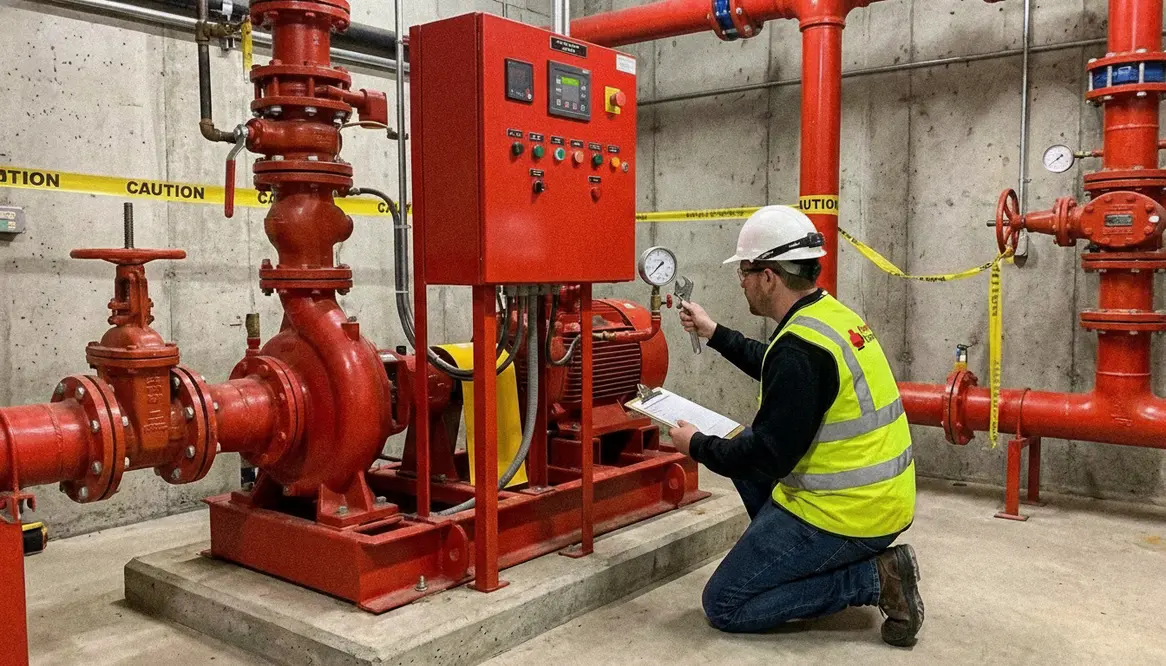
Next, I move to the water source and pump set. This is where the system gets its muscle. I verify the tank, mains supply, valves, pump controls, and pressure levels. If the site uses a pump, I review the setup against the relevant standard and project specs. I also check the pump start sequence, jockey pump action, and alarm signals to make sure they respond the way they should.
For anyone wanting a deeper look at pump expectations, I recommend the AS 2118 fire pump requirements for sprinkler systems guide. It helps explain the rules that support reliable fire pump performance. And for a local service example, you can also review los angeles fire pump solutions for commercial sites if you need to compare system support for larger properties.
Here is the point: a sprinkler system can only perform as well as its water supply. No water, no heroics. The system needs pressure, flow, and stable control under real conditions, not just on paper and in good mood lighting.
After the supply checks, I test how the system talks to the rest of the building. That means alarm devices, tamper switches, flow switches, panel signals, and any monitoring connection. I want to see alerts reach the panel fast and clearly. Then I confirm the system triggers the right response when water moves through the pipework.
I also verify each control valve sits in the correct position, locks properly, and shows the right status. If the building has linked systems such as smoke control, lifts, or emergency shutdowns, I check the interface points as well. This matters because one system should not act like it has never met the others. They need to work like a team, not a group chat full of silence.
Commissioning is not only about switching things on. It is about proving the system can do the job under real conditions. So, I record test results, compare them with design targets, and make sure any fault gets fixed before handover. If a pressure reading falls short or a valve does not sit right, I flag it and push for correction.
This stage also helps the owner and facility team understand what they are receiving. I explain the system layout, key shut off points, alarm behaviour, and routine maintenance needs. That knowledge matters because a well built system still needs care. Even Batman needs his tools maintained. Probably more than most of us.
Before handover, I gather the final package. This usually includes test records, as built drawings, product manuals, service notes, compliance paperwork, and any sign off certificates. I check that the documents match the installed system and that nothing important went missing in the shuffle.
Drawings
Pump and water supply tests
Alarm and flow testing
Valve status checks
Documents
Training
Defect close out
Owner sign off
Why it matters
Sprinkler system commissioning turns unknowns into measured results, so handover doesn’t feel like guessing under pressure.
I also run a short training session for the site team. I show them how to identify normal and fault conditions, where the main valves sit, and who to call if the system reports a problem. That final handover step builds confidence. And confidence, in a building this size, is not fluff. It is part of risk control.
FAQ
Quick answers for the questions that pop up right before sprinkler system commissioning is signed off and handed over.
If you manage a commercial or industrial building, do not rush this final stage. I treat sprinkler system commissioning as the last strong gate before handover, because it protects the people inside the building and the assets under its roof. If you want a system that performs when it counts, make sure the checks are thorough, the records are clean, and the team knows the system well. That is how I help turn a finished installation into a reliable safeguard.