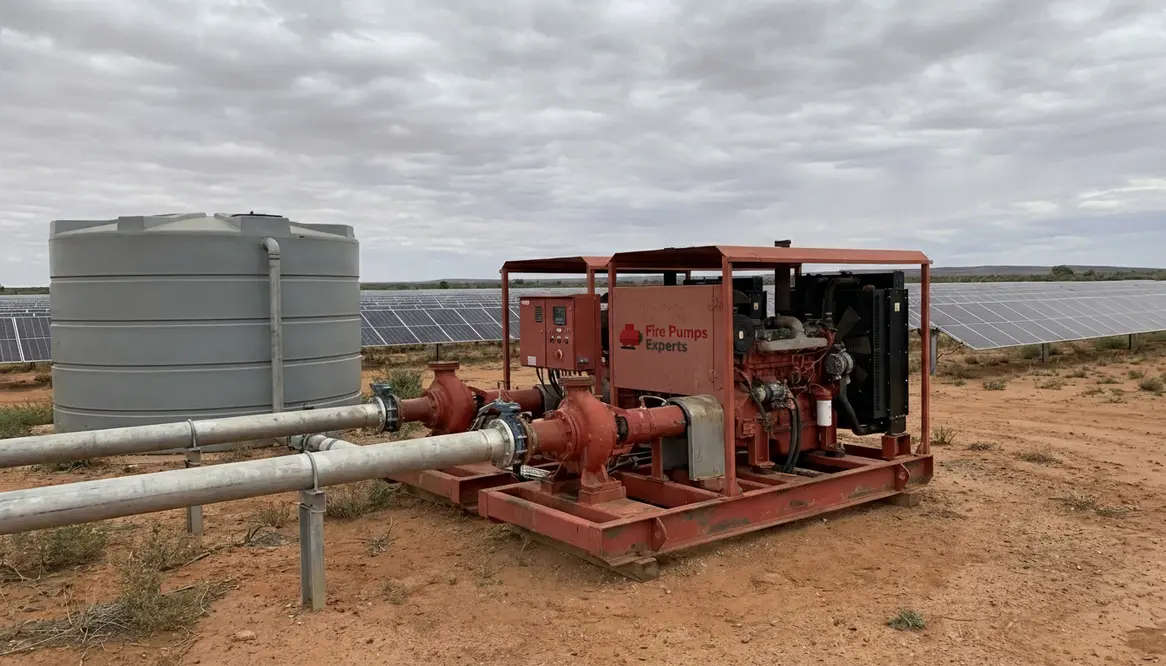
Fire Pump Solar Facility Australia Design Guide
I have spent years around industrial systems that most people never notice until something goes wrong. Fire protection is one of those quiet guardians. When we talk about fire pump solar facility Australia projects, we are stepping into a space where engineering meets harsh climates, remote locations, and very expensive assets. Solar farms do not forgive mistakes. One spark, one delayed response, and suddenly that clean energy dream looks more like a scene from an action movie. Not the good kind.
So today, I will walk you through how I approach fire pump design for renewable energy facilities across Australia, with a steady hand, a bit of humor, and a firm grip on reality.
Solar farms might look peaceful, but from a fire engineer’s perspective they are a maze of cables, inverters, transformers, and in some cases, battery systems quietly waiting to misbehave. Pair that with isolation, long response times, and high asset values, and suddenly fire protection is not just a line item, it is mission critical.
That is why a dedicated fire pump solar facility Australia strategy is less about ticking boxes and more about building a system that will perform on the worst day the site will ever see.
How I Approach Fire Pump Design for Renewable Energy Sites
First, I look at the risk profile. Solar and wind facilities may seem low risk, however, they are packed with electrical infrastructure, transformers, and battery systems that can escalate quickly. Therefore, I design systems that respond fast and sustain pressure over long durations.
Next, I account for location. Many renewable sites sit far from municipal water supplies. As a result, I often rely on static water storage tanks, dams, or hybrid solutions. This means the fire pump must be reliable without external support. No second chances out there.
Then comes compliance. Australian standards such as AS 2419 guide the framework. However, I do not treat compliance as the finish line. It is the starting point. Because in my experience, bare minimum protection is like bringing a garden hose to a bushfire. Technically water, practically useless.
Reading the Site Before Drawing the First Line
Before sizing a single pipe, I like to walk the site layout, understand high-value zones, review access routes, and map out how a fire would realistically spread. That context shapes everything that follows, from hydrant locations to how aggressive the fire pump solar facility Australia configuration needs to be.
What Makes Fire Pumps Different in Solar Farms Across Australia
Solar facilities introduce unique challenges. For one, the layout spreads across large land areas. Consequently, maintaining consistent pressure over long pipe runs becomes critical. I carefully calculate friction loss and ensure the pump curve aligns with real world conditions, not just textbook assumptions.
Additionally, power supply becomes a puzzle. Ironically, a solar facility cannot always rely on its own energy during emergencies. Therefore, I often specify diesel driven pumps or backup generators. It may feel old school, but when everything else fails, diesel still shows up like a dependable action hero.
Environmental conditions also matter. High temperatures, dust, and corrosion can degrade components quickly. Because of this, I select materials and enclosures that can withstand Australia’s climate without constant maintenance.
From UV-resistant pipe coatings to weatherproof control panels and well-ventilated pump houses, every detail adds up to a fire pump solar facility Australia setup that will still be working properly years after commissioning.
Hydraulics Across Wide, Open Solar Fields
String inverters, trackers, and access roads can stretch for kilometres. That distance punishes poorly designed pipework. I pay close attention to pipe sizing, elevation changes, and realistic flow demands so that the most remote hydrant behaves just as confidently as the one next to the pump house.
Key Design Elements I Never Compromise On
I have learned that certain elements separate a robust system from a liability. So I focus on the following:
Water Supply Reliability
I ensure sufficient storage capacity for worst case scenarios. Moreover, I design redundancy into supply lines whenever possible.
Pump Selection and Performance
I match pump curves precisely to system demand. Oversizing wastes energy, while undersizing risks failure. Neither is acceptable.
Control Systems
I specify intelligent controllers that provide real time monitoring. Because if something goes wrong, I want operators alerted immediately, not after damage spreads.
System Redundancy
I include backup pumps or jockey systems where required. Think of it as having a spare parachute. You hope you never need it, but you will be glad it is there.
Instrumentation, Testing, and Documentation
I put a lot of emphasis on test points, pressure gauges, and clear commissioning procedures. If you cannot reliably test a fire pump system, you cannot trust it. Proper documentation, as-builts, and training sessions make sure the site team knows exactly what they are looking at when alarms and indicators start lighting up.
Designing for Remote and Harsh Australian Conditions
Now, this is where things get interesting. Remote renewable facilities do not offer the luxury of quick maintenance. Therefore, I design systems that can operate independently for extended periods.
I prioritize durability. For instance, I use corrosion resistant materials and sealed components to combat dust and heat. Additionally, I simplify system layouts to reduce potential failure points.
At the same time, I integrate remote monitoring technologies. This allows operators to track performance from centralized control rooms. It is a bit like having a security camera for your fire system, minus the dramatic music.
And yes, I always plan for the unexpected. Because if Hollywood has taught us anything, it is that something always goes wrong at the worst possible moment.
Keeping People Off the Tools
For remote sites, the best maintenance strategy is one that does not need constant hands-on attention. That is why I avoid overly fussy components, specify clear maintenance intervals, and make sure critical spares are stored on site rather than in a warehouse several postcodes away.
Balancing Cost, Compliance, and Performance
Every project comes with budget pressures. However, I never let cost dictate safety. Instead, I balance investment with long term reliability.
For example, while a cheaper pump may meet initial requirements, it often leads to higher maintenance costs and downtime. In contrast, a well designed system reduces lifecycle expenses and protects valuable assets.
Moreover, I work closely with stakeholders to align expectations. Clear communication ensures that everyone understands the value of proper fire protection. Because cutting corners in this field is not clever. It is expensive.
Quick Snapshot: Priorities vs Outcomes
|
Priority Reliability over short term savings Compliance as a baseline Durability in harsh climates |
Outcome Reduced downtime and risk Safer operations Lower maintenance demands |
Why Fire Pump Solar Facility Australia Projects Demand Precision
In my experience, precision is everything. A fire pump solar facility Australia design must account for variables that shift daily, from temperature changes to fluctuating power availability.
Therefore, I rely on detailed hydraulic calculations, site specific data, and rigorous testing. I also collaborate with engineers, contractors, and facility managers to ensure seamless integration.
Because at the end of the day, a fire pump system is not just equipment. It is a safeguard for infrastructure worth millions. And frankly, that is not something I leave to guesswork.
Choosing the Right Partners
Getting a fire pump solar facility Australia project right is a team sport. I like working with designers, operators, and insurers who are willing to challenge assumptions, share real-world performance data, and build systems that are honest about the risks instead of pretending they do not exist.
FAQ
Final Thoughts and Next Steps
If you are planning or upgrading a renewable energy site, I would not treat fire protection as an afterthought. A well designed system protects your assets, your operations, and your peace of mind. Work with specialists who understand large scale commercial facilities and the realities of Australian conditions. When you are ready, take that step and build a system that stands strong when it matters most.
If you want to explore technical resources, case studies, and guidelines on pumps and fire systems, you can start with industry references such as https://firepumps.org and then adapt the principles to the exact risk profile of your own facility.