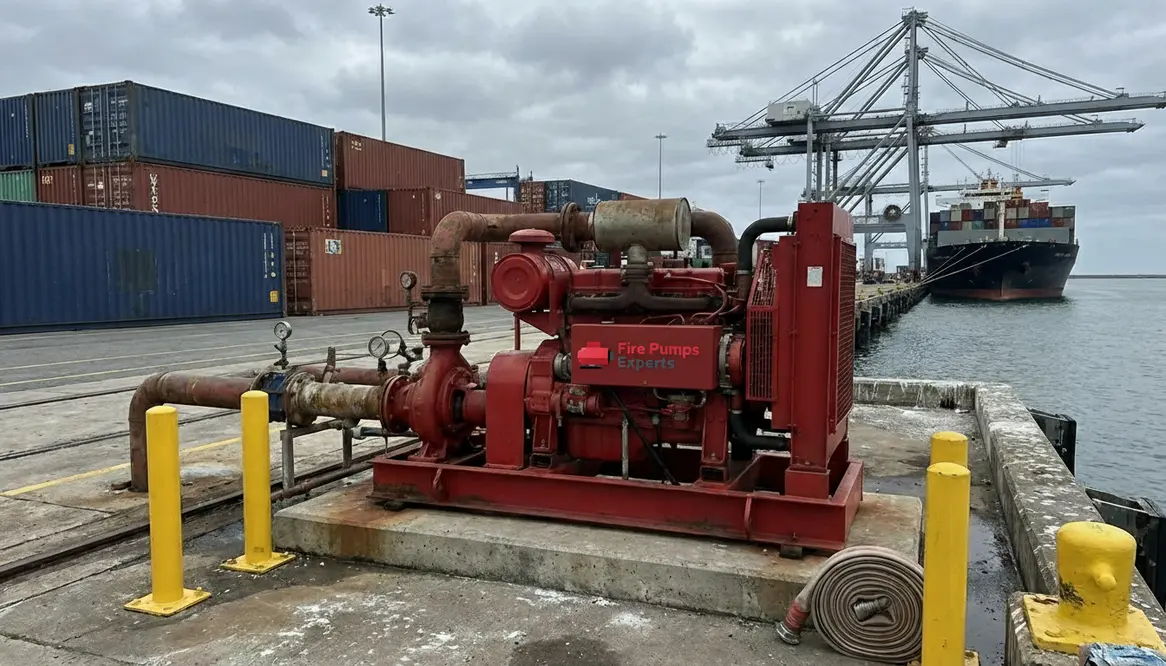
Port Fire Pump Australia Choosing the Right System
I have spent enough time around ports to know one thing for certain: when things go wrong, they go wrong fast. Fuel, cargo, heavy equipment, and salt air all sit in close company. That is why selecting the right port fire pump Australia solution is not just a box to tick. It is a decision that protects lives, assets, and entire supply chains. And yes, while it may not sound as thrilling as an action movie, trust me, when a fire system fails, it becomes one very quickly.
So, let me walk you through this with a steady hand and a clear voice. Because choosing the right system is less about guesswork and more about knowing exactly what your facility demands.
Understanding the Demands of Australian Port Environments
First, let us set the scene. Australian ports face a unique mix of conditions. Saltwater corrosion, high winds, extreme heat, and large scale industrial operations all play a role. Therefore, a standard fire pump setup simply will not cut it.
In my experience, durability always comes first. Equipment must withstand corrosion without losing performance. In addition, systems must operate reliably even during power instability, which is not uncommon in remote port locations.
Moreover, compliance with Australian standards is non negotiable. Regulations like AS 2941 shape how fire pump systems must perform. So, while it may be tempting to cut corners, that shortcut often leads straight to costly downtime or worse.
How Do I Choose the Right Fire Pump for a Port Facility?
Now we get to the question I hear all the time. And thankfully, the answer is not as mysterious as it sounds.
Flow rate and pressure
I start by looking at flow rate and pressure requirements. Ports are vast, and fire risks can spread quickly. Therefore, the system must deliver water at the right pressure across long distances.
Pump type and power reliability
Next, I consider pump type. Electric pumps work well when power is stable. However, diesel driven pumps offer reliability when the grid decides to take a nap. And let us be honest, infrastructure does that more often than we would like.
Redundancy is non negotiable
Then comes redundancy. A single pump is a gamble. I always recommend a backup system. Because in fire protection, hope is not a strategy.
Maintenance access and practicality
Finally, I factor in maintenance access. If a system is difficult to service, it will not be serviced properly. And that, my friend, is how small issues become headline news.
Key Components That Make or Break Performance
Every strong system relies on its parts working in harmony. Think of it like a band. If the drummer falls apart, the whole show suffers. And nobody wants a fire pump system that sounds like a garage rehearsal.
Essential Components
- Main fire pump unit built for high demand
- Jockey pump to maintain system pressure
- Reliable power source or diesel engine
- Corrosion resistant piping and fittings
Performance Enhancers
- Smart controllers for monitoring
- Automatic start systems
- Backup fuel systems for diesel units
- Remote alerts for fault detection
When these components align, the system responds instantly. And in fire protection, seconds matter more than speeches.
Designing for Scale and Future Expansion
Ports do not stay the same. They grow, evolve, and take on new operational demands. Therefore, I always design systems with expansion in mind.
For instance, oversizing certain components can save significant cost later. Additionally, leaving room for additional pumps or upgraded controllers ensures the system adapts without a full overhaul.
Furthermore, integrating modern monitoring systems allows facility managers to track performance in real time. It is a bit like having a security guard who never sleeps. And unlike most of us, it does not need coffee.
So while it may seem like an upfront investment, future proofing pays off. Especially in large scale commercial and industrial environments where downtime is measured in serious dollars.
Compliance, Testing, and Ongoing Maintenance
Now here is where many systems fall short. Installation is only the beginning. Without proper testing and maintenance, even the best setup becomes unreliable.
I always emphasize routine inspections. Weekly churn tests, monthly performance checks, and annual flow testing all play a role. Moreover, staying aligned with Australian fire safety standards ensures both compliance and readiness.
Additionally, documentation matters. Clear records help identify trends before they become problems. And let us face it, paperwork may not be glamorous, but it is far better than explaining a system failure during an emergency.
When managed correctly, a port fire pump Australia system becomes a quiet guardian. It does its job without applause, but when needed, it performs without hesitation.
FAQ: Fire Pump Systems for Australian Ports
Ports operate under pressure, and a port fire pump Australia setup has to keep pace. These common questions often come up when facilities start comparing options and planning upgrades.
Bringing It All Together
Choosing the right fire pump system for a port is not about ticking boxes. It is about building a reliable defense that stands ready at all times. I have seen what happens when systems are chosen carefully, and I have seen the alternative. One leads to confidence, the other to chaos.
If you are planning or upgrading your facility, now is the time to act. Work with specialists who understand industrial scale demands and Australian regulations. Because when the moment comes, your system should not hesitate. And neither should you.
The right port fire pump Australia design is not just a technical choice; it is a commitment to keeping ships moving, workers safe, and cargo flowing. Treat it as the quiet backbone of your risk management strategy, and it will repay that respect when it matters most.