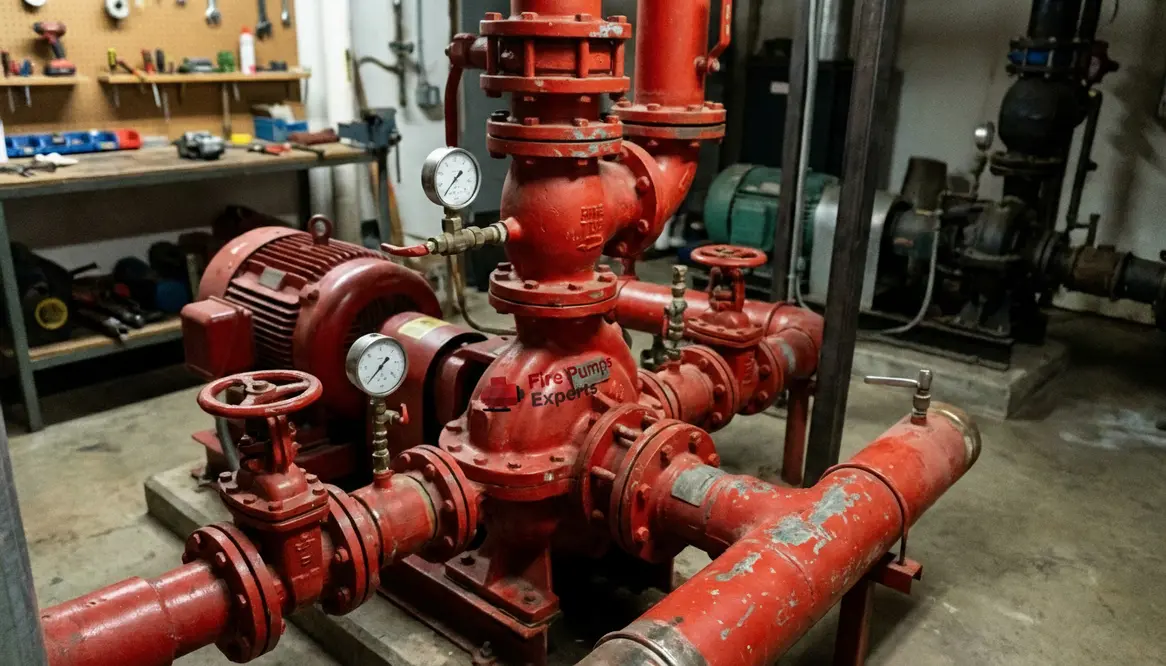
Fire Pump Solutions for Industrial Service Centers
I have spent enough time around industrial service centers to know one thing for certain. When things go wrong, they do not whisper. They roar. And in those moments, Fire pump solutions for support and repair operations become less of a line item and more of a lifeline. Within the first few minutes of an incident, the difference between control and chaos often comes down to whether your fire pump system was designed, installed, and maintained with precision. So today, I am going to walk you through what really matters, without fluff, without jargon, and with just enough humor to keep you awake.
What fire pump requirements actually matter in industrial service centers?
Let me answer this the way I would if we were standing on a factory floor.
First, capacity is king. Industrial service centers deal with large footprints, heavy machinery, and high fuel loads. Therefore, your fire pump must deliver sufficient flow and pressure to reach the most remote hazard point. If it cannot, it is about as useful as a flashlight with no batteries.
Next, reliability is not optional. You need systems that start instantly and run continuously. Electric pumps are common, but diesel driven pumps often step in as dependable backups. And yes, redundancy is not overkill. It is survival.
Then there is compliance. Codes like NFPA 20 exist for a reason. They define how pumps should be installed, tested, and maintained. Ignore them, and you are not bending rules. You are inviting risk.
Finally, accessibility matters. If technicians cannot reach components quickly, response time suffers. And in this world, seconds behave like they are worth minutes.
Designing systems that actually work under pressure
I have seen beautifully designed systems on paper fail in real life. Why? Because real life does not care about diagrams.
First, water supply must be dependable. Whether you rely on municipal lines, tanks, or reservoirs, consistency is everything. Without it, even the best pump becomes decorative.
Additionally, system layout must match operational hazards. High rack storage, flammable liquids, and large open spaces all demand different approaches. One size fits none.
Moreover, pressure balancing is critical. Too much pressure can damage pipes. Too little, and water never reaches the fire. It is a delicate dance, and yes, it requires experience.
And let me say this clearly. Testing during commissioning is not a formality. It is the moment of truth. If your system cannot perform then, it certainly will not perform when alarms are screaming.
Fire pump solutions for support and repair operations that keep systems alive
Even the best systems age. That is not pessimism. That is physics.
Routine inspection is where longevity begins. Weekly churn tests, monthly checks, and annual performance testing are not busywork. They are your early warning system.
Furthermore, wear and tear show up in subtle ways. A slight vibration. A delayed start. A pressure drop that seems insignificant until it is not. Skilled technicians know how to read these signs before they become headlines.
Repair operations must be swift and precise. In industrial environments, downtime is expensive. But compromised fire protection is even more costly. So, balancing speed with quality is essential.
And yes, upgrades matter too. As facilities expand or processes evolve, your fire pump system must keep pace. Otherwise, you are protecting yesterday’s risks, not today’s realities.
Where failures usually happen and how I avoid them
Let me save you some trouble. Most failures are not dramatic. They are predictable.
They happen when maintenance is skipped because everything “seems fine.” They happen when systems are undersized to cut costs. And they happen when no one takes ownership of the system.
So how do I avoid them?
Common Pitfalls
- Ignoring minor performance issues
- Delayed testing schedules
- Improper installation practices
- Lack of trained personnel
What I Do Instead
- Act on small warning signs early
- Stick to strict testing routines
- Use experienced installers only
- Train teams to respond fast
Because in this business, prevention is not glamorous. But it works.
Integrating fire pumps with broader safety systems
A fire pump does not operate in isolation. It is part of a larger ecosystem.
For example, alarm systems must trigger pump activation without delay. Sprinkler systems must distribute water effectively once pressure is delivered. And backup power systems must ensure continuity when the grid fails.
Additionally, communication between systems is vital. If one component lags, the entire response slows down. Think of it like a band. If the drummer loses tempo, the whole song falls apart. And nobody wants their emergency response to sound like a bad rehearsal.
Integration also allows for smarter monitoring. Modern systems provide real time data, helping teams spot issues before they escalate. That is not just convenience. That is control.
Fire pump solutions for support and repair operations in high demand environments
Industrial service centers are not gentle places. Equipment runs hard. Conditions fluctuate. And demands never seem to take a day off.
Therefore, fire pump systems must be built and maintained for endurance. This means selecting durable components, ensuring proper alignment, and protecting systems from environmental stress.
Moreover, response readiness must be constant. A pump that works nine times out of ten is not reliable. It is a liability.
And here is where experienced service providers make the difference. They do not just fix problems. They anticipate them. They optimize performance. And they ensure that when the moment comes, the system responds without hesitation.
Because in high demand environments, there are no second chances. Only outcomes.
FAQ
Conclusion
If you are responsible for an industrial service center, you already know what is at stake. The right system, supported by expert care, turns uncertainty into control. Now is the time to assess your setup, strengthen weak points, and invest in reliability. Connect with professionals who understand these environments and can deliver results that hold under pressure. Because when the moment arrives, preparation is not optional. It is everything.