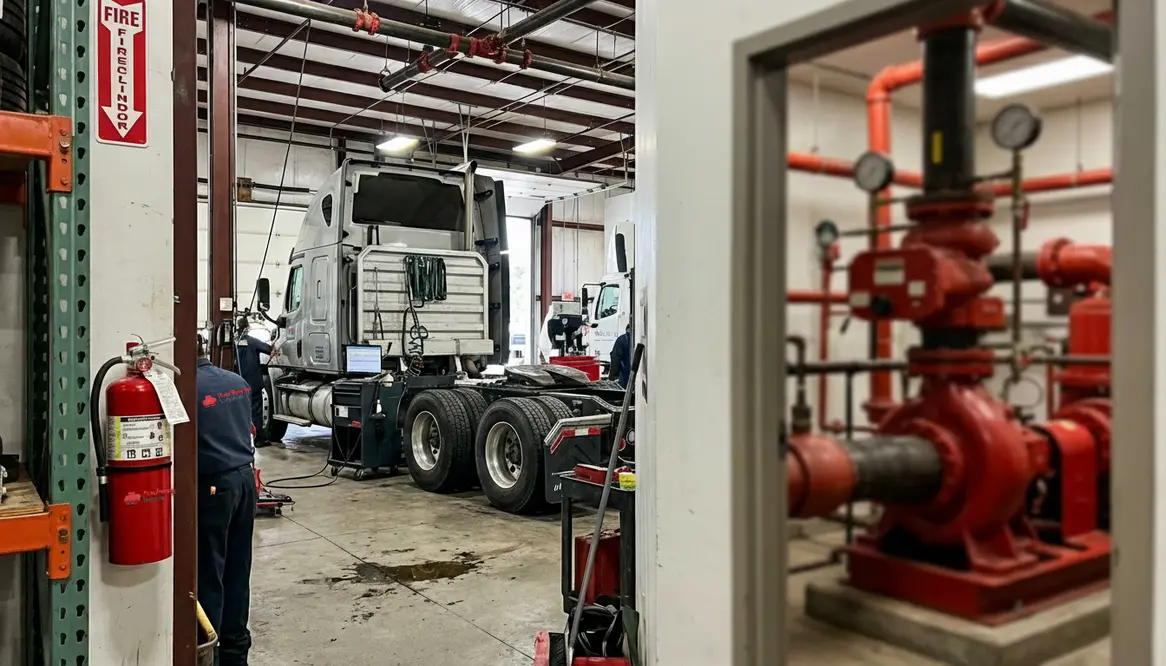
Fire Pump Systems for Commercial Service Garage Safety
I have spent enough time around service garages to know one thing for sure. Where there is fuel, heat, and heavy machinery, there is risk quietly waiting its turn. That is exactly why Fire safety for commercial vehicle service operations is not just a checkbox. It is the backbone of keeping a facility standing and a business running. And right at the center of that protection sits the fire pump system, steady, reliable, and ready to perform like the unsung hero in a movie you did not realize you needed.
What makes fire pump systems essential in service garages?
I will say it plainly. Without a fire pump system, your sprinkler system is just a polite suggestion. Service garages demand more. They deal with oil, fuel vapors, electrical systems, and confined spaces. So, when a fire starts, it does not ask permission. It escalates.
That is where fire pumps step in. They boost water pressure when municipal supply falls short. As a result, sprinklers and standpipes deliver the force needed to control or suppress a fire quickly.
Think of it this way. If your sprinkler system is the shield, the fire pump is the arm holding it steady. Without strength, the shield drops. And in this line of work, hesitation is not an option.
How do fire pumps actually perform under pressure?
It is not magic, though it can feel like it when everything works as intended. Fire pumps activate when system pressure drops. This drop usually happens when sprinklers open during a fire event.
Then, the pump kicks in automatically. It draws water from a reliable source and increases pressure across the system. Consequently, water reaches every critical point, even in large scale commercial bays where distance and elevation would otherwise weaken flow.
I have seen facilities rely on gravity alone. It works until it does not. A proper fire pump system removes that uncertainty and replaces it with consistency. And consistency, in fire protection, is peace of mind.
Fire safety for commercial vehicle service operations in high risk zones
Not all areas inside a service garage carry the same level of risk. Some spots practically raise their hand and say, “Hey, watch me closely.”
So I always focus on zones like fuel storage, maintenance pits, and electrical rooms. These areas require stronger coverage and dependable pressure. Fire pumps ensure that even the most vulnerable sections receive adequate water flow.
Additionally, modern systems can be tailored. You can prioritize certain zones, adjust pressure demands, and integrate with alarms and monitoring systems. It is a bit like giving your building a nervous system that reacts instantly when something goes wrong.
High Risk Areas
- Fuel storage sections
- Maintenance pits
- Battery charging zones
- Paint and chemical storage rooms
Fire Pump Advantages
- Maintains strong water pressure
- Supports large scale sprinkler systems
- Responds automatically
- Enhances system reliability
Choosing the right fire pump system for your facility
Here is where things get serious. Not all fire pumps are created equal, and choosing the wrong one is like bringing a garden hose to a warehouse fire. It will not end well.
I always consider three key factors. First, the size of the facility. Larger operations require higher flow rates. Second, the hazard level. More flammable materials mean greater demand. Third, the water supply. Whether it is a tank, municipal line, or reservoir, the source determines the pump type.
You will typically choose between electric, diesel, or jockey pumps. Each serves a purpose. Electric pumps are efficient and reliable. Diesel pumps offer independence from power outages. Jockey pumps maintain pressure during standby conditions.
When designed correctly, the system works like a well rehearsed orchestra. Every component knows its role and performs without hesitation.
Maintenance habits that keep systems ready
Now, here is the part many people would rather ignore. Maintenance. It is not glamorous. It will not win awards. But it will save your facility.
I always recommend routine testing. Weekly churn tests, monthly inspections, and annual performance evaluations. These are not optional. They are essential.
Because when a fire pump fails, it does not send a warning email first. It simply does not work. And that is a moment no facility manager wants to experience.
Moreover, keeping records and monitoring system performance ensures compliance with codes and standards. It also gives you insight into wear and tear before it becomes a problem.
Fire safety for commercial vehicle service operations and long term risk reduction
Building layered protection that holds up under stress
In my experience, fire protection is not just about responding to emergencies. It is about reducing the chance of those emergencies in the first place. A well designed fire pump system supports that goal by strengthening the entire suppression strategy.
It works alongside alarms, sprinklers, and operational protocols to create layers of protection. And while no system can eliminate risk entirely, it can dramatically reduce the impact.
Besides, there is something reassuring about knowing your facility is prepared. It is like having a seasoned security guard who never sleeps. Quiet, dependable, and always ready.
FAQ: Fire Pump Systems in Service Garages
Conclusion
If you run or manage a commercial service garage, the choice is simple. Invest in a fire pump system that performs when it matters most. Protect your people, your property, and your operations with confidence. The right system does more than meet code. It safeguards your future. Reach out to experts who understand large scale facilities and take the next step toward stronger, smarter fire protection today, and treat Fire safety for commercial vehicle service operations as a long term strategy instead of a short term checkbox.