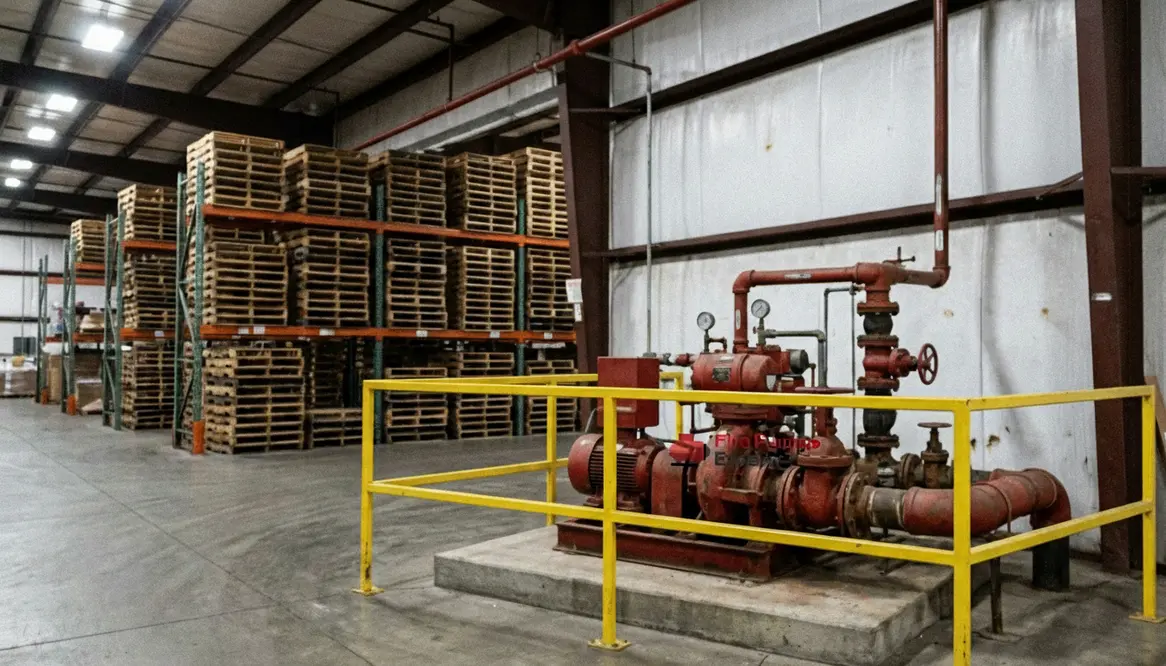
Fire Pump Sprinkler System Warehouse Design Guide
I have walked through more warehouses than I can count, each one humming like a living machine. And when I talk about fire pump sprinkler system warehouse design, I am not talking about pipes and valves alone. I am talking about the quiet guardian that stands ready when everything else goes wrong. In large industrial spaces, where inventory stacks high and operations never sleep, fire protection must rise to meet demand. That is where fire pumps step in, steady and reliable, like the seasoned hero who does not need an introduction.
Behind every successful fire pump sprinkler system warehouse design is an unapologetically practical mindset. Nothing flashy, just performance. It is about taking all that square footage, all that combustible load, and making sure one thing is guaranteed: when the alarm hits, water will be exactly where it needs to be, at the strength it needs to be there.
Why high demand sprinkler systems need more muscle
Warehouses today are not your grandfather’s storage sheds. They are towering ecosystems filled with dense materials, fast moving logistics, and sometimes a little chaos. Because of this, sprinkler systems alone often cannot deliver enough pressure or flow.
So, I rely on fire pumps to bridge that gap. They boost water pressure exactly when the system calls for it. Without them, sprinklers might deliver a polite drizzle when what we really need is a full on downpour. And trust me, fire does not respond well to politeness.
Moreover, high demand systems often serve large square footage with complex layouts. That means longer pipe runs and higher resistance. A properly designed fire pump ensures water reaches every corner, even the ones that seem to hide like introverts at a party.
How fire pump sprinkler system warehouse design supports peak performance
When I approach a fire pump sprinkler system warehouse design, I think in terms of balance. It is not just about power. It is about delivering the right pressure at the right time without overwhelming the system.
First, I evaluate the hazard level. Warehouses storing plastics or flammable goods demand far more water than those holding metal parts. Then, I size the fire pump accordingly, ensuring it can handle peak demand during worst case scenarios.
Additionally, I consider redundancy. Because in critical facilities, failure is not an option. Backup pumps or dual power sources keep the system running even when one component decides to take a day off. Machines have moods too, apparently.
Translating risk into performance
Every decision in a fire pump sprinkler system warehouse design connects directly to risk. High pile storage, narrow aisles, and fast-moving forklifts all add up. The higher the stakes, the more precisely the pump, sprinklers, and water supply must be tuned to one another.
What components make a fire pump system truly reliable
A fire pump system is more than just the pump itself. It is a coordinated effort of several key components working in harmony.
Core elements you cannot skip
Core elements include
- Fire pump unit which delivers the pressure boost
- Controller that starts the pump automatically when pressure drops
- Water supply such as tanks or municipal connections
- Jockey pump that maintains system pressure during normal conditions
- Valves and piping that direct flow where it is needed
Each piece plays a role. Remove one, and the whole system starts to wobble. It is like trying to run a band without a drummer. Technically possible, but something feels off.
How I match fire pump capacity to warehouse demand
This is where precision matters. I calculate flow requirements based on sprinkler density and coverage area. Then, I align that with the pump’s performance curve.
At the same time, I factor in pressure losses from elevation and pipe friction. Because water, as cooperative as it seems, still resists being pushed around.
Balancing demand and supply
To make this clearer, here is how I typically balance design factors.
Demand side
- Hazard classification
- Sprinkler density requirements
- Total coverage area
- Simultaneous system activation
Supply side
- Available water pressure
- Fire pump capacity
- Backup water sources
- System pressure stability
When both sides align, the system performs like a well rehearsed orchestra. When they do not, you get noise. And in fire protection, noise usually means trouble.
Can one fire pump handle an entire large warehouse?
Short answer, sometimes. Long answer, it depends on the size, layout, and hazard level.
In smaller large warehouses, a single properly sized pump can do the job. However, in massive facilities or those with multiple hazard zones, I often recommend multiple pumps or zoned systems.
This approach improves reliability and ensures consistent pressure across all areas. It also prevents one pump from being overworked. Even heroes need backup, just ask any superhero franchise.
Design mistakes I avoid in large scale systems
Over the years, I have seen designs that look good on paper but fail under pressure. Literally.
- Undersizing pumps, which leads to weak sprinkler performance
- Overcomplicating layouts that create unnecessary pressure loss
- Ignoring the way future expansion will stretch demand
- Forgetting that power reliability and backup sources are part of the design, not an afterthought
Another common mistake is ignoring future expansion. Warehouses grow, inventory changes, and demand increases. So, I always design with flexibility in mind.
Finally, I ensure compliance with industry standards. Because cutting corners in fire protection is like ignoring the check engine light. It might seem fine until it really is not.
Bringing it all together in a real warehouse
A strong fire pump sprinkler system warehouse design does not live in theory. It lives in loading docks at 3 a.m., in pallet racks stacked to the roof, in that awkward mezzanine you added last year, and in the space you are eyeing for future cold storage.
That is why I map out water supply, fire pump room location, power sources, and sprinkler zoning as one integrated picture. The goal is simple: no blind spots, no surprise pressure drops, and no confusion when the alarm goes off.
Done right, your warehouse does not just comply with codes. It earns a level of protection that lets operations move faster and with more confidence, knowing that the system standing behind them has real muscle.
FAQ about fire pumps in warehouse sprinkler systems
Conclusion
If you are managing a large warehouse, do not leave fire protection to chance. A well engineered fire pump system keeps your operations safe and your risks controlled. I design systems that perform when it matters most, without guesswork or shortcuts. Reach out today, and let us build a solution that stands strong, even under pressure. Because when the unexpected happens, you deserve more than hope. You deserve certainty.