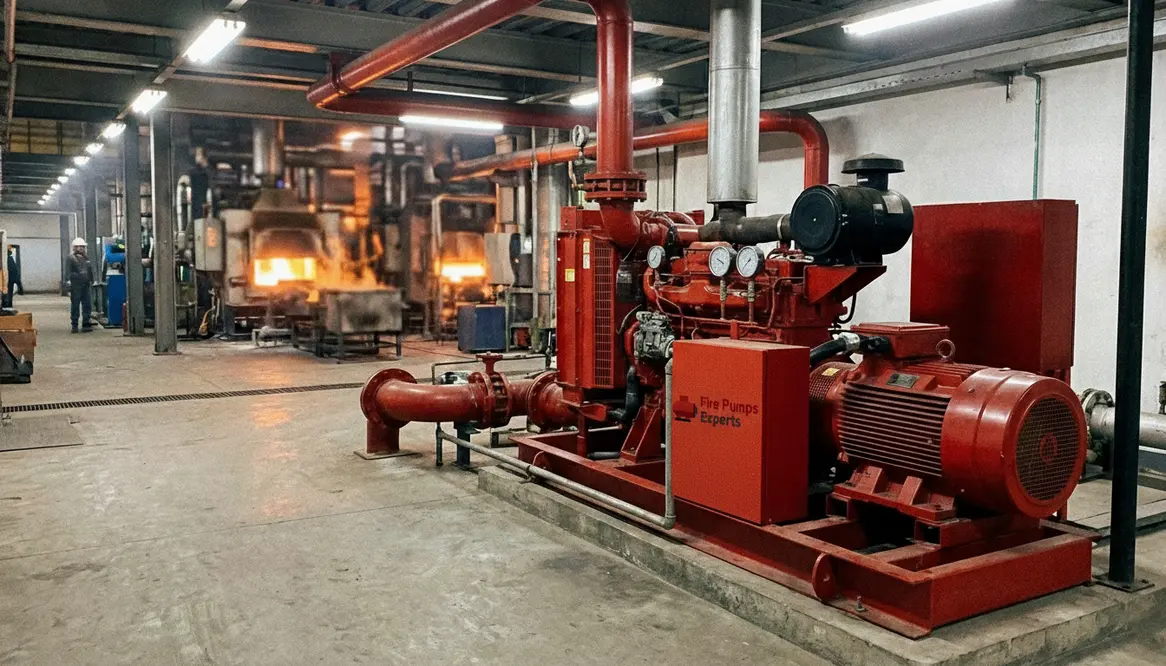
Fire Pump Systems for Glass Manufacturing Safety
I have spent years around industrial systems that run hot, loud, and unforgiving. Glass manufacturing sits near the top of that list. When furnaces glow like miniature suns, Fire safety for high-temperature production operations stops being a checklist and starts becoming a lifeline. In these environments, fire pump systems are not background equipment. They are the quiet guardians that stand ready when everything else goes sideways. And yes, like a good bodyguard in a movie, they do their best work when you never notice them.
Why fire pump systems matter in glass manufacturing facilities
I will put it plainly. Glass plants carry a unique risk profile. Molten materials, continuous heat, and large fuel loads create conditions where a small issue can escalate quickly. Because of this, fire protection in heat intensive industrial processes must respond instantly and reliably.
Fire pump systems ensure that water moves with force and consistency when municipal supply cannot keep up. Without that pressure, sprinklers and hydrants become decorative plumbing. And while that might look nice on a blueprint, it does not help when temperatures spike beyond control.
Additionally, these systems support compliance with strict codes that govern industrial fire protection. More importantly, they protect people, equipment, and production continuity. In a facility where downtime can cost thousands per minute, that matters.
What type of fire pump system works best for glass plants
I get this question a lot, and the answer depends on scale, layout, and hazard classification. Still, there are a few reliable truths.
First, electric fire pumps work well when power infrastructure is stable and backed by generators. However, in facilities where outages are a real risk, diesel driven pumps step in like that one friend who always shows up no matter what.
Second, vertical turbine pumps are often used when the water source sits below ground level, such as tanks or reservoirs. On the other hand, horizontal split case pumps are popular for their durability and ease of maintenance.
Finally, redundancy is not optional. I always recommend backup systems because relying on a single pump in a high heat environment is like bringing one bottle of water into the desert. Optimistic, but not wise.
Fire safety for high-temperature production operations in action
Let me walk you through how these systems actually perform when things heat up beyond normal. Once a fire event triggers the system, the fire pump engages automatically. It boosts water pressure across the network, feeding sprinklers, monitors, and hose stations.
However, performance depends on more than just turning on. Proper sizing, flow rate calculations, and pressure balancing ensure coverage reaches every critical zone. Furnace areas, conveyor lines, and storage zones all demand attention.
Moreover, integration with detection systems allows faster response times. When sensors detect heat or smoke, they signal the pump system to prepare. That coordination reduces delay, which is crucial when seconds matter.
Key system strengths
- Rapid pressure delivery
- Reliable operation under stress
- Integration with suppression systems
- Scalable for large facilities
Common challenges
- High maintenance demands
- Complex installation planning
- Energy consumption concerns
- Need for routine testing
How do I maintain fire pumps in a high heat facility
Maintenance is where many facilities either shine or stumble. I have seen both. The difference often comes down to consistency.
Weekly churn tests keep components active and prevent mechanical failure. Monthly inspections help identify leaks, pressure issues, or unusual vibrations. Meanwhile, annual performance testing ensures the system still meets required output levels.
Heat also affects materials over time. Seals, bearings, and electrical components can degrade faster in glass manufacturing environments. Because of that, I always advise using heat resistant materials and scheduling proactive replacements.
And let us be honest. Ignoring maintenance because everything seems fine is like skipping oil changes because your car still runs. It works until it really does not.
Design considerations that improve long term performance
Designing for fire protection in high temperature industrial environments requires foresight. I focus on layout, accessibility, and environmental conditions from the start.
First, I ensure pump rooms stay ventilated and protected from extreme heat exposure. Even the toughest equipment has limits. Second, I plan piping routes to minimize pressure loss while maximizing coverage. Every bend and connection matters.
Third, I consider future expansion. Glass facilities evolve, and fire systems must keep up. Building flexibility into the design prevents costly upgrades later.
Lastly, I always coordinate with engineers, safety managers, and facility operators. A system that looks perfect on paper must also function in the real world. Otherwise, it is just a very expensive decoration.
If you want deeper technical standards, resources like https://firepumps.org can help align your planning with recognized best practices for Fire safety for high-temperature production operations without reinventing the wheel.
Focused strategies for Fire safety for high-temperature production operations
In glass plants and other heat intensive facilities, Fire safety for high-temperature production operations is ultimately about matching real-world hazards with practical protection. That means fire pumps sized for worst-case scenarios, storage that keeps water available when infrastructure fails, and detection systems that buy precious seconds. It also means training teams to understand what the equipment will do for them, and what it will not.
When those elements line up, Fire safety for high-temperature production operations becomes less about hoping nothing goes wrong and more about knowing your systems are ready when something eventually will.
FAQ
Final thoughts and next steps
If you run or manage a glass manufacturing facility, you already understand the stakes. Fire pump systems are not optional upgrades. They are essential infrastructure. I encourage you to assess your current setup, identify gaps, and invest in systems built for high temperature industrial demands. Work with specialists who understand complex commercial environments. When the heat rises, you want confidence, not guesswork. And trust me, your future self will thank you.