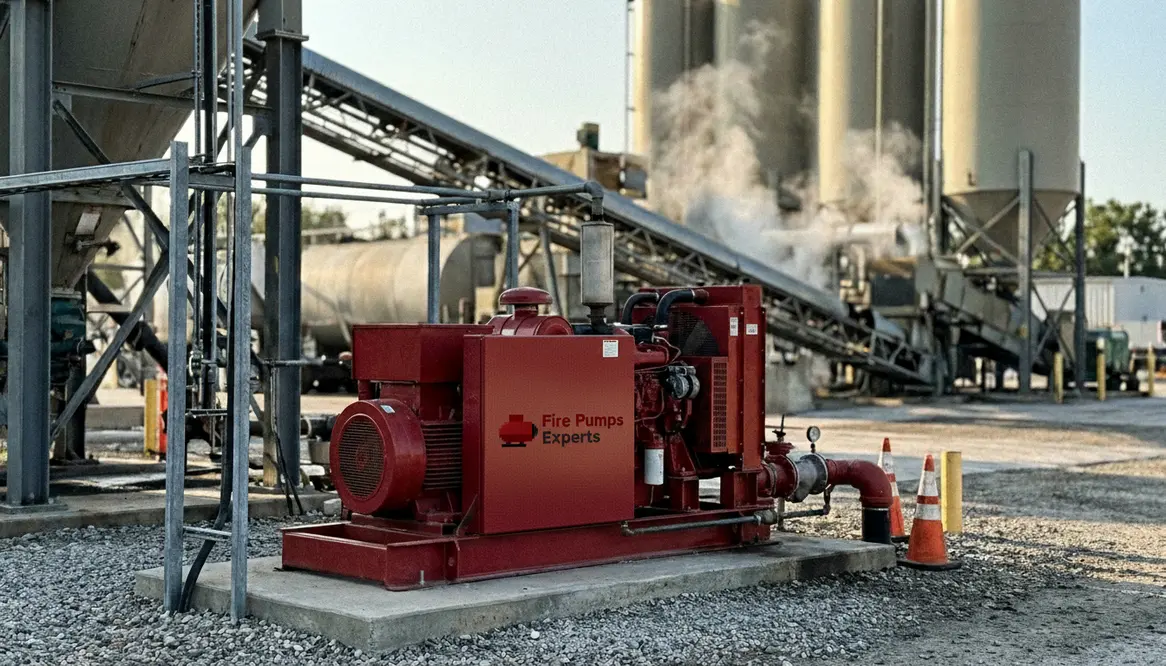
Fire Pump Systems for Asphalt Plant Protection
When heat, fuel, and machinery gather in one place, risk does not knock politely. It walks right in. That is why Fire protection for energy-intensive industrial sites is not just a requirement. It is a quiet guardian standing watch over asphalt plants that never truly sleep. And while fire pump systems may not get the spotlight, they are the backbone of that protection. Think of them as the bass player in a band. You may not always notice them, but without them, everything falls apart.
Why Asphalt Plants Demand Serious Fire Pump Systems
Asphalt plants run hot. That is their nature. Between heated aggregates, liquid asphalt binders, and constant fuel combustion, the environment is primed for ignition. So, I do not treat fire risk as a possibility. I treat it as an inevitability waiting for the right moment.
Because of this, I rely on fire pump systems that deliver immediate, high pressure water flow. These systems support sprinklers, hydrants, and deluge systems without hesitation. More importantly, they remain dependable even when power fluctuates or demand spikes.
And yes, while some might think a standard setup will do, asphalt facilities are not your average commercial buildings. They require tailored solutions built for sustained heat exposure and heavy operational loads. That is where Fire protection for energy-intensive industrial sites becomes a focused discipline instead of a generic checklist.
How Do Fire Pump Systems Work in Asphalt Facilities?
I like to explain it simply. A fire pump system takes water from a reliable source and pushes it where it needs to go with force and precision. However, in asphalt plants, the system must respond faster and work harder.
Typically, I see diesel driven pumps used here. Why? Because when electrical systems fail, and they sometimes do, diesel keeps going. It is the stubborn mule of the fire protection world. Not glamorous, but incredibly reliable.
The system activates when pressure drops, often triggered by sprinkler discharge or manual intervention. Then, in seconds, water moves through the network at a rate that can contain or control a fire before it escalates.
That speed matters. In this environment, seconds are not just seconds. They are the difference between a controlled incident and a full shutdown. The whole idea behind Fire protection for energy-intensive industrial sites is to shrink that gap between ignition and effective response until you barely notice it happened.
Fire Protection for Energy Intensive Industrial Sites: Key System Components
Core Hardware
Pump Unit
This is the heart of the system. It must handle high demand without overheating or failing under pressure.
Controller
I depend on smart controllers to monitor performance and trigger automatic activation when needed.
Water Supply
Whether from tanks or municipal sources, consistency is critical. No water, no protection. It is that simple.
Support Systems
Jockey Pump
This smaller pump maintains system pressure, preventing unnecessary starts of the main pump.
Piping Network
It distributes water across high risk zones like dryers and storage silos.
Fuel System
For diesel pumps, a reliable fuel supply ensures operation during extended emergencies.
Each component plays a role, and when they work together, they form a system that responds with precision and strength. This is Fire protection for energy-intensive industrial sites in practical form: not one shiny device, but a network that behaves like a single, well‑trained unit.
Design Considerations I Never Overlook
Now, here is where things get interesting. Designing fire pump systems for asphalt plants is not a copy and paste job. I consider layout, fuel sources, and even wind patterns around the plant.
For instance, I always account for high hazard zones like bitumen storage and burner systems. These areas demand higher flow rates and faster response times. Additionally, I factor in redundancy. Because if one system fails, there must be another ready to step in.
And let us not forget maintenance access. A beautifully designed system is useless if no one can service it. I make sure every component is reachable and testable. After all, even the best systems need a little care now and then. Think of it like a classic car. Ignore it, and it will remind you at the worst possible moment.
Fire Protection for Energy Intensive Industrial Sites: Compliance and Real World Performance
Standards And Expectations
I follow standards like NFPA 20 and NFPA 13 closely. Not because I enjoy reading them over coffee, although I have done stranger things, but because they provide a proven framework for safety.
However, compliance alone is not enough. I push systems to perform beyond minimum requirements. Asphalt plants operate under extreme conditions, so I ensure systems can handle extended run times and fluctuating demands.
Testing And Reliability
Moreover, I prioritize routine testing. Weekly churn tests and periodic full flow tests keep the system ready. Because when a fire starts, that is not the time for surprises.
In practice, Fire protection for energy-intensive industrial sites is proven not in design meetings, but in those tense, chaotic minutes when equipment fails, alarms sound, and everyone suddenly cares very deeply about whether the pump starts on the first try.
Common Mistakes I See and How I Avoid Them
I have seen a few patterns over the years, and they tend to repeat themselves.
First, undersized pumps. Trying to save costs upfront often leads to inadequate protection later. That is a gamble I never take.
Second, poor water supply planning. Without consistent supply, even the best pump becomes a very expensive paperweight.
Finally, neglecting system integration. Fire pumps must work seamlessly with alarms and suppression systems. Otherwise, response times suffer.
So, I design with foresight, test with discipline, and maintain with intention. That is the real backbone of Fire protection for energy-intensive industrial sites: consistent, sometimes unglamorous work that quietly prevents catastrophic headlines.
FAQ: Fire Pump Systems for Asphalt Plants
Final Thoughts and Next Steps
If you manage or operate an asphalt plant, I encourage you to take a closer look at your fire pump systems. The right setup does more than meet codes. It protects operations, people, and investments. Work with specialists who understand industrial environments and demand performance beyond the basics. When fire risk is high, preparation must be higher. Visit https://firepumps.org and take the next step toward stronger, smarter protection today.