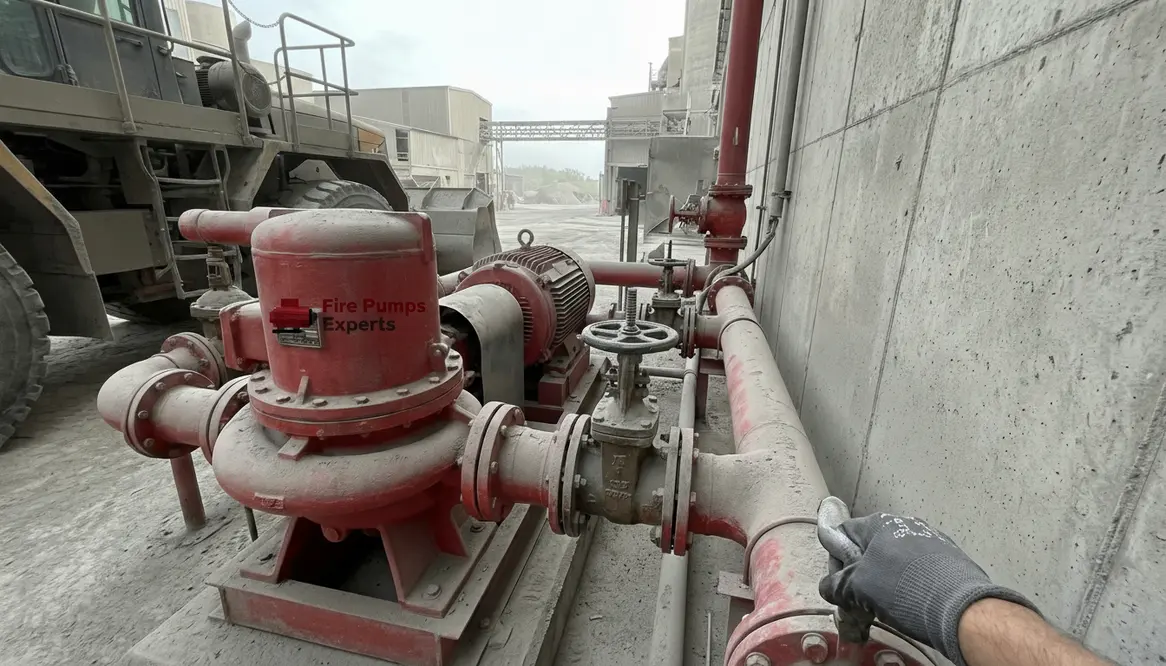
Fire Pump Considerations for Cement Plants
I have spent enough time around cement plants to know one thing for certain. These places do not forgive mistakes. Heat, dust, heavy machinery, and miles of conveyors create a perfect storm where fire risks quietly build in the background. That is exactly why Fire pump considerations in heavy industrial environments matter more here than almost anywhere else. In the first moments of an incident, a properly designed fire pump system does not just protect equipment. It protects livelihoods, production schedules, and sometimes lives. And yes, it also saves you from explaining to corporate why half the plant looks like a scene from an action movie gone wrong.
What fire pump capacity does a cement plant actually need?
I get this question a lot, and the answer is not one size fits all. However, I always start with hazard classification. Cement plants fall into high hazard industrial categories due to combustible dust, fuel storage, and continuous operations. Therefore, I calculate demand based on the most demanding fire scenario, not the average day.
Typically, I design systems that support multiple simultaneous demands. For example, hydrants, hose streams, and fixed suppression systems may all need water at once. Consequently, flow rates often exceed 2500 gallons per minute, sometimes climbing much higher depending on plant size.
Moreover, pressure matters just as much as flow. Long pipe runs and elevation changes across large facilities require pumps that can maintain consistent pressure. Otherwise, you end up with water that arrives fashionably late and completely underdressed for the job.
Core components that make or break reliability
When I evaluate fire protection systems in cement facilities, I focus on reliability first and everything else second. Because when a fire starts, there is no pause button.
Here are the components I never compromise on:
- Primary fire pump sized for peak demand and continuous operation
- Backup pump usually diesel driven to ensure redundancy during power loss
- Controller systems designed for industrial environments with minimal failure points
- Water storage capable of sustaining extended firefighting durations
In addition, I always recommend diesel backup pumps in cement plants. Electrical systems are great until they are not. And in a dusty, high heat environment, “not” can happen at the worst possible moment.
Fire pump considerations in heavy industrial environments that most people overlook
Now this is where things get interesting. Many designs look perfect on paper, yet fail in the real world. Why? Because they ignore the environment itself.
First, dust infiltration is relentless. Cement dust finds its way into seals, cooling systems, and air intakes. Therefore, I specify enclosures and filtration systems that can handle constant exposure.
Second, temperature swings can be brutal. Equipment rooms near kilns or grinding operations can experience extreme heat. As a result, I account for ventilation and cooling to prevent overheating of both diesel and electric pumps.
Third, vibration from heavy machinery can loosen connections over time. So, I always include vibration isolation and conduct regular inspections. Otherwise, you might discover a loose fitting at the exact moment you need full pressure. That is not the kind of surprise anyone enjoys.
How do I design for long term performance instead of short term compliance?
Compliance gets you through inspections. Performance keeps your plant running. I aim for both, but I design for the latter.
To begin with, I prioritize accessibility. Fire pumps should not be buried behind equipment or tucked into forgotten corners. If maintenance teams cannot reach it easily, it will not get the attention it needs.
Next, I build in monitoring. Modern systems allow remote alerts for pressure drops, pump failures, or fuel issues. Consequently, problems get addressed before they become disasters.
Finally, I plan for testing. Weekly and monthly tests are not optional. They are essential. And yes, I know they can feel repetitive. But repetition beats regret every single time.
Design Focus
- High flow capacity
- Redundant power sources
- Durable materials
- Environmental protection
Operational Focus
- Routine testing
- Predictive maintenance
- Real time monitoring
- Staff training
Integration with plant wide safety systems
A fire pump does not operate in isolation. It is part of a larger safety ecosystem. Therefore, I always ensure integration with detection systems, alarms, and suppression networks.
For instance, automated triggers from heat or flame detectors should activate pumps without delay. At the same time, coordination with plant shutdown procedures can limit fuel sources and reduce fire spread.
Additionally, communication systems must be clear and immediate. Because when alarms sound, confusion should not be part of the response plan. This is not a group project where everyone wonders who is doing what.
Fire pump considerations in heavy industrial environments across cement operations
Across modern cement plants, Fire pump considerations in heavy industrial environments extend beyond the pump room. Conveyor tunnels, clinker storage, fuel handling areas, and packing lines all depend on a water supply that is predictable even on the worst day of the year. When I map these zones, I look at how quickly crews can reach them, what kind of hose streams they need, and how long they may be working before municipal support arrives.
That holistic view of Fire pump considerations in heavy industrial environments shapes where I route mains, place isolation valves, and size sectional control equipment. A pump that technically meets code but leaves a remote transfer tower under-supplied is not a solution; it is a liability waiting for a spark. The goal is a balanced system where hydrants, monitors, and sprinklers all receive the volume and pressure they were promised during design.
FAQ about fire pumps in cement plants
Questions about Fire pump considerations in heavy industrial environments come up in nearly every cement plant review. The most common ones revolve around pump type, testing frequency, environmental challenges, and how much redundancy is truly necessary.
Final thoughts and next steps
If you run or manage a cement facility, I would not leave fire protection to chance. A well designed system built around real world conditions will always outperform one built just to check a box. Fire pump considerations in heavy industrial environments are not theoretical; they decide whether the system works when everything else is going wrong. If you want guidance tailored to your operation, now is the time to act. Reach out, assess your current setup, and make sure your fire pump system is ready before it is ever needed.