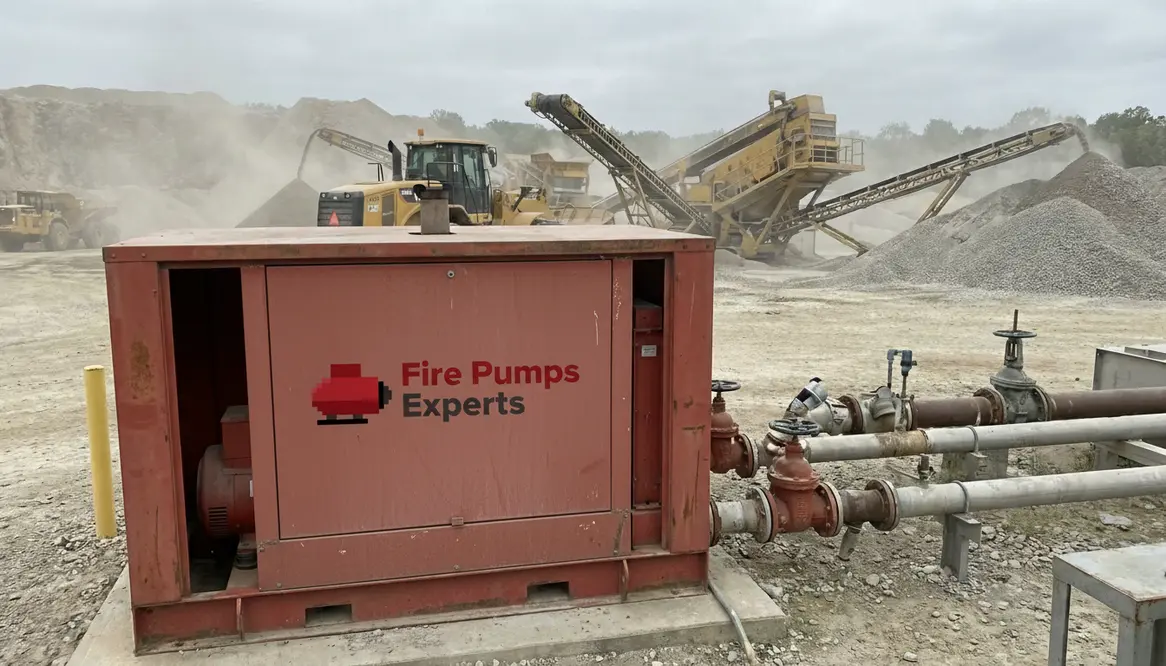
Fire Pump Systems for Quarry Fire Safety Sites
Dust, vibration, heat, and high-risk operations demand more than a basic sprinkler line. This is where purpose-built fire pump systems become the backbone of Fire safety for rugged industrial sites.
I have spent enough time around quarries to know one thing for certain. Dust settles everywhere, machines never truly sleep, and risk likes to linger where rock meets friction. That is exactly why Fire safety for rugged industrial sites matters more than most people realize. When I walk into a quarry operations building, I am not just looking at equipment. I am looking at fuel sources, heat, and the quiet potential for disaster. So, let us talk about fire pump systems, the unsung heroes that stand ready while everything else roars.
Why quarries demand more from fire protection
Quarry fire risks rarely announce themselves. They build up in dust layers, worn bearings, overloaded cables, and fuel storage corners that no one has looked at since last winter. Fire pumps exist for that exact moment when “it will probably be fine” turns into “we need water now.”
What makes fire pump systems essential in quarry operations buildings?
I will answer this straight away. Quarry environments are harsh, and standard fire protection simply does not cut it. Dust particles can ignite, heavy machinery generates heat, and electrical systems run long hours. Therefore, I rely on fire pump systems to deliver consistent water pressure when it matters most.
Unlike office buildings, these facilities cannot depend on municipal pressure alone. Instead, fire pumps act as the backbone of suppression systems. They ensure water reaches sprinklers and hoses with enough force to control a blaze before it spreads. Think of it as the difference between a garden hose and a fire hose. Both move water, but only one commands respect.
Moreover, downtime in quarry operations is expensive. A single fire event can halt production for days or even weeks. That is why I always emphasize prevention paired with immediate response. Fire safety for rugged industrial sites is not just about compliance; it is about keeping people safe and rock moving.
Fire safety for rugged industrial sites starts with the right pump selection
Choosing a fire pump is not a one size fits all decision. I look at flow rate, pressure requirements, and the size of the facility. Then I factor in environmental conditions. Dust, vibration, and temperature swings can wear down weaker systems fast.
The pump types that earn their place in a quarry
- Electric fire pumps are reliable and efficient, although they depend on a stable power source.
- Diesel fire pumps provide independence from electrical systems, which is critical during outages.
- Jockey pumps maintain pressure and prevent the main pump from cycling unnecessarily.
However, the real trick lies in pairing these correctly. I often combine diesel and electric systems to create redundancy. Because in quarry operations, backup is not optional. It is survival.
How do I design systems that survive dust, vibration, and heat?
This is where things get interesting. Quarry environments are not gentle, and frankly, they do not care about your carefully drawn plans. So I design with durability in mind from the start.
First, I prioritize enclosed pump rooms with proper ventilation. This keeps dust out while preventing overheating. Next, I select materials that resist corrosion and abrasion. Standard components will fail faster than a phone battery during a long road trip.
Built to stay put and stay accessible
Additionally, I anchor equipment to handle constant vibration. Heavy machinery nearby can shake poorly secured systems loose over time. Therefore, stability is just as important as performance.
And yes, I also plan for easy maintenance access. Because if a technician cannot reach it, it will not get serviced. And if it does not get serviced, well, you can guess how that story ends.
Key components I never overlook in quarry fire protection
Every strong system depends on its parts working together. So I make sure nothing is treated as an afterthought.
The physical backbone
- Reliable water supply comes first. Whether from tanks or reservoirs, it must meet demand without hesitation.
- Control panels allow quick monitoring and response. I like systems that speak clearly, not ones that hide problems.
- Valves and piping must handle pressure without leaks or weak points.
- Testing systems ensure everything works before an emergency proves otherwise.
Signals, alarms, and awareness
Furthermore, I integrate alarms and monitoring tools that alert teams immediately. Because seconds matter, and silence during a fire is never a good sign. When Fire safety for rugged industrial sites is treated seriously, alarm panels are not background noise; they are the early warning that keeps people out of harm’s way.
For deeper technical guidelines and performance standards, resources like https://firepumps.org can be useful references when validating system designs.
Balancing performance and practicality in real operations
Now, here is where theory meets reality. I can design the most powerful system in the world, but if it disrupts operations, it will face resistance. So I aim for balance.
Operational needs
- Continuous production flow
- Minimal downtime
- Easy maintenance access
Fire protection goals
- High pressure delivery
- Rapid activation
- System redundancy
By aligning these priorities, I ensure the fire pump system supports the facility instead of competing with it. After all, no one wants a safety system that feels like an inconvenience. It should feel like a silent partner, always ready, never in the way.
Fire safety for rugged industrial sites requires ongoing testing and discipline
I cannot stress this enough. Installation is only the beginning. Without regular testing, even the best systems become unreliable.
I schedule routine inspections and flow tests to confirm performance. Additionally, I train staff to recognize warning signs early. Strange noises, pressure drops, or delayed starts are not quirks. They are red flags.
And yes, documentation matters. Keeping records ensures compliance and helps identify patterns before they become problems. It may not sound exciting, but neither is explaining to stakeholders why a preventable failure occurred. Fire safety for rugged industrial sites rewards the disciplined operators who log, test, and follow up long after the ribbon-cutting photos are forgotten.
FAQ
Conclusion
I see fire pump systems as the quiet guardians of quarry operations buildings. They stand ready when conditions turn hostile, delivering power and protection without hesitation. If you are managing a demanding industrial site, now is the time to invest in a system built for resilience. Connect with specialists who understand these environments, and make fire protection a strength, not a vulnerability. Because in this business, preparation is not optional. It is everything.