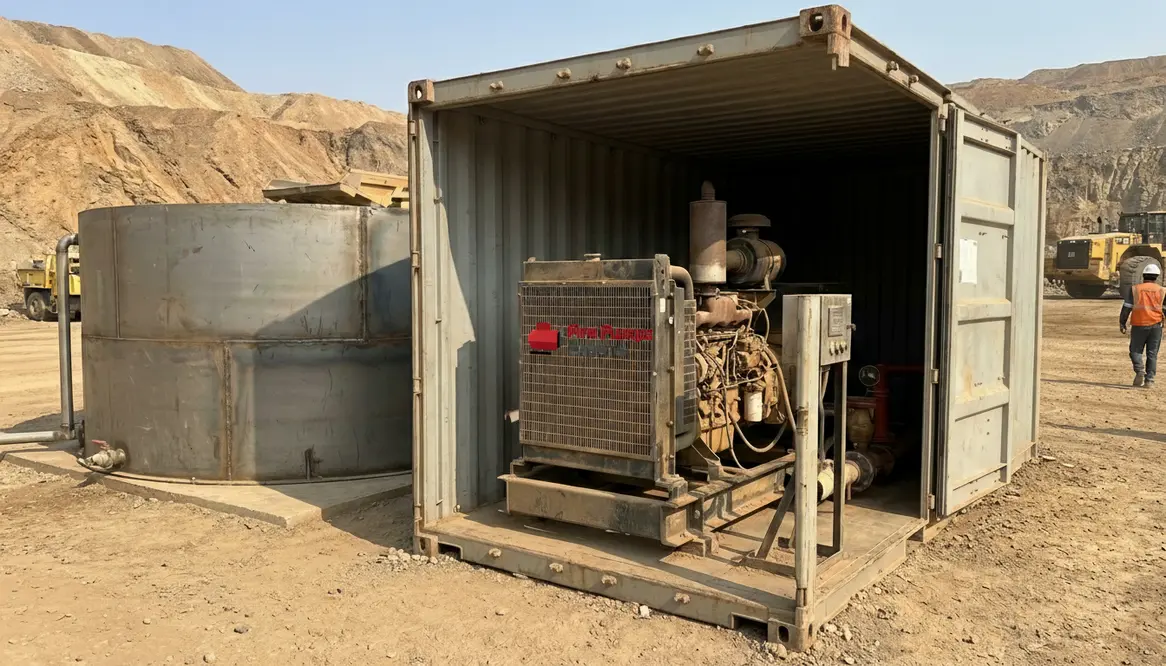
Fire Pump Requirements for Remote Mining Facilities
I’ve spent enough time around heavy industry to know one thing: when water is needed, it needs to show up fast, strong, and without excuses. That’s especially true when we talk about Fire pump needs for remote industrial support buildings tied to mining operations. Out there, miles from the nearest hydrant and help that might take longer than a movie trilogy, fire protection becomes a self-reliant system. And frankly, there’s no room for “we’ll figure it out later.” In this world, planning a fire pump system isn’t just a line item. It’s the difference between a controlled incident and a headline nobody wants.
What makes fire protection in mining support facilities different?
Now, you might think a fire pump is a fire pump. Water in, pressure up, problem solved. If only it were that simple. Mining support facilities bring a unique mix of hazards and logistics that change the entire equation.
First, location drives everything. These buildings often sit far from municipal infrastructure. Therefore, I design systems that rely on stored water and independent power. No city backup. No safety net. Just engineering that works when it has to.
Additionally, the environment itself can be unforgiving. Dust, vibration, and extreme temperatures can wear down equipment faster than you can say “preventive maintenance.” As a result, I always prioritize durable components and enclosures built to handle harsh conditions.
And then there’s the risk profile. Fuel storage, electrical rooms, and heavy equipment all raise the stakes. So, fire pump requirements for mining support facilities must account for higher hazard classifications and more demanding flow rates. All of this folds back into the Fire pump needs for remote industrial support buildings that simply cannot afford a “good enough” approach.
How do I size a fire pump for remote industrial buildings?
Let’s get straight to it, because this is where things can go sideways if you guess. I never guess. I calculate.
I start by identifying the hazard classification. That tells me the required flow and pressure. Then, I factor in system losses, elevation changes, and the layout of the facility. Because water, like people, takes the path of least resistance.
However, sizing isn’t just about meeting minimums. I build in a margin that accounts for real world conditions. For example, partially clogged pipes or fluctuating water levels. Because out in a remote mining support building, you don’t get a second chance to “top it off.”
Moreover, I consider future expansion. Mining operations evolve. Equipment grows. Risk changes. A slightly oversized pump today can save a full system overhaul tomorrow. And trust me, no one enjoys tearing out infrastructure in the middle of nowhere.
Key sizing questions to answer early
- What hazard classification truly reflects the process and storage risks?
- How far and how high does water need to travel from the pump?
- What pressure is left at the most remote, highest-demand sprinkler or hose outlet?
- How might the Fire pump needs for remote industrial support buildings change over the facility’s life cycle?
Core components I never compromise on
Reliable Power Supply
In remote sites, diesel driven pumps often take the lead. Why? Because they don’t depend on a grid that may or may not cooperate. Electric pumps still have their place, but only when paired with dependable backup systems.
Water Storage
I always ensure sufficient on site storage. Tanks must support full system demand for the required duration. No shortcuts. No “it should be enough.”
Controller Systems
Modern controllers offer monitoring and automation that make life easier. Still, I keep them rugged and simple enough to function in tough conditions.
Redundancy
If one pump fails, another must take over instantly. Because downtime during a fire event is not a plot twist anyone wants.
Each of these components plays a role in meeting fire suppression requirements for remote industrial facilities. Together, they form a system that can stand on its own, even when everything else feels miles away. When you consider the Fire pump needs for remote industrial support buildings that support mining, these elements move from “nice to have” to “non-negotiable.”
Designing for harsh environments without overengineering
There’s a fine line between robust and overbuilt. I walk that line carefully. While it’s tempting to throw every possible safeguard into a system, complexity can become its own risk.
Instead, I focus on practical durability. Corrosion resistant materials, sealed enclosures, and proper ventilation go a long way. At the same time, I keep maintenance in mind. Because if a technician needs a treasure map to service your pump, something has gone wrong.
Additionally, I design layouts that allow easy access to critical components. This reduces downtime and keeps inspections straightforward. After all, a system that’s easy to maintain is far more likely to stay operational.
Compliance and standards I always follow
I don’t treat compliance like a checkbox exercise. Standards exist because someone, somewhere, learned a hard lesson. So I pay attention.
NFPA 20 guides fire pump installation, while NFPA 13 and other related codes shape the overall system design. However, mining environments often require additional considerations based on local regulations and site specific risks.
Therefore, I coordinate closely with engineers, safety officers, and inspectors. This ensures the system meets both regulatory requirements and operational realities. Because passing inspection is great, but performing under pressure is better.
Codes, standards, and reality
- Start with NFPA and local codes as the baseline.
- Layer on site-specific risks from fuel, conveyors, electrical distribution, and process buildings.
- Validate that theoretical calculations still work when exposed to dust, vibration, and isolation.
- Confirm that Fire pump needs for remote industrial support buildings are documented clearly for inspectors and operators alike.
Keeping systems ready when no one is watching
A fire pump system isn’t something you install and forget. I wish it were that easy, but reality has other plans.
Routine testing is essential. Weekly churn tests, periodic flow testing, and regular inspections keep the system in peak condition. Furthermore, I recommend remote monitoring where possible. It’s like having a security camera for your pump, minus the suspenseful music.
Maintenance plans should also account for the site’s isolation. Spare parts, trained personnel, and clear procedures ensure that small issues don’t turn into big failures.
FAQ: Fire Pump Requirements for Mining Support Facilities
Building smarter fire pump systems for remote industrial support buildings
When I look at Fire pump needs for remote industrial support buildings, I don’t just see equipment. I see a system that has to perform flawlessly under pressure, in places where help is far away and stakes are high. If you’re planning or upgrading a facility, now is the time to invest in a solution built for reality, not theory. Reach out to experts who understand industrial demands and get a system that works when it matters most.