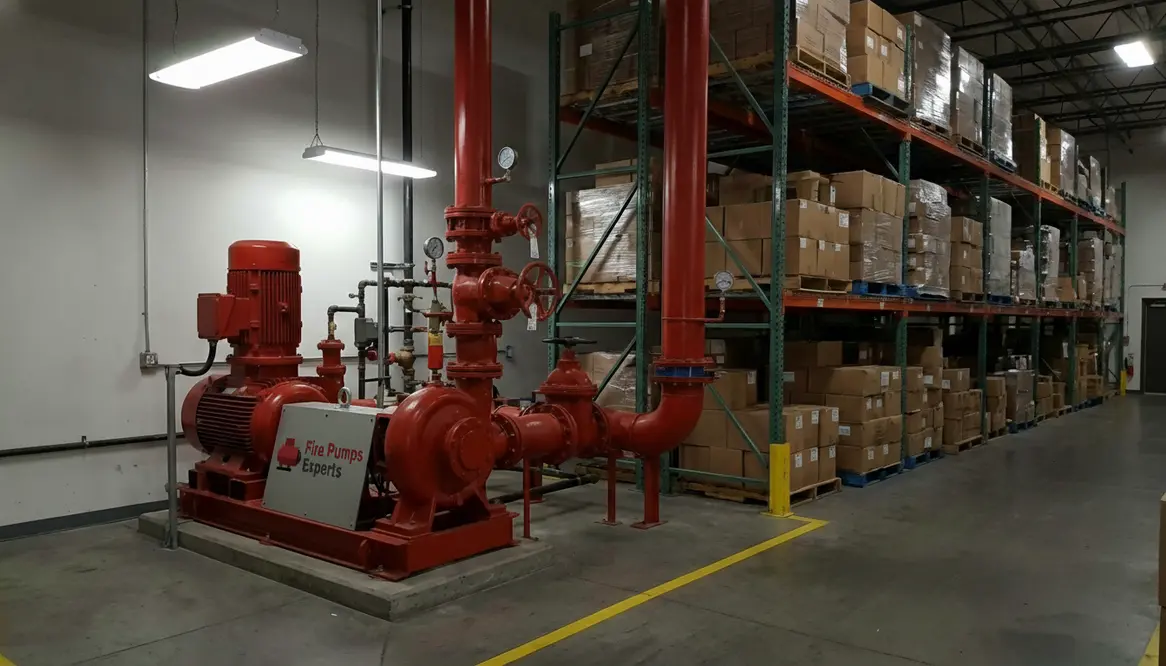
Fire Pump Systems for Industrial Storage Planning
Fire Pump Systems for Industrial Storage Buildings
I have spent years around industrial facilities, and I can tell you this with a calm certainty. Fire protection is not just about equipment. It is about understanding risk at a deeper level. And right at the center of that conversation sits one idea that quietly shapes everything. How storage type changes fire pump planning. Whether you are stacking pallets of paper goods or housing high hazard chemicals, the fire pump system must respond with precision. Otherwise, you are basically bringing a garden hose to a blockbuster level disaster. And nobody wants to be the extra in that scene.
So let’s walk through this together, step by step, with a steady hand and maybe a few chuckles along the way.
Why Fire Pump Systems Matter in Industrial Storage
Fire pumps are not glamorous. They do not sparkle like new tech or hum like a luxury car. However, when the pressure drops and the sprinklers need backup, they step in like a seasoned action hero who has seen it all.
In industrial storage buildings, water demand often exceeds what municipal systems can provide. Therefore, I rely on fire pump systems to bridge that gap. They ensure consistent pressure, support sprinkler systems, and keep suppression efforts effective from the first second to the last.
Moreover, large scale storage introduces variables like ceiling height, rack configuration, and commodity classification. Each of these factors shapes the required flow and pressure. So, a one size fits all approach does not just fail. It invites trouble.
How storage type changes fire pump planning for real world facilities
Let me say it plainly. The type of storage dictates everything. If I am dealing with high piled storage, I need higher discharge pressure. On the other hand, if flammable liquids are involved, I am planning for rapid fire spread and intense heat release.
Additionally, automated storage and retrieval systems introduce tighter spaces and vertical complexity. That means I must account for both reach and response time. In other words, I am not just installing a pump. I am designing a system that understands the building like a chess player reading ten moves ahead.
And yes, sometimes it feels like I am solving a puzzle designed by someone who binge watched too many engineering documentaries. Still, that is where the real value comes in.
What factors determine fire pump sizing in storage buildings?
I hear this question often, and I answer it the same way every time. Sizing is about matching supply with worst case demand. Nothing less.
Here is what I evaluate immediately:
- Hazard classification which defines how intense the fire could become
- Storage height and layout which impacts water delivery
- Sprinkler system demand including flow and pressure requirements
- Water supply reliability because not all sources are created equal
Furthermore, I consider future expansion. Because if there is one thing I have learned, it is this. Buildings grow. Risks evolve. And nobody enjoys retrofitting a system under pressure. That is like trying to fix a plane mid flight. Technically possible, but not recommended.
Designing for reliability and redundancy
Primary Considerations
- Diesel or electric pump selection
- Backup power availability
- Controller reliability
- Routine testing protocols
Advanced Safeguards
- Redundant pump systems
- Pressure maintenance pumps
- Remote monitoring integration
- Alarm and alert systems
At the same time, I make sure maintenance access is not an afterthought. Because even the best system fails if nobody can service it properly. And trust me, no technician enjoys crawling through tight mechanical rooms like they are auditioning for a spy movie.
How storage type changes fire pump planning in high density environments
Now we step into the more complex side of things. High density storage changes the game entirely. The tighter the packing, the faster heat builds and spreads. As a result, I need higher flow rates and often specialized sprinkler systems that demand more from the pump.
For example, plastic commodities burn hotter and faster than many traditional materials. Therefore, I adjust the pump curve to deliver sustained pressure over longer durations. Similarly, cold storage facilities introduce freezing risks, which means I must think about insulation and system protection.
In these cases, planning becomes less about code minimums and more about performance under stress. Because when things go wrong, they rarely do so politely. This is where How storage type changes fire pump planning becomes more than a phrase and turns into a guiding design principle that keeps the system honest under pressure.
Common mistakes I see in industrial fire pump planning
Even experienced teams make missteps. And while I say this with a calm tone, I also say it with urgency. These mistakes can cost millions.
- Undersizing pumps based on outdated storage assumptions
- Ignoring future expansion or changes in commodity type
- Overlooking system testing and long term maintenance
- Failing to coordinate pump design with sprinkler engineers
However, the most common issue ties back to that central idea. Not fully understanding how storage configuration impacts fire protection demand. It is a subtle oversight, yet it echoes through the entire system. In practical terms, How storage type changes fire pump planning becomes the question that should be asked at every design meeting, especially when someone suggests “just reusing the old pump curve.”
Translating storage decisions into fire pump strategy
Rack storage vs. bulk storage
Tall rack storage drives higher pressures to reach elevated sprinklers and in-rack systems, while wide, open bulk storage pushes overall flow rate. Both push the pump in different ways, and both prove How storage type changes fire pump planning in everyday facilities.
Ordinary vs. high hazard commodities
Paper products, tires, plastics, and flammable liquids all behave differently once ignition happens. The jump from ordinary hazard to high hazard is often the point where the pump selection, tank size, and controller strategy all shift.
When these storage choices are made in a vacuum, the pump usually loses. When they are made with the pump in mind, the system becomes more resilient, easier to test, and far more likely to perform as intended on the worst day of the facility’s life.
FAQ: Fire Pump Systems for Industrial Storage Buildings
These are the questions I hear most often when teams finally sit down and confront How storage type changes fire pump planning and overall system performance.
Conclusion
If you are managing or developing an industrial storage facility, now is the time to take fire pump planning seriously. I encourage you to look closely at your storage layout, your risks, and your long term goals. Then align your fire pump system to match. When done right, it protects your assets, your people, and your operations.
The real key is understanding How storage type changes fire pump planning and refusing to treat pumps as generic, interchangeable hardware. Every pallet, rack, aisle, and commodity decision echoes through the design. Reach out to a qualified expert and make sure your system is ready before it is ever needed.