Fire Pump Systems for Student Housing Safety
I have walked through enough dense residential education buildings to know one thing for sure. When hundreds of students live, study, and occasionally forget how ovens work, fire protection cannot be an afterthought. It must be built into the bones of the structure. That is where Fire Pump Systems for Student Housing Complexes quietly take center stage. These systems do not ask for applause, yet when pressure drops or demand spikes, they step in like a calm voice in chaos. And trust me, in a packed dorm during finals week, calm is worth its weight in gold.
What makes fire protection in dense student housing uniquely challenging?
First, density changes everything. When I evaluate these properties, I see tight living quarters, shared kitchens, overloaded outlets, and high occupant turnover. As a result, fire risks multiply faster than a group chat before midterms.
However, the real challenge is not just ignition. It is response time and system reliability. Because more occupants mean more demand on suppression systems, water delivery must remain consistent even under peak load. Therefore, fire pump systems become critical infrastructure, not optional upgrades.
Additionally, evacuation complexity increases. Students are often unfamiliar with layouts, and distractions are everywhere. Consequently, suppression systems must act immediately, buying precious time while alarms do their job.
Designing Fire Pump Systems for Student Housing Complexes that actually perform
I always say a fire pump system is only as good as its worst day. That means designing for peak demand, not average use. In student housing, peak demand can feel like a concert crowd trying to exit through one door.
So, I focus on three key elements:
Reliable water supply
Municipal pressure alone rarely cuts it in multi story student housing. Therefore, a dedicated fire pump ensures consistent flow regardless of external fluctuations.
System redundancy
Because failure is not an option, backup pumps and power sources are essential. When one system rests, another stands ready.
Pressure control
Too little pressure weakens suppression. Too much can damage infrastructure. A balanced system keeps everything steady, like a seasoned professor handling a heated debate.
Moreover, proper sizing matters. Oversized systems waste energy, while undersized ones fail under stress. I aim for precision, not guesswork.
How do I ensure compliance without overengineering the system?
This is the question I hear most, and honestly, it is a good one. Codes and standards are strict for a reason, yet overengineering can inflate costs without adding real value.
I start by aligning with national and local fire codes. Then, I evaluate the building’s specific risks. For example, a high rise student residence with commercial kitchens demands a different approach than a mid rise academic dorm.
After that, I integrate fire pump systems with sprinklers, standpipes, and alarms. Because when systems communicate well, they respond faster. Think of it as assembling a team where everyone knows their role and no one hogs the spotlight.
Finally, I test under realistic conditions. Not theoretical models. Real world stress. Because fire events do not follow scripts, no matter how much we wish they would.
Key components that keep systems dependable under pressure
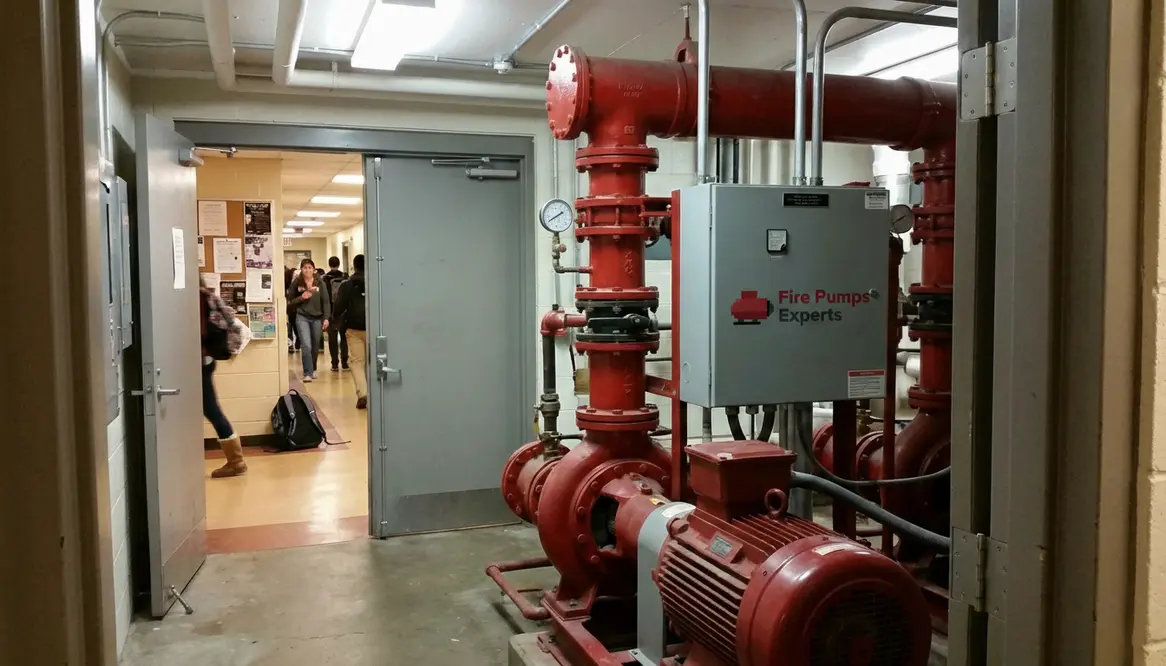
Fire pumps: The heart of the system, delivering water at required pressure.
Controllers: These act as the brain, starting pumps automatically when needed.
Backup power: Because outages often accompany emergencies.
Jockey pumps: Maintaining pressure without overworking main pumps.
Valves and piping: Directing water efficiently across the building.
Monitoring systems: Providing real time data and alerts.
Each component plays a role, and together they form a system that responds faster than a student hearing free pizza is available downstairs.
Maintenance strategies that actually prevent failure
Even the best designed system will fail if ignored. So I treat maintenance as part of the design, not an afterthought.
Regular testing ensures pumps start instantly. Weekly inspections catch small issues before they grow. Additionally, performance testing under load confirms that the system can handle real demand.
I also recommend digital monitoring. Because when facility managers can track performance remotely, they respond faster. And in fire protection, speed matters more than perfection.
Furthermore, training staff makes a difference. A well informed team can identify warning signs early, reducing downtime and risk.
Fire Pump Systems for Student Housing Complexes and long term property value
Fire protection is not just about safety. It directly affects property value and operational stability. Buildings with robust systems attract institutional investors, reduce liability, and lower insurance costs.
Additionally, reliable systems minimize disruptions. Because when systems fail, repairs are costly and reputations take a hit. And let us be honest, no property manager wants their building trending for the wrong reasons.
By investing in well engineered fire pump solutions, I help ensure that these properties remain safe, compliant, and financially sound for years to come.
For more detailed technical guidance and design resources on Fire Pump Systems for Student Housing Complexes, refer to expert materials available at https://www.firepumps.org.
FAQ
Conclusion
When I look at dense residential education spaces, I see more than buildings. I see responsibility. The right fire protection strategy, anchored by dependable pump systems, turns uncertainty into control. If you manage or develop large scale student housing, now is the time to strengthen your infrastructure. Explore proven solutions, invest in resilience, and make safety part of your property’s legacy. Because preparation today quietly protects everything tomorrow.