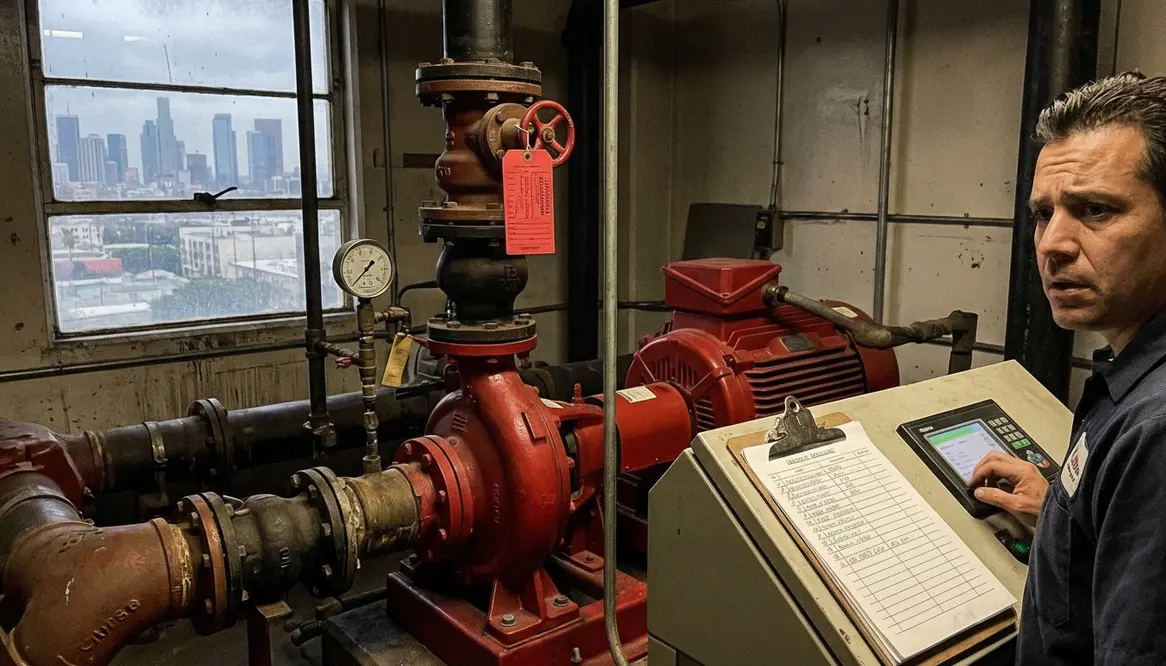
Fire Pump Test Failed Los Angeles Fix Guide
When a fire pump test failed los angeles, the clock starts moving fast. I have seen that moment catch facility teams off guard, and it never feels calm. Still, it is not the end of the road. It is the start of a fix, a report, and a return to code compliance. In a city like Los Angeles, where commercial towers, industrial sites, and major properties run on tight safety plans, a failed test calls for clear action. Think of it like a plot twist in a movie nobody asked for, but one we still have to deal with.
In this article, I explain what happens next, what the common causes are, and how I would handle the process step by step. I also share how a property team can stay ahead of repeat issues so the next test goes smoother than a Sunday jazz set.
What I check first after the failure
First, I look at the test report in full. The numbers matter, but so does the story behind them. Did the pump fail to start, lose pressure, or miss flow requirements? Did the controller act up, or did the suction side fall short? Each clue points to a different fix.
Then, I compare the results with the required standards for the site. Los Angeles inspectors and facility teams expect fire pumps to support the building the way a good backup singer supports the lead. Quietly, firmly, and without drama. If the pump fails, I treat it as a real safety issue, not a paperwork hiccup.
Next, I notify the right people fast. That usually means the property manager, the fire protection vendor, and the maintenance lead. Because time matters, I do not let the report sit in an inbox like an old invitation to a party no one wants to attend.
Why the fire pump test failed in Los Angeles
Most failures come from a few common places. I see power issues, weak suction, worn parts, poor alignment, and control panel problems. Sometimes the pump itself works fine, but the water supply does not deliver enough pressure or volume. That is like bringing a sports car to a race and finding out the fuel line is asleep.
Corrosion also causes trouble, especially in older commercial buildings and industrial sites. Over time, scale and wear can slow the pump and lower output. In other cases, the test setup may be off. If gauges, valves, or sensors give bad readings, the result can look worse than the actual condition. Still, I never assume the issue is small until someone proves it.
Here is a quick view of where the problem often starts.
Two main problem zones
Mechanical causes
- Worn seals
- Damaged impeller
- Motor trouble
- Bad bearings
- Loose coupling
System causes
- Low water supply
- Closed valve
- Pressure drop
- Faulty controller
- Instrument error
What I do next to fix it
From failure report to repair plan
After the cause appears clear, I move into repair mode. I want the vendor to inspect the pump, confirm the failure point, and test the parts that matter most. If the controller fails, I expect a full electrical check. If the pump loses flow, I want a suction review, a discharge check, and a look at the impeller and seals.
Why retesting always matters
Then, I want retesting. A repair is only half the story. The system must prove it can perform under test conditions. For commercial and industrial facilities, this step matters because the building depends on that pump during a real fire event. And unlike a superhero sequel, we do not want surprises in the third act.
Learning from the past failures
I also like to review the logbook and past service history. That helps me spot patterns. If the pump keeps failing for the same reason, I know the site may need deeper work, not just a quick patch. That saves money later, which every property owner appreciates, even if they pretend not to during budget season.
What Los Angeles property teams should document
Good records keep the process clean. I make sure the team saves the test report, the repair notes, the retest results, and any photos or technician comments. If the site faces a follow up inspection, this paper trail helps show the building acted fast and handled the issue the right way.
For fire pump test failed los angeles cases, I also suggest tracking dates and names. That simple habit cuts confusion later and helps the next vendor step in with better context. In a busy city, good records save time, and time is gold with a fire protection system.
For a helpful next step, I often point people to Fire Pump Test Failure: What Happens Next and Fixes from firepumps.org, which gives a clear view of the repair path for commercial and industrial properties. It fits well with the kind of action plan a serious facility team needs.
How to stay ahead of the next failed test
Turn “fire pump test failed los angeles” into a one-time problem
A single failure is a warning; a pattern is a system design issue or a maintenance gap. When a fire pump test failed los angeles once, I treat it like a full review opportunity. I look at how often the pump runs, what the preventive maintenance plan really looks like in practice, and whether anyone is skipping steps because the building is “too busy” that day.
Practical habits that reduce failures
- Schedule true preventive checks, not just quick looks before an inspection.
- Keep valves, controllers, and power feeds labeled clearly so no one guesses under pressure.
- Walk the pump room regularly and listen for new noises, vibration, or leaks.
- Train on what “normal” pump readings look like, so “not normal” stands out fast.
- Make it easy for staff to log anything odd they see, even if it seems small.
FAQ
Conclusion
If your site faces a failed fire pump test, do not wait and hope it improves on its own. It will not. I recommend acting fast, getting a proper diagnosis, and arranging repairs and retesting right away. For commercial and industrial properties in Los Angeles, that response protects people, property, and compliance. If you need expert help, reach out now and get the system back where it belongs: ready, reliable, and fully tested.