Fire Pump Voltage Drop San Jose Risks and Fixes
I have spent years around commercial and industrial fire protection systems, and if there is one quiet troublemaker I keep seeing in San Jose, it is fire pump voltage drop San Jose. It sounds technical, almost harmless, yet it can quietly undermine an electric driven fire pump right when a facility needs it most. In a city powered by innovation, even a small dip in voltage can turn a reliable system into a hesitant one. And trust me, hesitation is not what you want when alarms are screaming and seconds matter.
Understanding Fire Pump Voltage Drop San Jose in Real Terms
Let me break it down simply. Voltage drop happens when electrical power loses strength as it travels through conductors. Now, that might sound like your phone battery fading at the end of the day. However, in a commercial fire pump system, it is a much bigger deal.
Electric driven fire pumps rely on consistent voltage to start and run at full capacity. When voltage drops too low, the motor struggles. As a result, it may fail to start quickly or run below its rated speed. That means less water pressure, and in fire protection, less pressure is like showing up to a fire with a garden hose instead of a fire engine.
Moreover, in large facilities across San Jose, long cable runs and heavy electrical loads often make voltage drop more likely. So while everything may look fine on paper, reality tells a different story when systems activate under stress.
Why Electric Driven Fire Pumps Feel the Strain
I have seen electric fire pumps behave like marathon runners forced to sprint uphill. They try, but physics has other plans. When voltage dips, motors draw more current to compensate. Consequently, this creates heat, stress, and wear over time.
Here is what typically happens in commercial and industrial settings:
- Delayed startup: The pump hesitates, which wastes critical seconds.
- Reduced output: Lower voltage means weaker performance.
- Overheating risks: Components age faster under electrical strain.
- Nuisance tripping: Protection systems may shut everything down unexpectedly.
And yes, this is where things get a bit ironic. The very system designed to protect a building can become unreliable because of something as subtle as voltage loss. It is like hiring a bodyguard who forgets their glasses.
What causes voltage drop in San Jose facilities?
I get this question a lot, especially from facility managers running large campuses. The causes are rarely dramatic, yet they add up quickly.
First, distance plays a major role. The farther electricity travels from the power source to the fire pump controller, the more voltage it loses. Additionally, undersized wiring amplifies the problem, much like trying to push too much water through a narrow pipe.
Then there is the load factor. In busy commercial buildings, multiple systems draw power simultaneously. Elevators, HVAC systems, data centers, all competing for energy. Consequently, when a fire pump kicks in, it may not get the full voltage it expects.
Finally, aging infrastructure quietly contributes. Over time, connections loosen and resistance increases. Therefore, even a well designed system can degrade without regular evaluation.
Fire Pump Voltage Drop San Jose Compliance and Design Considerations
Now we step into the world of codes and standards, where things get serious. In San Jose, compliance with NFPA 20 is not optional. It clearly outlines acceptable voltage drop limits for fire pump operation.
I always advise designing systems with real world conditions in mind, not just ideal scenarios. For example, engineers should calculate voltage drop during both normal operation and motor starting conditions. Starting currents can be several times higher than running currents, which makes voltage drop more pronounced.
Additionally, proper conductor sizing is critical. Cutting corners here might save money upfront, but it often leads to costly retrofits later. And in commercial properties, downtime is rarely cheap.
Good Design Practices
- Use adequately sized conductors
- Minimize cable length where possible
- Perform detailed load calculations
- Include voltage drop analysis early
Common Oversights
- Ignoring starting voltage conditions
- Underestimating facility load growth
- Relying on outdated electrical layouts
- Skipping routine system testing
When I walk through facilities, I often find that the issue is not ignorance. It is assumption. And assumptions, as we all know, tend to age poorly.
How I Evaluate and Fix Voltage Drop Issues
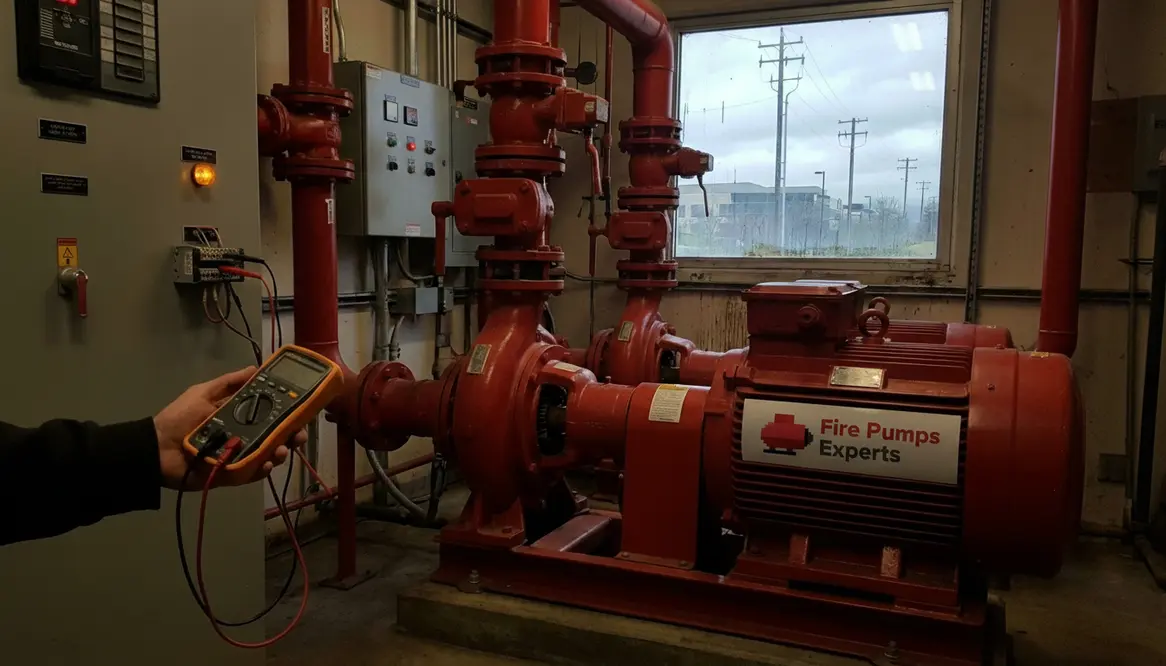
When I assess a system, I start with measurements, not guesses. I check voltage at the controller during both idle and simulated load conditions. This tells me how the system behaves when it matters.
Next, I review electrical drawings and compare them to actual installations. You would be surprised how often they do not match. Then, I evaluate conductor sizes, run lengths, and connection quality.
From there, solutions become clear. Sometimes it is as straightforward as upgrading conductors. Other times, it involves redistributing loads or improving power supply paths. In complex facilities, I may recommend dedicated feeders for fire pumps to ensure consistent voltage.
And yes, occasionally I deliver the kind of news that makes budget meetings very quiet. But fixing the issue is always cheaper than system failure during an emergency.
FAQ About Fire Pump Voltage and Performance
fire pump voltage drop San Jose issues are not just about numbers on a meter; they are about whether the pump will perform when the city’s permitting, inspection, and insurance expectations are all on the line.
The following questions come up constantly when teams begin looking seriously at fire pump voltage drop San Jose conditions during design reviews, annual testing, or retrofit planning.
Can voltage drop prevent a fire pump from starting?
Yes. If voltage is too low, the motor may fail to start or trip protective devices.
Do large buildings face higher voltage drop risks?
Yes. Longer cable runs and higher electrical loads increase the likelihood of voltage drop.
How often should voltage be tested?
I recommend testing during commissioning and as part of routine maintenance schedules.
Is voltage drop a code violation?
It can be if it exceeds NFPA 20 limits or affects system performance.
Conclusion and Next Steps
If you manage a commercial or industrial property in San Jose, do not leave fire pump performance to chance. I encourage you to evaluate your system, measure real conditions, and correct issues before they become failures. A strong fire protection system starts with stable power. When you are ready to take action, connect with specialists who understand both electrical design and fire pump behavior. Because in this line of work, reliability is not optional, it is everything.
For owners and engineers looking for deeper technical guidance on fire pump voltage drop San Jose projects or beyond, resources like https://firepumps.org can provide useful reference material as you refine designs and upgrade existing infrastructure.