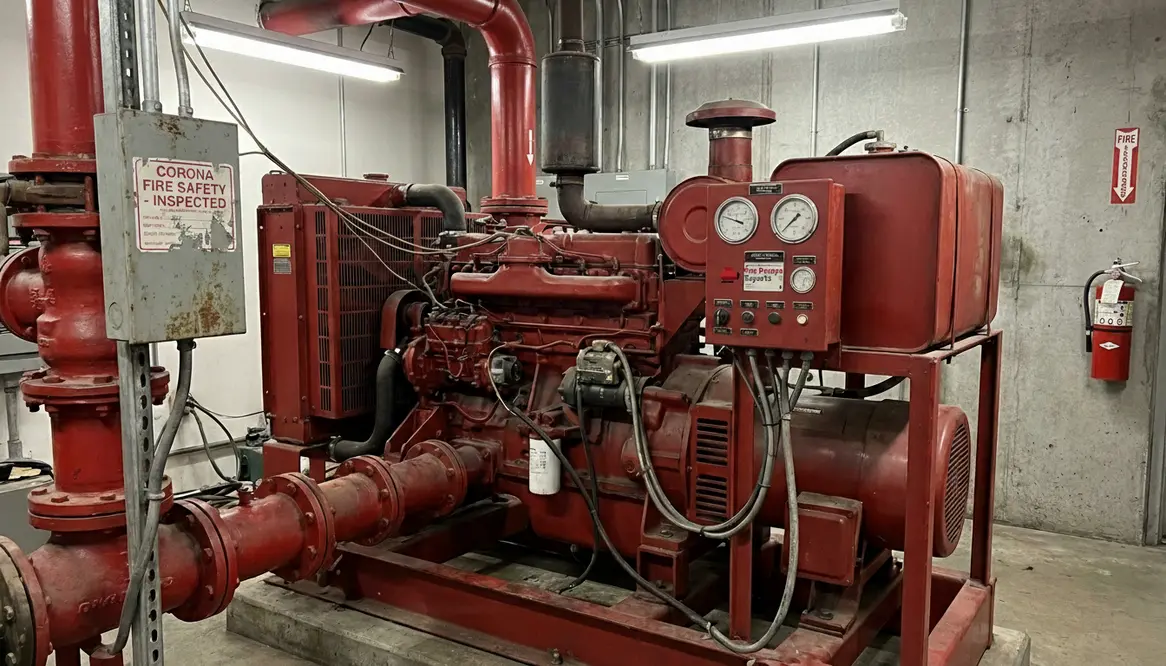
Diesel Fire Pump Engine Failure Corona Risks
I have spent years around emergency systems in large commercial buildings, and I can tell you this without hesitation: when a fire pump fails, it is never at a convenient time. Somewhere in Corona, a system is always being tested, inspected, or quietly waiting for the worst day. That is why understanding diesel fire pump engine failure Corona risks is not just technical trivia. It is the difference between a system that performs on command and one that leaves you staring at gauges like they are abstract art.
So let me walk you through what actually goes wrong, why it happens, and how I think about preventing it before it becomes a very expensive surprise.
What causes diesel fire pump engine failure Corona in real systems?
When I look at failure reports, I rarely see a dramatic explosion or some Hollywood style breakdown. Instead, I see small issues stacking up like unpaid parking tickets. Eventually, something gives.
First, fuel quality quietly causes more problems than most people expect. Diesel that sits too long begins to degrade. Then, microbial growth creeps in, clogging filters and starving the engine. As a result, the engine struggles right when it needs to perform at full load.
Next, I often find cooling system neglect. These engines generate serious heat. However, when coolant levels drop or heat exchangers clog, the system overheats fast. And unlike your car, you cannot just pull over and wait it out.
Battery failure is another classic. It sounds simple, yet it shows up again and again. Weak batteries or corroded terminals mean the engine may not even start. In an emergency, that delay is everything.
Finally, I see control panel faults. Sensors drift. Wiring loosens. Relays age. Therefore, the system may misread conditions or fail to trigger at all. It is not dramatic, but it is deadly in terms of reliability.
Inside the system: where failures like to hide
Fuel system issues
Fuel lines clog, injectors wear down, and tanks collect water. Consequently, combustion becomes inconsistent, reducing engine power.
Air intake problems
Dirty filters restrict airflow. As a result, the engine cannot maintain proper combustion ratios.
Lubrication breakdown
Oil that is not changed on schedule loses effectiveness. Over time, internal components wear faster and friction rises.
Cooling system faults
Blocked exchangers and failing pumps push temperatures beyond safe limits.
Electrical weak points
Starter motors, batteries, and wiring connections degrade slowly until they suddenly fail.
Controller miscommunication
Sensors and control logic drift out of calibration, leading to delayed or failed activation.
Each of these areas might seem manageable alone. However, together they form a chain. And like any chain, it only takes one weak link.
Why do failures cluster in commercial and industrial buildings?
I notice a pattern across large facilities in Corona. These systems are built to sit idle most of the time. Ironically, that is part of the problem.
Because the engine does not run daily, minor issues go unnoticed. Then, when weekly or monthly tests are skipped or rushed, those issues compound. Meanwhile, environmental factors such as dust, heat, and vibration quietly wear components down.
Also, large properties often rely on multiple teams. Maintenance, safety, and operations do not always communicate clearly. Therefore, something as simple as a missed inspection can slip through the cracks.
It reminds me of those disaster movies where one scientist says something is wrong and everyone ignores them until the volcano erupts. Except here, the volcano is a fire pump that refuses to start.
How I prevent diesel fire pump engine failure Corona before it starts
Prevention is not glamorous. There is no dramatic music. Still, it works.
I focus on consistency first. Regular testing under load reveals issues early. Not just a quick start, but a full performance check. Because if the engine cannot handle real demand, the test did not mean much.
Then, I stay strict with fuel management. I test fuel quality, remove water, and schedule polishing when needed. Clean fuel keeps everything else running smoothly.
I also pay close attention to batteries and electrical systems. I replace them before they fail, not after. It is a simple mindset shift, yet it saves a lot of trouble.
Additionally, I treat cooling systems like a priority, not an afterthought. I inspect heat exchangers, verify coolant levels, and ensure proper flow. Overheating is predictable if you know where to look.
Finally, I make documentation part of the process. Clear records help me track patterns. And patterns, in turn, help me stop failures before they repeat.
Is your fire pump system quietly warning you?
Yes, it probably is. Most systems give off subtle clues long before they fail.
For example, longer start times often signal battery or starter issues. Meanwhile, fluctuating pressure can point to fuel or air problems. Unusual vibration or noise usually means internal wear is progressing.
However, these warnings are easy to ignore. After all, everything still “works,” right? That mindset is where trouble begins.
I like to think of it this way: the system is talking. You just have to listen before it starts shouting.
FAQ: Diesel fire pump reliability in commercial systems
Keep your system ready when it matters most
I have seen what happens when preparation meets opportunity, and when neglect meets reality. One leads to a system that performs without hesitation. The other leads to costly downtime and serious risk. If you manage a commercial or industrial property in Corona, now is the time to take a closer look. Schedule inspections, tighten your maintenance plan, and address weak points early. Because when the moment comes, your fire pump should not hesitate. And neither should you.