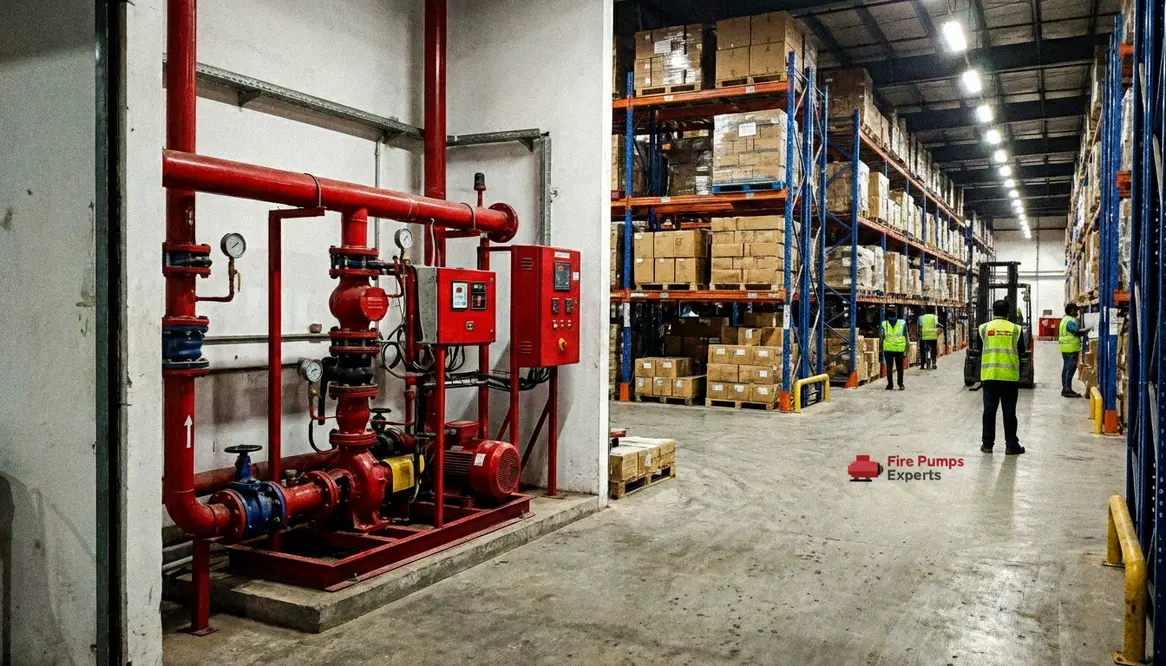
Fire Pump Warehouse India Logistics Safety Guide
I have spent years walking through cavernous warehouses across India, where the hum of logistics never sleeps and the stakes sit high. In these massive spaces, one system quietly stands guard at all hours: the fire pump warehouse India logistics network depends on. It is not flashy. It will not trend on social media. Yet, when everything is on the line, it becomes the hero of the story. And trust me, unlike in the movies, this hero does not wait for dramatic music. It starts instantly, does its job, and saves millions in assets without asking for applause.
Understanding Fire Pump Systems in High Volume Warehousing
To put it simply, a fire pump boosts water pressure when the main supply cannot keep up. However, in large logistics hubs, this simple function becomes a critical backbone. These facilities stretch across acres, with high rack storage and complex layouts. So, relying on gravity alone would be like expecting a garden hose to put out a bonfire. Not happening.
Therefore, I always emphasize that a well designed pump system ensures water reaches every sprinkler head with enough force. Moreover, it supports compliance with strict industrial safety codes across India. Without it, even the most advanced fire detection systems become spectators instead of participants.
Which Fire Pump Types Dominate Large Indian Logistics Hubs?
Let me answer this the way most clients ask me, straight and practical. The choice depends on scale, layout, and risk profile. Still, a few types consistently lead the pack.
Electric Fire Pumps
These are the dependable workhorses. They run on a stable power supply and are ideal where electricity reliability is high. I often recommend them for modern logistics parks with backup power systems.
Diesel Engine Fire Pumps
Now, these are your backup warriors. When the grid fails, and it will at some point, diesel pumps step in. They do not ask questions. They just start. Think of them as the action hero who shows up when things go sideways.
Jockey Pumps
Small but essential. These maintain pressure in the system and prevent the main pump from cycling unnecessarily. In other words, they keep things calm until real trouble begins.
Split Case Pumps
Designed for high flow rates, these are perfect for expansive warehouses. Their efficiency and durability make them a favorite in large scale fire pump warehouse India logistics environments.
Why Pump Selection Matters More Than You Think
I have seen facilities invest heavily in storage automation yet overlook pump optimization. That is like buying a luxury car and skipping the brakes. It looks impressive until it really matters.
First, the wrong pump type can lead to uneven water distribution. Consequently, certain zones may remain under protected. Second, energy efficiency plays a role. Overpowered systems waste resources, while underpowered ones fail under pressure. Additionally, maintenance demands vary. Choosing wisely reduces long term costs and downtime.
And yes, inspectors notice everything. Compliance is not just paperwork. It is performance under stress.
Design Considerations for Fire Pump Warehouse India Logistics Facilities
When I approach system design, I think beyond the pump itself. I consider the entire ecosystem. Because in reality, a pump is only as good as the network it supports.
Firstly, water source reliability is key. Whether it is a dedicated tank or municipal supply, consistency matters. Secondly, layout complexity affects pressure requirements. High ceiling racks demand stronger flow rates.
Moreover, redundancy is not optional in large commercial properties. I always recommend dual pump configurations. If one fails, the other takes over without hesitation. It is like having a co pilot who actually knows how to fly.
Finally, integration with alarm and control systems ensures seamless activation. No delays. No confusion. Just action.
Maintenance Practices That Keep Systems Ready
Here is where many operators get a little too optimistic. They install a solid system and then assume it will behave forever. Unfortunately, fire pumps are not self healing superheroes.
Routine testing is essential. Weekly churn tests, monthly inspections, and annual performance evaluations keep everything in check. Additionally, fuel levels in diesel pumps must stay adequate. It sounds obvious, yet I have seen empty tanks more often than I would like to admit.
People, Not Just Pumps
Also, trained personnel make a difference. Even the best equipment needs skilled hands. Because when an emergency hits, there is no time to Google instructions.
How Modern Technology Is Changing Fire Pump Systems
Now, this is where things get interesting. Technology has started to reshape how we monitor and manage fire pump warehouse India logistics setups.
Smart controllers provide real time data on performance. Therefore, facility managers can detect issues before they escalate. Remote monitoring allows teams to oversee multiple sites without being physically present.
In addition, predictive maintenance tools analyze patterns and flag potential failures early. It is almost like the system whispers, “Hey, I might need attention soon.” And honestly, that is far better than a sudden breakdown during a crisis.
Still, I remind clients that technology supports, not replaces, strong fundamentals. You cannot automate your way out of poor design.
FAQ: Fire Pump Systems in Large Warehouses
Conclusion: Building Safer Logistics Hubs Starts Here
When I look at a warehouse, I do not just see storage. I see risk, responsibility, and opportunity. A well designed fire pump system protects assets, operations, and lives without making a sound. If you manage a large facility, now is the time to evaluate your setup, upgrade where needed, and partner with experts who understand industrial scale demands. Because when it comes to fire safety, quiet confidence always beats loud regret.