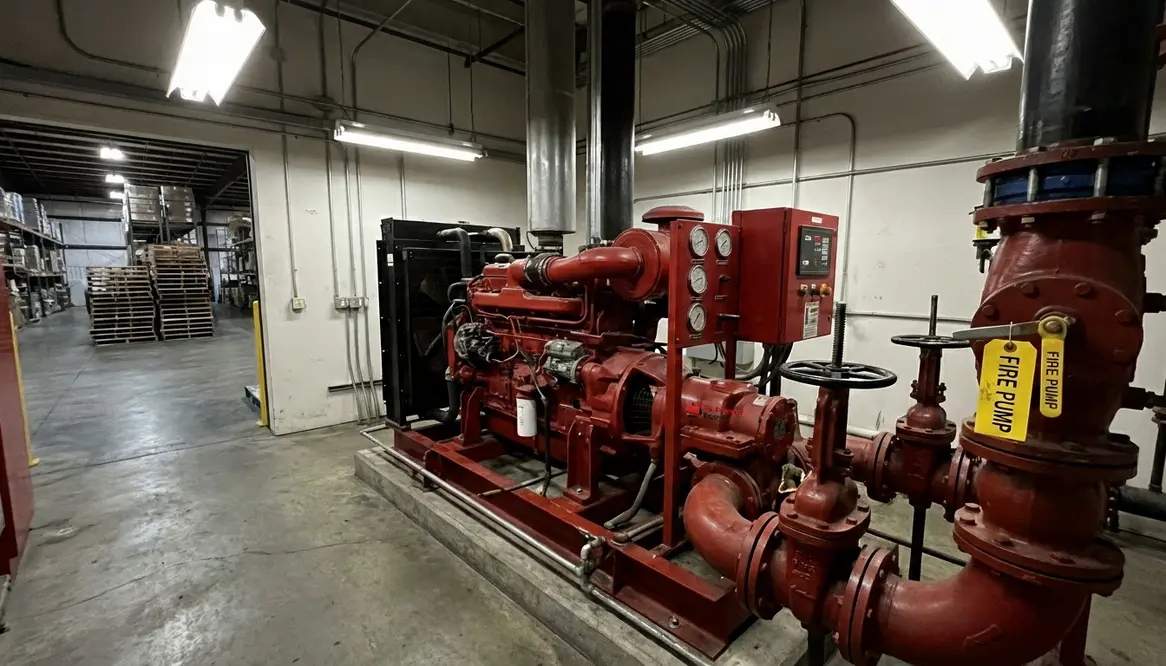
Fire Pumps in Industrial Building Fire Protection
I have spent years around large facilities, and I can tell you this with a calm certainty. When it comes to industrial building fire protection, fire pumps are not just equipment. They are the quiet guardians standing by when everything else goes wrong. In New Jersey, where industrial properties stretch from dense urban hubs to sprawling logistics centers, fire pumps play a role that is both simple and profound. They move water with purpose. And when seconds matter, that purpose becomes everything.
Why Fire Pumps Matter in New Jersey Industrial Properties
New Jersey is not exactly known for taking it easy. Between busy ports, manufacturing plants, and distribution warehouses that seem to run on caffeine and tight deadlines, the risk profile stays high. Because of this, I always emphasize that a standard water supply often falls short during a fire emergency.
That is where fire pumps step in. They boost water pressure so sprinkler systems can actually do their job. Without them, even the most advanced system might perform like a garden hose trying to stop a five alarm blaze. And let us be honest, that is not the kind of underdog story anyone wants to watch.
Moreover, local codes and insurance requirements often expect reliable pressure levels. So, installing and maintaining fire pumps is not just smart. It is necessary.
How Fire Pumps Support Industrial Building Fire Protection Systems
I like to think of a fire pump as the heartbeat of a fire suppression system. When the system detects heat or flame, the pump activates and pushes water through pipes at the right pressure. This ensures consistent coverage across large and complex industrial layouts.
In facilities with high ceilings or expansive floor plans, this becomes even more critical. Water needs to travel far and fast. Without proper pressure, coverage weakens, and weak coverage is a risk no facility manager wants on their record.
Additionally, modern fire pumps integrate with alarms and monitoring systems. As a result, they respond quickly and communicate clearly. It is a bit like having a well trained emergency crew that never sleeps and never complains about overtime.
What Types of Fire Pumps Are Used in Large Facilities
Different buildings call for different solutions. I have seen facilities try to cut corners here, and it rarely ends well. Choosing the right pump depends on size, layout, and water supply conditions.
Common Fire Pump Types
- Electric fire pumps for consistent power and reliability
- Diesel fire pumps for backup when power fails
- Vertical turbine pumps for deep water sources
- Split case pumps for high capacity needs
Where They Shine
- Warehouses with large sprinkler grids
- Manufacturing plants with complex layouts
- Distribution centers with high storage racks
- Facilities requiring redundant systems
Each option serves a purpose. Therefore, selecting the right one is less about preference and more about performance under pressure. Literally.
How Do I Know My Fire Pump System Is Reliable
I get this question a lot, and the answer is straightforward. Testing and maintenance tell the truth. Even the best equipment needs regular attention to stay ready.
Routine flow testing ensures the pump delivers the required pressure. Meanwhile, inspections catch wear and tear before it becomes failure. In New Jersey, where compliance standards are strict, staying ahead of maintenance is not just wise. It keeps operations running without interruption.
Also, documentation matters. When inspectors come in, having clear records can make the process smooth. Without them, things can feel a bit like explaining your homework to a teacher who already knows you forgot it.
Key Challenges in Industrial Fire Protection and How Pumps Solve Them
Industrial environments are not simple spaces. They come with high ceilings, hazardous materials, and constant activity. Because of this, fire protection systems must adapt.
Fire pumps address several core challenges. First, they ensure consistent pressure across wide areas. Second, they compensate for fluctuating municipal water supply. And third, they provide redundancy when paired with backup systems.
However, the real advantage lies in reliability. When everything else is uncertain, a properly maintained pump delivers. It does not panic. It does not hesitate. It just works.
Choosing the Right Partner for Industrial Building Fire Protection
I have seen the difference between a system installed and a system engineered. The latter considers every detail, from flow requirements to long term maintenance.
Working with specialists who understand industrial building fire protection in large scale facilities ensures that nothing gets overlooked. They design systems that align with codes, meet operational demands, and stand up to real world conditions.
And let us face it, in a state where inspections are taken seriously, having experts on your side is less of a luxury and more of a survival strategy.
For facilities that want to go deeper into pump-specific decisions, resources like fire pump service and maintenance guidance can help translate theory into practical steps.
FAQ
Below are a few of the questions I hear most often when we start talking about fire pumps and industrial building fire protection in large facilities.
Keep Your Facility Ready When It Matters Most
When I look at a well protected facility, I see more than compliance. I see preparation, foresight, and a commitment to keeping people and assets safe. Fire pumps are a central piece of that promise. If you manage a large property in New Jersey, now is the time to evaluate your system, strengthen your defenses, and work with experts who understand what is truly at stake. Because when the moment comes, readiness is everything.