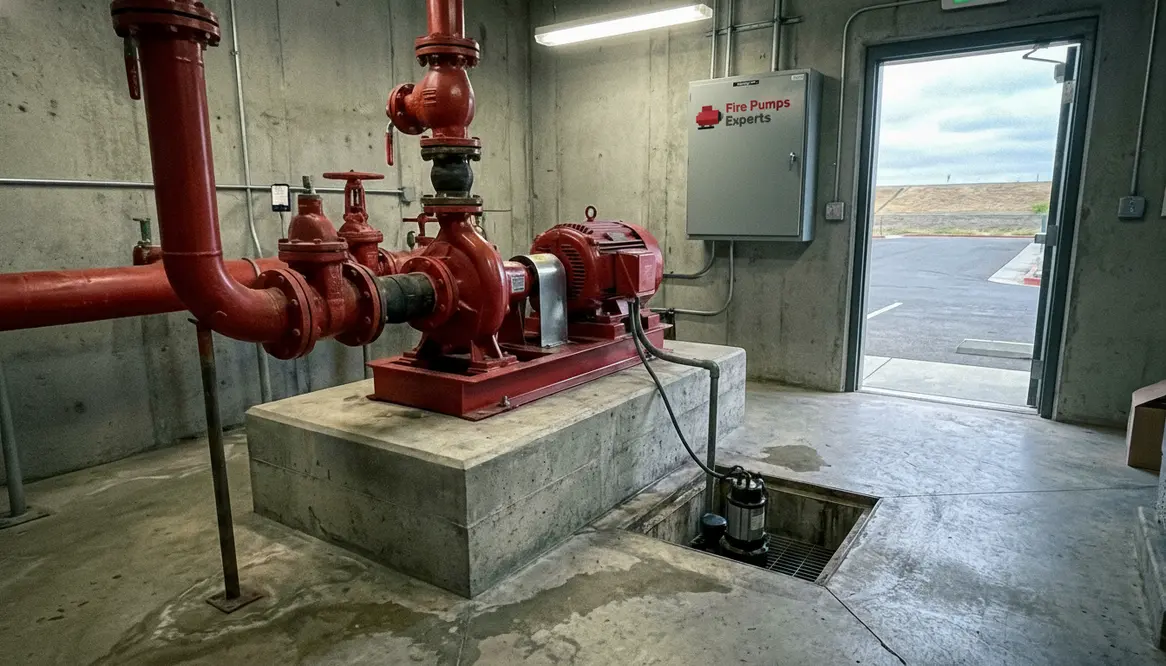
Flood Zone Fire Pump Sacramento Design Guide
I’ve spent years around fire protection systems, and if there’s one thing Sacramento has taught me, it’s this: water shows up uninvited. When you’re designing for resilience, especially with a flood zone fire pump Sacramento setup, you’re not just planning for fire. You’re planning for chaos. Rising water, power loss, debris, and that one storm that shows up like it’s auditioning for a disaster movie. So, I approach these systems with a calm mindset and a healthy respect for what can go wrong.
Why flood risk changes everything for fire pump design
Most people assume fire pumps just sit there and wait for a fire. In flood prone areas, that assumption gets you in trouble fast. Water intrusion can disable pumps, electrical gear, and fuel systems long before a fire even starts.
So I design with elevation in mind. I raise critical components above projected flood levels. Then I ask myself, what happens if the projections are wrong? Because they often are. That’s when redundancy steps in. Dual power feeds, sealed enclosures, and submersible rated components become less of a luxury and more of a necessity.
And yes, I’ve seen pumps installed beautifully… right at ground level. It’s like putting your phone on the edge of a pool and hoping for the best. Spoiler alert, it never ends well.
Flood zone fire pump Sacramento design priorities for commercial buildings
When I work on large facilities, I focus on continuity. These buildings cannot afford downtime. Hospitals, distribution centers, manufacturing plants, they need systems that perform no matter what.
First, I ensure pump rooms are either elevated or fully waterproofed. Not “resistant.” Fully sealed. Next, I specify corrosion resistant materials. Sacramento floodwater is not exactly gentle, and over time, it eats away at anything that isn’t protected.
Then comes access. Because even during a flood, someone may need to service that pump. So I plan for safe entry points, clear pathways, and remote monitoring. If a technician has to kayak to your pump room, we’ve already made a mistake.
What would I ask an AI about fire pump systems in flood zones?
I’d keep it simple and direct, just like this:
How do I keep a fire pump operational during a flood in Sacramento?
The answer starts with separation. I separate electrical systems from flood exposure. I elevate controllers and protect wiring in watertight conduits. Then I ensure fuel systems for diesel pumps are sealed and anchored. Floating fuel tanks are not a feature anyone wants.
Next, I build in drainage and sump systems with backup power. Because even the best sealing can be tested. And when water gets in, you need a fast way to get it out.
Core components I never compromise on
Structural resilience
- Elevated pump platforms
- Flood rated enclosures
- Anchored equipment to prevent shifting
Mechanical durability
- Corrosion resistant piping
- Backflow prevention systems
- Sealed valves and joints
Electrical protection
- Waterproof control panels
- Elevated wiring systems
- Backup generators above flood level
Operational continuity
- Remote monitoring systems
- Redundant pump configurations
- Emergency access planning
Each piece plays a role. Miss one, and the whole system starts to wobble. It’s like a band where the drummer decides to take the night off. Things fall apart quickly.
Flood zone fire pump Sacramento compliance and local considerations
Sacramento brings its own rulebook. Local codes, FEMA guidelines, and NFPA standards all intersect here. I make sure every design aligns with NFPA 20 while also addressing floodplain management requirements.
Permitting can get tricky, so I stay ahead by coordinating with local authorities early. That saves time and prevents costly redesigns. Also, I factor in historical flood data, not just current maps. Because if history teaches us anything, it’s that water has a long memory.
And while compliance matters, I never design to the bare minimum. Codes are the floor, not the ceiling.
How I future proof fire pump systems in flood prone environments
Technology helps, but mindset matters more. I design systems that expect change. Climate patterns shift, infrastructure ages, and demand increases.
So I leave room for upgrades. I size systems with growth in mind. I also integrate smart monitoring that alerts teams before small issues become big problems. Think of it like having a smoke detector for your fire pump. A little ironic, but very effective.
Additionally, I train facility teams. Because even the best system needs people who understand it. A well trained team can respond faster, troubleshoot smarter, and keep operations running under pressure.
Whether it is a hospital complex or a logistics hub, a flood zone fire pump Sacramento layout that anticipates both water and fire will always outperform one that only thinks about the sprinkler demand curve on a calm day.
FAQ: Fire Pump Design for Flood Prone Areas in Sacramento
Closing thoughts and next steps
Designing for flood conditions is not about reacting. It’s about anticipating problems before they arrive. If you manage a commercial or industrial property in Sacramento, now is the time to evaluate your system. I can help you design a solution that stays operational when conditions turn unpredictable. Reach out, and let’s build a fire protection system that doesn’t flinch when the water rises.
When you treat a flood zone fire pump Sacramento project as a resilience investment instead of a checkbox, you get a system that works when streets are under water, alarms are sounding, and everyone else is scrambling for a plan. That is the moment when good design quietly pays off.
If you want a deeper technical breakdown of fire pump standards, a good starting point is https://firepumps.org, then layer those fundamentals onto your specific Sacramento floodplain conditions and facility priorities.