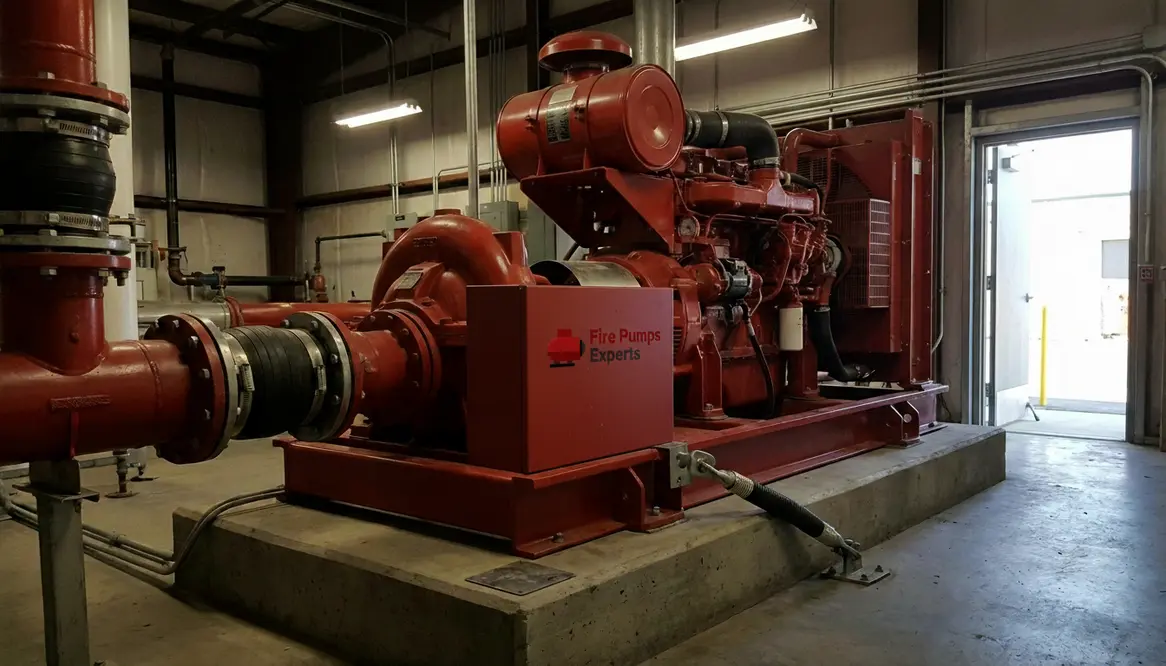
Seismic Fire Pump California Design Guide
I have spent enough time around fire protection systems to know one thing for sure. In California, the ground has a personality, and sometimes it likes to move. That reality changes how I approach every seismic fire pump California project. It is not just about moving water. It is about keeping that water moving when the earth decides to dance. And trust me, earthquakes are not exactly known for their gentle rhythm.
So, if you are managing a commercial facility or a large industrial property, this is where things get serious. But do not worry. I will walk you through it in a way that feels less like a code manual and more like a conversation with someone who has seen a few things.
How do I choose a fire pump for seismic zones in California
I start with one simple principle. The pump must work after the earthquake, not just before it. That might sound obvious, yet many systems fail because they were designed for normal conditions, not seismic events.
First, I look at seismic ratings. Equipment must meet California Building Code and NFPA 20 requirements. These standards ensure that the pump, controller, and fuel systems can withstand seismic forces. However, compliance alone is not enough. I always verify that anchorage and bracing are properly engineered for the specific site conditions.
Next, I consider the type of pump. Electric pumps are common, but diesel driven units often provide more reliability during power outages, which tend to follow earthquakes like a bad sequel. Therefore, many large facilities lean toward diesel or hybrid setups.
Finally, I evaluate the water supply. Because if your pump is ready but your water source is not, well, that is like bringing popcorn to a movie with no screen.
Seismic fire pump California requirements I never ignore
There are a few non negotiables I stick to every time. These are not optional upgrades. They are survival tools for your system.
Anchorage and bracing must be engineered to resist lateral and vertical forces. I have seen poorly anchored pumps shift just enough to break connections. And just like that, your system becomes decorative.
Flexible connections are critical. Rigid piping does not forgive movement. Flexible couplings and seismic loops absorb that motion and keep the system intact.
Fuel system protection matters for diesel units. Tanks must be secured, and lines must accommodate movement. Otherwise, your backup plan turns into a liability.
Controller resilience is another key factor. The controller must remain operational even if the building structure shifts. I treat it like the brain of the system. You do not want that going offline.
Key components I focus on for long term performance
Foundation design
I make sure the pump sits on a reinforced housekeeping pad designed for seismic loads. A weak base undermines everything.
Piping layout
I avoid overly rigid layouts. Instead, I incorporate flexibility and proper support spacing to allow controlled movement.
Power reliability
I evaluate backup power options carefully. In California, power loss is not a possibility. It is an expectation.
Testing access
I ensure the system is easy to test and maintain. Because a system that is hard to test often does not get tested.
Designing for real world seismic scenarios
Now, this is where experience comes into play. Codes tell you the minimum. Real life demands more.
I think about how the building will behave during an earthquake. Will there be differential movement between floors and piping runs? Will adjacent systems collide? These are not theoretical questions. They are the difference between a system that survives and one that fails quietly.
Additionally, I coordinate with structural engineers early. Fire protection cannot exist in a silo. When disciplines collaborate, the result is a system that works as one cohesive unit. It is like assembling the Avengers, except instead of saving the universe, we are saving your facility from catastrophic loss.
Any seismic fire pump California design worth installing must account for how the pump room, piping, and building frame move together as a system, not as isolated parts bolted down and forgotten.
Common mistakes I see in large commercial facilities
Even well funded projects can miss the mark. I have seen it happen more times than I would like.
Treating seismic protection as optional
One mistake is treating seismic protection as an afterthought. It gets value engineered out or minimized. Then, when an earthquake hits, the system underperforms.
Improper installation
Another issue is improper installation. You can specify the best equipment in the world, but if it is installed incorrectly, it will not perform. It is like buying a luxury car and filling it with the wrong fuel. Looks great. Goes nowhere.
Neglecting ongoing inspection
Lastly, I often see a lack of ongoing inspection. Seismic components can loosen or degrade over time. Regular checks ensure everything stays ready.
When a seismic fire pump California upgrade is rushed, underfunded, or treated like wallpaper instead of critical infrastructure, the odds of failure go up just when you can least afford it.
Future proofing your fire pump system
Technology is evolving, and so are seismic design strategies. Therefore, I always plan with the future in mind.
Smart monitoring systems now allow real time performance tracking. These tools can alert facility managers to issues before they become failures. It is like having a watchful guardian that never sleeps.
Also, I consider scalability. As facilities expand, fire protection systems must adapt. Designing with flexibility ensures that upgrades do not require a complete overhaul.
The smartest seismic fire pump California strategies leave room for new sensors, data logging, and changes in water supply without tearing out everything you paid for the first time.
If you want to benchmark your approach, resources like https://firepumps.org can help you frame what modern performance and reliability should look like in practice.
FAQ
Closing thoughts and next steps
If you are responsible for a commercial or industrial facility, this is not the place to cut corners. A properly designed system protects your building, your operations, and your bottom line. I recommend working with specialists who understand seismic demands inside and out. Take the next step, evaluate your current setup, and make sure it is ready for whatever California decides to throw your way. Because when the ground moves, your fire protection system should not flinch.
The right seismic fire pump California strategy will feel almost boring when the shaking starts, and that is exactly the point: nothing breaks, nothing disconnects, and your building keeps its best line of defense flowing when it matters most.