Fire Pump Wind Exposure Palmdale Design Guide
How to keep your fire pump system steady when Palmdale’s wind is doing its best impression of a movie stunt coordinator.
I have spent years working with systems that only matter when everything else fails. And in Palmdale, where the wind can howl like it is auditioning for a disaster movie, designing a reliable fire protection setup is not just smart, it is essential. When I talk about fire pump wind exposure Palmdale, I am talking about a very real challenge that affects how water moves, how equipment survives, and how buildings stay protected when conditions turn aggressive. So let me walk you through how I approach it, calmly, carefully, and with just enough humor to keep us both awake.
Understanding Wind Behavior in Palmdale Commercial Zones
First, I look at the wind itself. Palmdale is not shy about pushing air around. Gusts can be strong, sustained, and unpredictable. Because of that, I treat wind as a structural force, not background noise.
Moreover, wind pressure can impact pump houses, exposed piping, and even electrical components. I have seen improperly anchored systems shift just enough to create long term reliability issues. That is not dramatic. That is physics doing its job.
So, I always evaluate site orientation, surrounding structures, and open exposure. If your facility sits in a wide open industrial lot, the wind will treat it like a playground. And trust me, the wind always wins that game.
How I Design for fire pump wind exposure Palmdale Conditions
Now we get into the part where things get interesting. Designing for wind is not about overbuilding everything. It is about building smart.
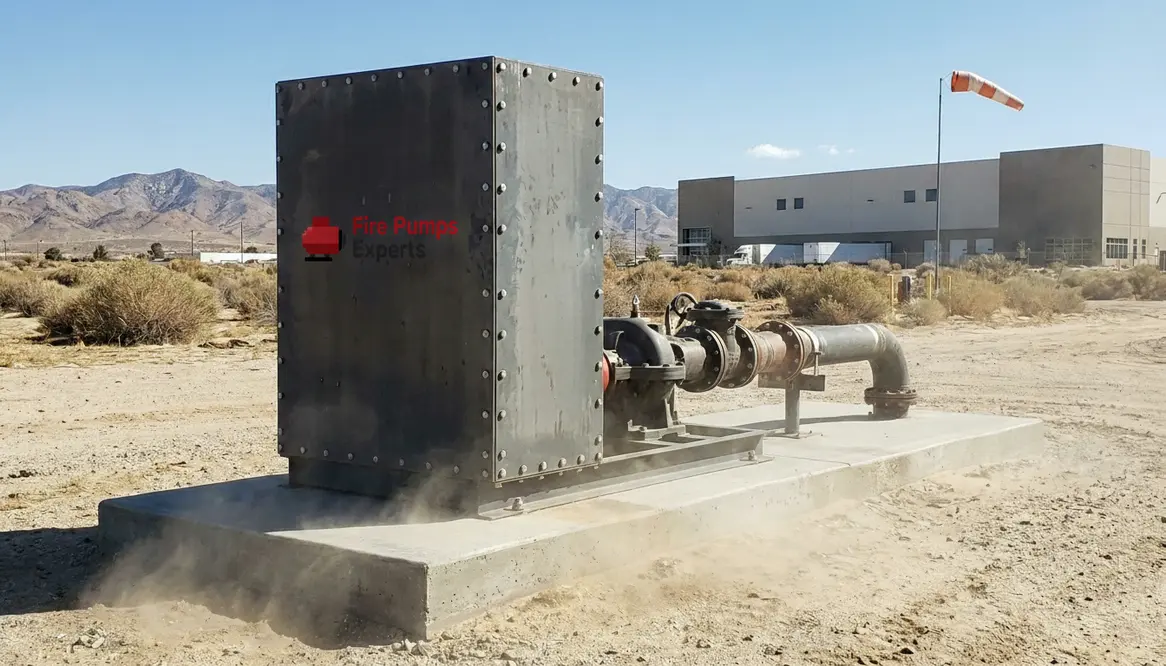
First, I prioritize enclosure integrity. A properly designed pump room or housing reduces direct wind interaction. Then, I reinforce anchoring systems. Bolts, frames, and foundations must resist uplift and lateral movement. If it looks like it could budge, I assume it will.
Additionally, I account for vibration. Wind does not just push, it shakes. Over time, that vibration can loosen fittings or stress joints. So I select components that tolerate movement without failing.
And yes, I also think about access. Because when something goes wrong during high winds, nobody wants to wrestle a door that swings like it is possessed.
What Materials Actually Hold Up in High Wind Fire Pump Installations?
I get this question a lot, and the answer is simple. Not all materials are equal when the wind decides to show off.
For commercial and industrial facilities, I rely on:
- Steel enclosures because they resist deformation and provide solid protection
- Corrosion resistant fasteners since Palmdale conditions can wear down weaker metals over time
- Flexible couplings to absorb vibration without cracking
- Reinforced concrete pads that anchor the system with confidence
However, I never choose materials in isolation. Everything must work together. A strong pump on a weak base is like putting a superhero in flip flops. Impressive, but not practical.
Design Priorities for Large Facilities and Industrial Buildings
Structural Stability
I focus on anchoring systems that can withstand both steady and sudden gusts. This prevents misalignment and protects long term performance.
Redundancy Planning
I build systems that continue functioning even if one component struggles. Because in high risk environments, backup is not optional.
Protected Placement
I position pumps and controllers in areas shielded from direct wind exposure whenever possible.
Maintenance Access
I ensure technicians can safely reach equipment during adverse conditions without turning routine service into an action scene.
At this scale, small design flaws become expensive problems. So I approach every detail with intention.
Common Mistakes I See in Wind Exposed Fire Pump Systems
Even experienced teams can overlook a few things. And unfortunately, wind does not forgive shortcuts.
For example, I often see under anchored systems. They meet basic code, sure, but they do not account for local wind intensity. That gap matters.
Another issue is poor enclosure sealing. Wind driven dust and debris can enter sensitive components, leading to wear that nobody notices until performance drops.
Then there is the classic mistake of ignoring vibration. It is subtle at first. But over time, it turns into leaks, noise, and failures that seem to come out of nowhere.
Fixing these issues later costs more than doing it right the first time. That is not just engineering wisdom. That is life wisdom.
How I Future Proof Systems Against Changing Conditions
Here is the thing about Palmdale. The environment does not stay still. Development changes wind patterns. Climate trends shift intensity. So I design with flexibility in mind.
I allow for upgrades. I select components that can be reinforced without full replacement. And I document everything clearly, so future teams are not left guessing.
Additionally, I consider monitoring systems. Sensors that track vibration or pressure changes can provide early warnings. Think of it as giving your fire pump system a voice. Not a loud one. Just enough to let you know something is off before it becomes a problem.
When I approach fire pump wind exposure Palmdale projects, I also think about documentation that lives beyond a single upgrade cycle. Drawings, torque specs, anchorage details, and inspection intervals all become part of a package that future engineers and technicians can trust instead of guess at.
Key Site Questions Before You Build
Before committing to a layout, I ask questions like:
- How exposed is the lot to prevailing winds throughout the year?
- Are there neighboring structures that create wind tunnels or turbulence?
- Where will drifting dust and debris naturally collect?
- Can access paths stay safe during high gusts?
- Is there a better orientation for the pump house door and louvers?
- What does historical data say about peak wind events on this parcel?
Those answers shape how I treat fire pump wind exposure Palmdale specific constraints long before concrete is poured.
FAQ About Fire Pump Systems in High Wind Areas
Final Thoughts and Next Steps
Designing for fire pump wind exposure Palmdale conditions is not about overreacting. It is about respecting the environment and building systems that hold their ground when it matters most. If you manage a commercial or industrial property, I can help you design or upgrade a system that performs reliably, no matter how hard the wind pushes. Reach out, and we will build something that stays exactly where it belongs.