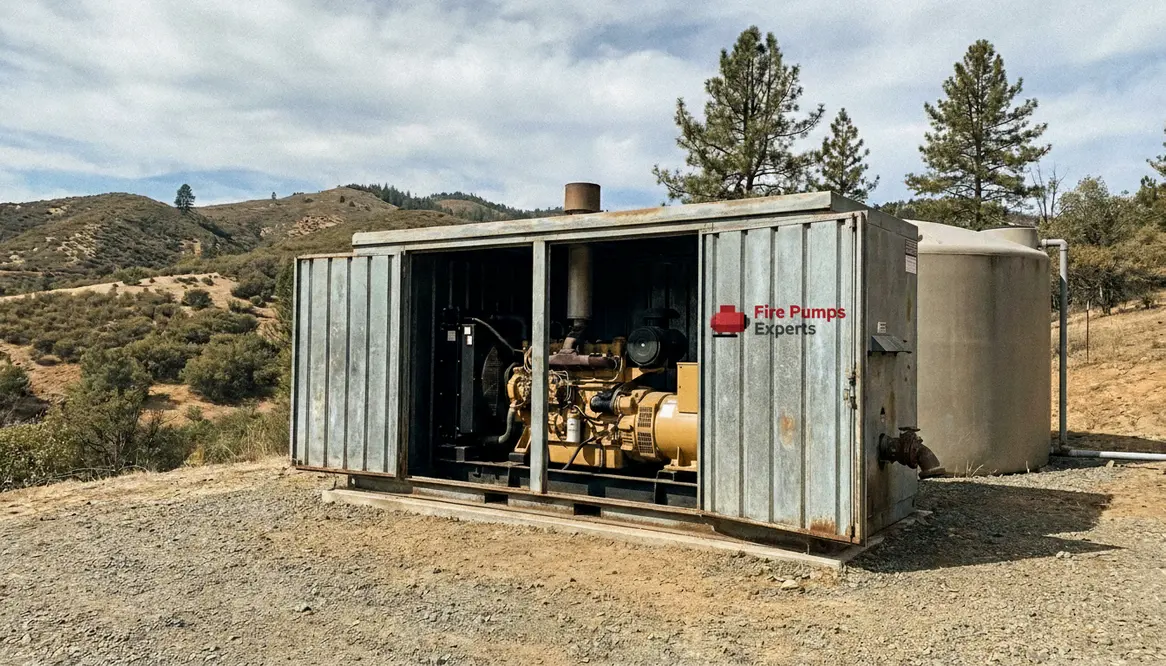
Remote Facility Fire Pump Northern California Guide
I have spent years around commercial sites tucked into the rugged stretches of Northern California, where help is often miles away and response time is not a luxury you can count on. That is exactly where the right remote facility fire pump Northern California strategy becomes more than a line item. It becomes the quiet hero in the background. Out here, fire protection is not flashy. It is steady, dependable, and ready when everything else feels uncertain. And yes, choosing the right system can feel about as thrilling as watching paint dry… until you realize that paint might be on a fuel storage tank.
What fire pump types work best in remote Northern California facilities
When I evaluate fire protection for remote industrial properties, I focus on reliability first, convenience second. Remote locations demand systems that operate without constant oversight. Therefore, the most common pump types I see include diesel driven pumps, electric pumps with backup power, and vertical turbine pumps.
Diesel fire pumps are the workhorses. They do not depend on the electrical grid, which is a big deal when storms roll through or when infrastructure is limited. I trust them in isolated lumber mills, agricultural processing plants, and energy facilities.
On the other hand, electric pumps still have their place. When paired with generators, they provide consistent performance with less maintenance. However, I always remind clients that a generator without fuel is just a very expensive paperweight.
Then there are vertical turbine pumps. These shine when water sources sit below ground, such as wells or reservoirs. In Northern California, where terrain can be unpredictable, these pumps adapt well.
Each option serves a purpose, but the environment always makes the final call.
Why water supply defines your fire pump choice
I have seen people obsess over pump horsepower while ignoring the actual water source. That is like buying a sports car with no road to drive on. In remote areas, water availability often dictates the entire system design.
If I am working with a static water tank, I lean toward horizontal split case pumps for steady flow. However, if the facility depends on a lake or underground well, vertical turbine pumps become the logical choice.
Additionally, seasonal changes matter. Northern California dry seasons can reduce water levels significantly. Because of this, I always plan for worst case conditions, not ideal ones. It is not pessimism. It is preparation.
remote facility fire pump Northern California compliance and codes made simple
Let me be honest. Codes are not exciting. They will not win awards or trend on social media. Still, they are the backbone of every reliable system.
In Northern California, I follow NFPA 20 standards closely, along with local authority requirements. Remote commercial and industrial facilities often face stricter scrutiny because emergency response times are longer.
That means redundancy is not optional. Backup power, duplicate controllers, and monitoring systems are often required. I also recommend remote monitoring tools. They allow facility managers to track performance without being physically present. Think of it as giving your fire pump a voice that says, “Hey, I am good,” or “We need to talk.”
Any remote facility fire pump Northern California design worth approving should clear these code hurdles while staying practical for the people who have to live with it every day.
How I balance reliability and maintenance in remote locations
Maintenance is where even the best systems can fall apart. In remote settings, regular service visits are not always easy. So I prioritize designs that reduce complexity without sacrificing performance.
What I prioritize
- Simple control systems
- Durable components
- Easy access for inspections
- Fuel efficiency for diesel units
What I avoid
- Overly complex automation
- Hard to source replacement parts
- Systems that need constant calibration
- Unproven technologies
Because of this approach, I help clients avoid the “set it and forget it” trap. Fire pumps are not crockpots. They need attention, just not constant babysitting.
Can one system handle multiple industrial risks
Short answer, yes, but only if designed correctly. Remote facilities often combine multiple hazards such as fuel storage, manufacturing processes, and large warehouses. Therefore, I design systems that handle varying pressure and flow demands.
For example, a system might need high pressure for sprinkler systems and high volume for hydrants. Balancing these needs requires careful pump selection and controller configuration.
Moreover, I consider future expansion. Facilities grow. Risks change. A flexible system saves time and money later. It is like buying a slightly bigger jacket. You may not need it today, but you will be glad you have it tomorrow.
When I plan a remote facility fire pump Northern California project around multiple hazards, I make sure the backbone of the system can flex with whatever the facility becomes five or ten years from now.
remote facility fire pump Northern California real world considerations
Out in the field, theory meets reality fast. I have seen pumps installed perfectly on paper fail because someone ignored environmental factors.
Dust, temperature swings, wildlife, and even seismic activity can impact performance. Yes, I have seen a curious animal chew through wiring. Nature does not read installation manuals.
So I account for protective enclosures, proper ventilation, and seismic bracing. I also make sure systems can start reliably in cold mornings and hot afternoons. Consistency is everything.
And then there is access. If a technician cannot reach the pump easily, maintenance will get skipped. It is human nature. So I design with practicality in mind, especially when laying out a remote facility fire pump Northern California crews will have to service for decades.
FAQ
Conclusion
When I design a fire protection system for a remote commercial or industrial site, I think beyond equipment. I think about reliability, environment, and long term performance. The right fire pump setup protects more than property. It protects operations, people, and peace of mind.
If you are planning or upgrading a system, now is the time to get it right. Whether it is a small outpost or a sprawling industrial complex, a carefully planned remote facility fire pump Northern California installation turns uncertainty into something you can manage. Reach out, ask hard questions, and build something that works when it matters most.
For more background on properly engineered systems and industry standards, resources like https://firepumps.org can help frame the technical side while you focus on what your specific site really needs.