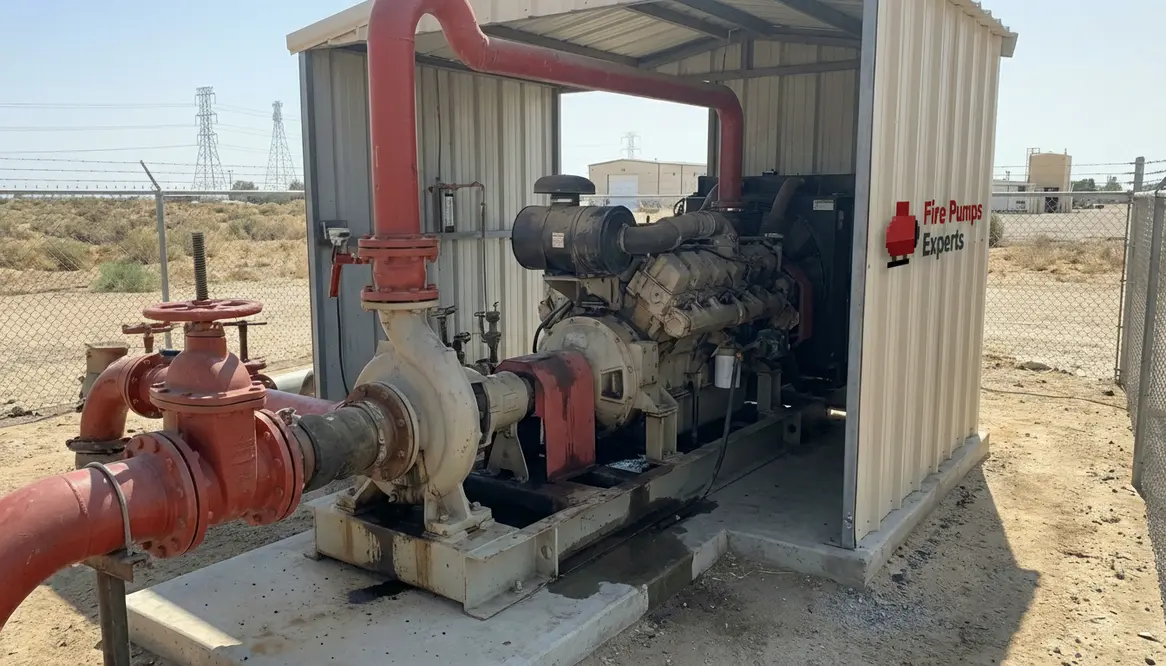
Kern County Fire Pump Reliability for Industry
I have spent years around industrial sites, and if there is one thing I have learned, it is this: fire protection is not the place for shortcuts. Early on, I came to appreciate what people call New Jersey fire pump reliability. It is that quiet confidence that when a system is called upon, it answers without hesitation. Now, bring that same expectation to Kern County, where heat, dust, and heavy industry raise the stakes. The question is not if you need a fire pump. The real question is how to get it right the first time, and keep it right.
Why industrial fire pumps in Kern County cannot afford to fail
Between long, dry seasons, sprawling industrial footprints, and complex processes, Kern County facilities operate with a razor thin margin for error when it comes to fire risk. You are not just protecting equipment; you are protecting uptime, contracts, and people. That is why importing the mindset behind New Jersey fire pump reliability into Kern County operations is more than a catchy comparison. It is a practical benchmark: systems that start, hold pressure, and stay online when the situation is at its absolute worst.
What New Jersey standards have to do with Kern County
When I reference New Jersey fire pump reliability, I am not suggesting geography changes physics. I am pointing to a culture of system performance where owners, engineers, and contractors assume that the pump must work the first time, every time. Bringing that same expectation to Kern County is how you bridge the gap between minimum code compliance and real world resilience in harsh industrial environments.
What fire pump requirements apply to industrial sites in Kern County?
Right out of the gate, Kern County facilities must follow California Fire Code, NFPA 20, and local authority rules. However, codes alone do not tell the whole story. I always tell clients that compliance is the floor, not the ceiling.
Because many industrial sites handle hazardous materials or operate around the clock, fire pumps must meet higher performance expectations. Therefore, systems often require:
- Dedicated water supply with verified capacity
- Backup power sources such as diesel engines
- Seismic bracing due to California regulations
- Routine testing that goes beyond minimum intervals
In other words, you are not just installing equipment. You are building a system that must perform under stress, in extreme heat, and sometimes when everything else is failing. Think of it like a stunt double in an action movie. When the chaos starts, it has to step in flawlessly.
That is also where the discipline behind New Jersey fire pump reliability becomes useful as a mental model. If your Kern County pump cannot match that level of dependable performance, you have work to do long before the inspector or the fire department shows up.
Designing systems that actually perform under pressure
I have seen beautifully designed systems on paper fall apart in real conditions. So, I focus on practical design. First, flow and pressure calculations must reflect real site demands, not ideal scenarios. Next, pump selection should match both peak demand and long duration events.
Additionally, Kern County presents unique environmental challenges. Dust can clog components, while high temperatures can strain engines. Because of this, I recommend:
- Enclosures with proper ventilation and filtration
- Materials that resist corrosion and heat stress
- Control systems that remain stable during power fluctuations
Meanwhile, layout matters more than most people expect. A poorly placed pump room can slow response times or complicate maintenance. I like to say that accessibility is not a luxury. It is survival planning.
Design checks that protect industrial operations
- Verify available water supply against worst case firefighting scenarios, not just drawings.
- Confirm pump driver sizing with realistic ambient temperatures and ventilation assumptions.
- Plan suction and discharge piping to minimize friction losses and turbulence.
- Provide clear access for maintenance teams and emergency responders.
Bringing reliability benchmarks into Kern County
If you want Kern County fire pumps to mirror the best examples of New Jersey fire pump reliability, build in margins, not excuses. Oversimplified assumptions, optimistic power studies, or cramped pump rooms have a way of turning theoretical designs into practical failures.
How do I choose the right fire pump for a large industrial facility?
I get this question often, and the answer is never one size fits all. However, I start with three core factors: water supply, hazard level, and operational continuity.
For example, facilities with high hazard processes often benefit from diesel driven pumps. Why? Because they keep running even if the grid goes down. On the other hand, electric pumps can work well when paired with reliable backup power.
Here is a simple way I break it down:
When I lean diesel
- Unstable power conditions
- Remote industrial sites
- Critical continuous operations
When electric makes sense
- Strong grid reliability
- Lower maintenance priorities
- Indoor controlled environments
Of course, I always circle back to reliability benchmarks. That is where echoes of New Jersey fire pump reliability come into play. It is not about location. It is about adopting a mindset where failure is simply not acceptable.
If you want a reference point for what committed fire pump service looks like, study how established providers approach inspection, repair, and testing programs. For example, Kord Fire Protection outlines comprehensive fire pump maintenance and testing services at https://kordfire.com/fire-pump/, including weekly, monthly, and annual schedules that keep systems ready for real emergencies.
Inspection, testing, and the rhythm of reliability
A fire pump that sits idle too long becomes a question mark. Therefore, routine testing is non negotiable. Weekly churn tests, monthly inspections, and annual flow tests form the backbone of a reliable system.
However, I push beyond basic schedules. I encourage facilities to track performance trends. If pressure drops slightly over time, that is not random. It is a signal. And ignoring signals is how small issues become expensive headlines.
Turn testing into a decision making tool
- Trend test results over time instead of filing them away.
- Set internal performance thresholds that trigger investigation long before code minimums are violated.
- Use test data to validate that your Kern County system is delivering the same kind of consistency you would expect from New Jersey fire pump reliability standards.
Also, documentation matters. Inspectors in Kern County expect clear records. More importantly, your own team needs that history to make informed decisions. Think of it like a medical chart. Without it, you are guessing instead of diagnosing.
Avoiding costly mistakes in industrial fire pump setups
I have seen mistakes that could make a safety manager lose sleep. The most common one is undersizing the pump. It may pass initial checks, yet fail during a real event. Another frequent issue is poor integration with existing systems.
Furthermore, some facilities treat maintenance as optional. That approach works right up until it does not. Then suddenly, everyone is asking why the system failed.
So, I keep it simple:
- Never design for minimum requirements only
- Always test under realistic conditions
- Train staff like they will face a real emergency
And yes, I will say it with a slight grin. Fire pumps are like seatbelts. Nobody brags about them, but everyone is grateful when they work.
Common pitfalls to watch for in Kern County industrial setups
- Assuming municipal or on site water supplies will behave the same during peak demand or wildland fire events.
- Locating pump rooms in hot, poorly ventilated corners that quietly reduce driver life and reliability.
- Skipping seismic detailing or restraints because “it has never been an issue before.”
- Failing to coordinate with process engineers, leading to surprises when demand profiles change.
FAQ: Fire Pump Requirements for Kern County Industrial Facilities
Industrial owners and operators often circle back to the same questions when they begin taking pump performance seriously. Here are straight answers to the most common ones.
Final thoughts and next steps
If you run an industrial facility in Kern County, this is your moment to get serious about fire pump performance. I encourage you to evaluate your system, test its limits, and upgrade where needed. When you aim for proven reliability standards, similar to what I have seen associated with New Jersey fire pump reliability, you build confidence into every corner of your operation. Reach out, ask hard questions, and make sure your system is ready before it is ever needed.