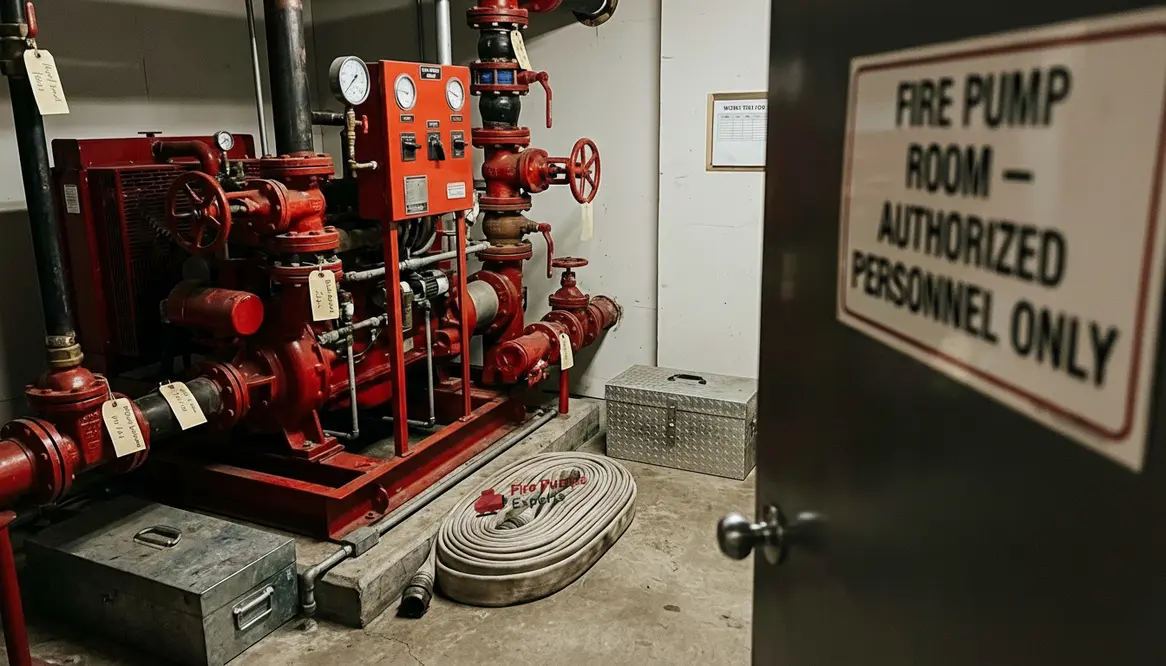
Fire Pump Solutions for Kern County Facilities
I have spent years around fire protection systems, and if there is one thing I know, it is this: reliability is not a luxury. It is a requirement. Whether I am discussing New Jersey fire pump maintenance or planning systems for large scale properties in Kern County, the principle stays the same. When a fire starts, nothing else matters except whether the system works. No excuses. No second chances. And certainly no “we will fix it later.” Later is where the problems live.
So today, I want to walk through how fire pump solutions support schools, hospitals, and public facilities in Kern County. Not in a dry manual kind of way, but in a way that actually makes sense. Because, let’s be honest, fire pumps are not exactly blockbuster movie material. Although, if they were, they would be the quiet hero who shows up in the third act and saves everyone without asking for applause.
In Kern County, that quiet hero has to deal with long pipe runs, aging infrastructure, and facilities that never really sleep. Schools, hospitals, and public buildings all depend on pressure that shows up on time, every time. That is where thoughtful design, disciplined testing, and the same mindset used in rigorous programs like New Jersey fire pump maintenance really start to matter.
If you manage one of these properties, you are not just buying hardware. You are committing to an ongoing relationship with a system that quietly protects your people. The better that relationship is defined and maintained, the fewer surprises you will face when alarms sound and water has to move now, not later.
What Fire Pump Solutions Do for Kern County Facilities
Fire pumps exist for one reason. They move water with force when pressure drops. However, in large facilities like hospitals or campuses, that simple idea becomes a complex system.
In Kern County, I often see properties spread across wide footprints. As a result, municipal water pressure alone cannot keep up. Therefore, fire pumps step in to deliver consistent flow across multiple buildings, floors, and zones.
Additionally, these systems must handle peak demand instantly. A hospital cannot pause during an emergency. Likewise, a school cannot gamble with safety. So, I design systems that respond immediately, without hesitation, like a well trained first responder who has had their coffee.
Beyond raw water movement, these systems create a safety net for the people inside. Sprinklers, standpipes, and hose outlets depend on that pump doing exactly what it was designed to do. When those components are fed by a properly sized and maintained fire pump, the entire building behaves differently during a fire: more predictable, more controlled, and far less chaotic.
How I Approach Fire Pump Design for Schools and Hospitals
I do not believe in one size fits all solutions. Each facility tells me what it needs, if I pay attention.
Schools
I prioritize wide coverage and durability. Large campuses require pumps that can maintain pressure across multiple buildings. Also, systems must be simple to maintain because staff turnover happens.
For schools, I look for ways to make operation intuitive. Clear labeling, straightforward test procedures, and logical valve layouts mean that even when personnel change, the system’s intent does not get lost. The result is a pump arrangement that behaves predictably on the worst day a campus might face.
Hospitals
Here, redundancy becomes essential. I design with backup systems and continuous monitoring. After all, downtime in a hospital is not just inconvenient. It is dangerous.
Multiple power sources, clear separation between primary and backup pumps, and detailed alarm reporting all play a role. When a facility has operating rooms, critical care units, and patients who cannot self-evacuate, every decision around the fire pump has to assume that failure is not an option.
Meanwhile, public facilities fall somewhere in between. They need strength, reliability, and efficiency without unnecessary complexity. Think of it as building a system that works hard but does not complain about it.
Across all these facility types, I bring the same mindset I apply when thinking about structured programs like New Jersey fire pump maintenance: clear standards, repeatable testing, honest documentation, and a zero tolerance policy for “we will get to it next quarter.” That combination is what keeps real buildings, with real people, safe.
Why Preventive Care Matters More Than the Equipment Itself
I have seen brand new fire pumps fail. Not because they were poorly made, but because they were ignored. Maintenance is where the real story lives.
That is why practices like New Jersey fire pump maintenance have shaped how I think about long term reliability. Regular inspections, testing under load, and timely repairs are not optional. They are the backbone of system performance.
Furthermore, I always remind facility managers that a fire pump is not a decoration. It is not there to look impressive during inspections. It needs to run, and it needs to run perfectly every time.
And yes, I have heard the classic line, “It worked last year.” That is comforting, in the same way that saying your phone worked yesterday helps when the battery is dead today.
Consistent care also reveals patterns you would otherwise miss: recurring leaks, slow-start problems, nuisance alarms that point to something deeper. When those patterns are logged and addressed the way disciplined teams handle New Jersey fire pump maintenance, the system becomes more than compliant on paper. It becomes trustworthy in practice.
How Do Fire Pumps Handle High Demand in Large Facilities?
They do it through coordination and control. A fire pump does not operate alone. It works alongside controllers, sensors, and backup power systems.
When pressure drops, sensors trigger the pump instantly. Then, controllers regulate output to maintain consistent flow. Meanwhile, backup generators ensure operation even during power loss.
In Kern County, where infrastructure can vary, I often design systems that anticipate stress. High occupancy events, extreme heat, and aging water supply lines all play a role. Therefore, I build in flexibility so the system adapts instead of struggles.
It is a bit like directing traffic in a busy city. Everything moves smoothly when the system works together. When it does not, well, you get chaos. And nobody wants chaos during an emergency.
Part of that coordination is making sure the pump and distribution layout match the facility’s actual usage. A hospital tower does not behave like a single story administrative building, and a sprawling campus needs different zoning than a tight, vertical site. Getting that right up front, then supporting it with disciplined maintenance like the best New Jersey fire pump maintenance programs, is what keeps performance steady when demand spikes.
Smart Technology and Modern Fire Pump Systems
Technology has changed how I manage fire pump systems. Today, I can monitor performance remotely, detect issues early, and respond before a problem escalates.
For example, smart controllers provide real time data on pressure levels and pump activity. Consequently, I can identify wear and tear before it becomes failure. This approach reduces downtime and extends system life.
Moreover, integrating automation does not replace human oversight. It enhances it. Think of it as giving your system a voice that says, “Hey, something feels off.” And honestly, that is a voice worth listening to.
In Kern County facilities, this kind of real time visibility pairs nicely with the structured mindset behind strong programs like New Jersey fire pump maintenance. Automated alerts prompt human investigation, trend data informs repair decisions, and both work together to keep that quiet hero of your fire protection system in ready condition.
Fire Pump Planning for Kern County Public Infrastructure
Public facilities carry a unique responsibility. They serve large populations, often under unpredictable conditions. Therefore, fire pump solutions must be both strong and adaptable.
I focus on scalability. As facilities expand, the system should grow with them. Additionally, I ensure compliance with local codes while preparing for future demands.
And yes, I always consider the human factor. Systems should be easy to operate and maintain. Because even the best design can fail if it confuses the people responsible for it.
In a way, designing these systems feels like writing a long running TV series. You need a strong pilot episode, but you also need staying power for the seasons ahead.
When I work on Kern County public projects, I also look for local support that can stand behind the system over its entire life. For example, a regional provider experienced with Kern County fire protection can handle inspections, testing, repairs, and future modifications on the same system they helped put in place. That kind of continuity makes long term safety far more realistic than a one time installation and a stack of forgotten drawings.
If you want a deeper technical view of how design standards shape these systems, resources like the NFPA 20 overview at https://kordfire.com/how-nfpa-20-regulates-fire-pump-systems/ give helpful context for why certain layout and equipment choices are not just preferences, but code driven requirements.
FAQ About Fire Pump Solutions
Conclusion and Next Steps
Fire pump systems are not just equipment. They are quiet guardians built into the structure of every major facility. If you manage a school, hospital, or public property in Kern County, now is the time to take a closer look. I encourage you to invest in design, testing, and ongoing care that matches the scale of your responsibility. Reach out, ask questions, and make sure your system stands ready. Because when the moment comes, it needs to perform without hesitation.
Whether you are tuning an existing system or planning a new one from the ground up, treat your fire pump with the same seriousness that strong programs like New Jersey fire pump maintenance demand. The more intentional you are today, the more confident you will feel tomorrow, when those quiet guardians have to prove what they are truly capable of.