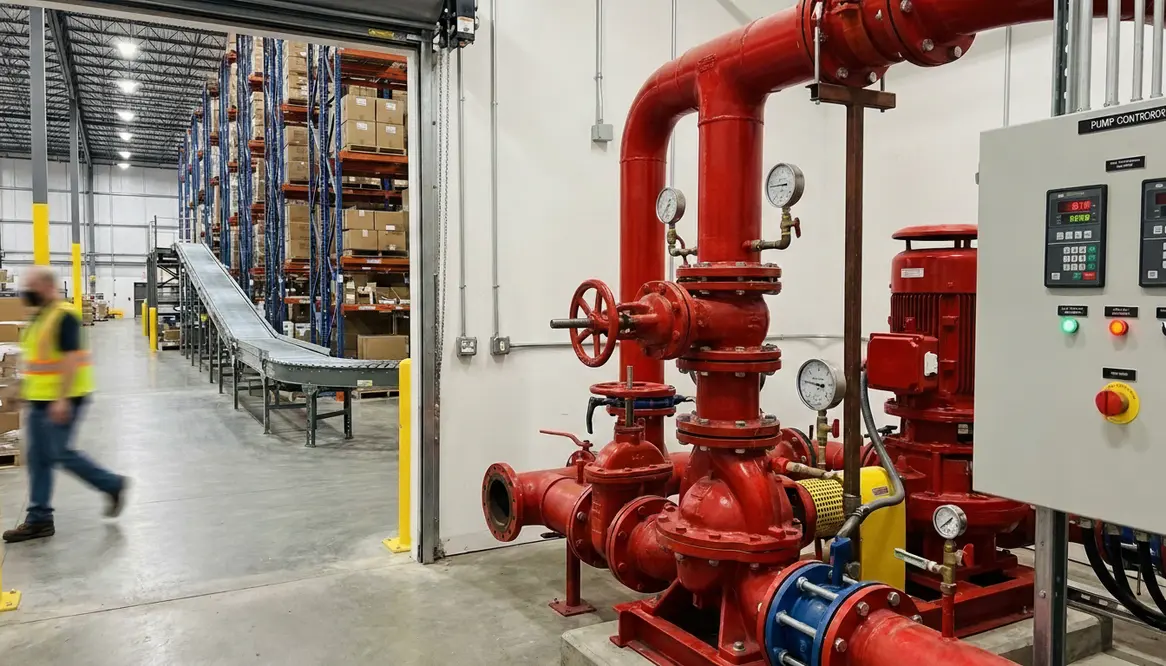
Large Automated Distribution Centers Fire Pump Systems
When I talk about warehouse fire protection, distribution center fire protection, and a reliable fire pump, I am talking about the kind of setup that keeps a giant operation from turning into a very expensive cautionary tale. In a large automated distribution center, one weak link can spread trouble fast. That is why I focus on systems that keep water moving, pressure steady, and people calm. And yes, calm matters. Even the loudest conveyor line cannot outshout a fire alarm, no matter how hard it tries.
In these facilities, speed, automation, and storage height create real risk. So I look at fire pump systems as the engine room of protection. They help the sprinklers do their job when the building demands more water than a city line can safely give. That is the basic idea, but the details are where the real work happens.
Why I treat fire pump design as the backbone
In a large automated site, I do not treat the pump as an add on. I treat it as the heart of the system. If pressure drops, sprinkler coverage can weaken. Then one small ignition can become the main event, and nobody wants their distribution center making headlines for the wrong reason.
I build around the actual demand of the building. Tall racks, dense storage, long pipe runs, and wide floor plans all raise the need for steady flow. So I look at water supply, system layout, and the fire code together. When those three line up, the protection system stands a real chance of doing its job when smoke shows up uninvited.
For me, strong planning also means I think about future growth. Automated centers change often. New storage layouts, added robotics, and higher throughput can all change fire risk. Therefore, I want a pump setup that supports the building now and still has room to handle tomorrow.
What I check before I size the system
I start with the site itself. Then I check the water supply data, the hazard level, the sprinkler demand, and the building use. I also look at whether the facility needs electric, diesel, or a backup setup. Each choice has tradeoffs, and I do not pretend one size fits every job. That would be too easy, and life rarely cooperates like that.
I also review testing and access needs. A pump room must stay usable. It needs clear space, proper ventilation, good drainage, and easy service access. Otherwise, even a strong system becomes hard to maintain. And a hard to maintain system tends to become an ignored system, which is how bad days begin.
Quick view of what I compare
Water supply: I check if the source can support the needed flow and pressure.
Building demand: I match the pump to the sprinkler and hose load.
Power source: I decide between electric, diesel, or a mixed backup plan.
Room layout: I make sure service, airflow, and drainage all work together.
In many projects, I also use references from trusted resources such as los angeles fire pump solutions when I review system standards and install expectations. For electrical support and coordination, I also look at kord electric support for industrial systems as part of the bigger picture. If the project is in Australia, I may also review australian fire sprinkler services for service context and regional fit.
How I keep performance steady during real emergencies
A fire pump only matters when conditions get messy. That is when I want the system to start fast and hold pressure without drama. In a distribution center, the fire load can rise quickly because of packaging, pallets, and stored product. So the pump must support the sprinkler system from the first alarm through the whole response.
I also pay close attention to monitoring. A pump that works today but hides a fault until the worst moment is not much comfort to anyone. For that reason, I want alarms, controllers, and regular inspections that catch trouble early. I think of it as the difference between a tuned race car and a shopping cart with one square wheel. Both move, but only one does it with dignity.
Power reliability matters too. If the facility uses electric power, I check backup support. If it uses diesel, I review fuel condition and routine testing. Either way, I want the pump to respond when the building needs it most, not after a long think.
How I keep maintenance simple and practical
I like systems that staff can actually maintain. That means clear labels, easy access, and a test plan that does not feel like a mystery novel. Routine checks should cover pressure, suction, controller status, valve position, and any sign of wear or leak.
Just as important, I want the pump room to stay clean and open. Boxes, tools, and random storage do not belong there. I have seen plenty of sites that treat the pump room like a spare closet. That habit is charming in the way a flat tire is charming. It is not.
A simple rhythm that holds
So I push for a simple rhythm:
Weekly: I confirm the pump and controller status.
Monthly: I test operation and check visible parts.
Quarterly: I review deeper system condition and records.
Yearly: I verify full performance and service needs.
When I keep this process steady, the system stays ready, and the facility keeps moving. That matters in automated centers where downtime can cost more than the repair itself.
FAQ for fire pump planning in large facilities
In the end, I look at fire pump systems as a core part of smart industrial protection, not as an extra expense with a badge. If you manage a large automated distribution center, I can help you build a plan that fits the building, the code, and the real risk on site. Reach out today, and let us make your protection system stronger, simpler, and ready for the day it is truly needed.