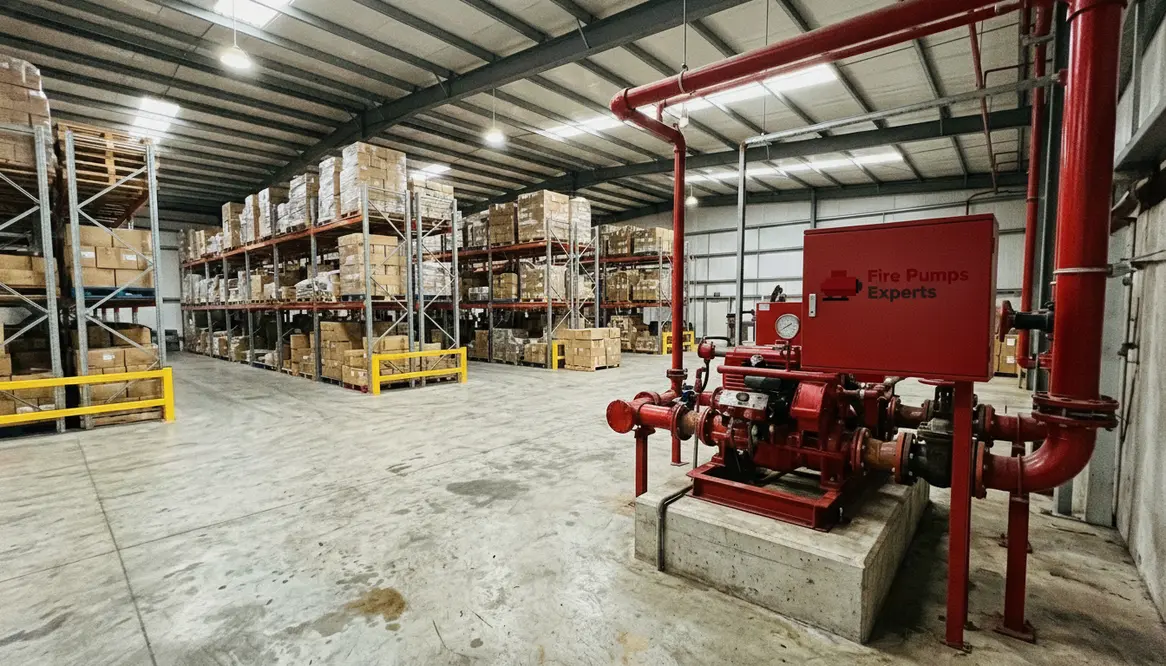
LPC Rules Warehouses Fire Pump Requirements Guide
When I look at LPC Rules warehouses, I see more than racks, pallets, and forklifts moving like they are late for a deadline. I see a fire risk profile that changes fast and demands a solid plan. That is where fire pump requirements step in. In a warehouse, water pressure cannot be a hopeful guess. It must be strong, steady, and ready when the system calls for it. So, if you manage a commercial or industrial facility, I will walk you through what matters, why it matters, and how LPC Rules warehouses shape the fire pump side of the job.
Why I treat warehouse fire pumps as a serious design issue
A warehouse can look calm on a normal day, yet one small ignition source can turn the place into a very expensive disaster. Because of that, LPC rules focus on making sure sprinklers get enough water at the right pressure and flow. I do not treat that as a box to tick. I treat it as the backbone of fire protection.
In practical terms, the fire pump supports sprinkler performance when the water supply alone cannot do the job. That can happen because of low municipal pressure, large building size, high storage, or dense commodity layouts. And yes, a warehouse can make a fire system sweat like it just ran a marathon in a wool suit.
LPC Rules warehouses usually require a deeper review of the water supply, hazard level, and building layout before anyone selects a pump. The goal is simple. I want the sprinklers to work as designed, not as hoped.
Warehouse risk in one look
I think of warehouse fire pumps as the pressure engine behind every sprinkler head. If the engine stumbles, the whole show falls apart. The calm aisles, stacked pallets, and humming forklifts hide a fire load that can escalate faster than most people are comfortable admitting.
That is why LPC Rules warehouses do not treat fire pumps as optional decoration. They treat them as core infrastructure that must be sized, powered, and protected for the worst realistic day the building might see.
Fire pump sizing and water supply basics
First, I look at the demand. The pump must support the sprinkler system flow and pressure needs for the warehouse fire scenario. Then I compare that to the available water supply. If the supply falls short, the pump must make up the difference. Simple idea. Serious math.
What I check vs. what it tells me
What I check
- Available water flow
- Residual pressure
- Sprinkler design demand
- Storage height and rack layout
- Hazard class and commodity type
What it tells me
- Whether a pump is needed
- How large the pump should be
- Whether suction conditions are safe
- How much reserve the system needs
- Whether the warehouse setup raises demand
This step matters because LPC Rules warehouses do not forgive weak supply planning. If the pump is too small, the system may fail when it matters most. If it is too large, it may create pressure control problems. So, I always aim for the right fit, not the loudest machine in the room.
LPC Rules warehouses and pump room setup
The pump itself is only part of the story. The room around it matters just as much. I need clear access, safe ventilation, reliable power, and enough space for service. After all, a fire pump tucked into a cramped corner is about as useful as a superhero with a flat tire.
Pump room essentials I watch closely
- Fuel source and power backup for dependable operation
- Protection from heat, flooding, and physical damage
- Easy access for inspection and maintenance
- Proper suction conditions to avoid cavitation
- Control equipment that stays protected and visible
In many cases, the pump room becomes a quiet but critical part of the whole fire plan. Therefore, I make sure the setup supports testing and repair without interrupting the building’s main work. A warehouse still has to warehouse, after all. The forklifts do not enjoy surprise shutdowns.
How I match the pump to the warehouse fire load
Not every warehouse carries the same risk. Some store light goods. Others hold high piled plastics, mixed commodities, or dense rack storage that can drive fire demand much higher. Because of that, I do not use a one size fits all approach.
I look at the stored material, ceiling height, rack arrangement, and sprinkler type. Then I check how all of that changes the required pump performance. This is where LPC Rules warehouses push real engineering discipline. The rules help match the pump to the true fire load, not the building’s wishful thinking.
Also, I always ask whether future changes might increase demand. If the owner plans to raise storage height or change product type later, I want the system ready for that. A warehouse can evolve faster than a streaming trend, and the fire protection needs to keep up.
Testing, maintenance, and compliance checks
Once the pump is in place, the work does not stop. I schedule regular testing because a fire pump that has not been checked is a gamble, and I do not like gambling with industrial property. Routine testing helps confirm that the pump starts, holds pressure, and performs under load.
I also check for common issues like valve problems, power failures, worn parts, and low suction pressure. These small issues can grow into big ones fast. In addition, I review records to confirm the system stays aligned with the warehouse design and current use. That matters because a warehouse that changes storage patterns may need a fresh look at its fire protection.
When I work with commercial and industrial properties, I also recommend a review against the latest fire pump compliance guidance for warehouses so the owner stays ahead of trouble instead of chasing it after the fact.
Quick answers on LPC Rules warehouses fire pumps
Questions always show up once the discussion turns to pump curves, test headers, and storage changes. Here are clear responses to the ones that come up most often when I review LPC Rules warehouses and their fire pump setups.
Conclusion
If I want a warehouse to stay safe, I start with the water supply, then I match the pump to the real fire load, and I keep testing it like the building depends on it. Because it does. If your commercial or industrial facility needs a review, I encourage you to act now, not later. A strong fire pump plan protects people, inventory, and business continuity, and that is a very good trade.