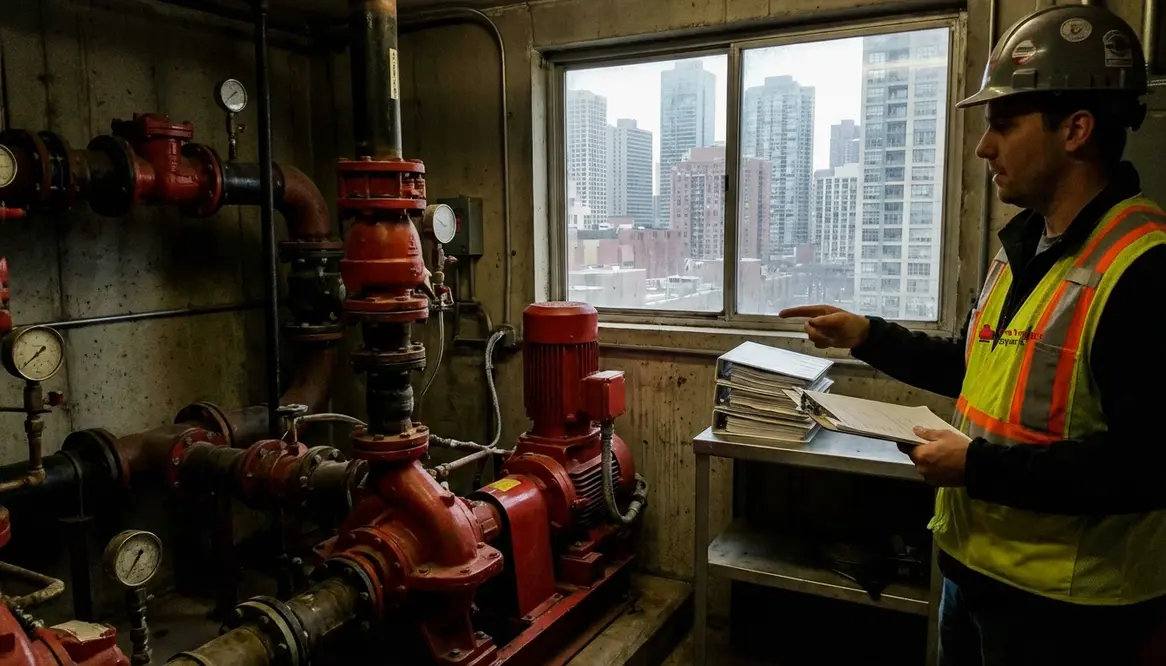
Metro Area Fire Pump Compliance Across US Cities
I have spent years walking through pump rooms that hum like quiet engines of safety, and if there is one thing I have learned, it is this: metro area fire pump compliance is never a one size fits all story. In fact, what works in Chicago may raise eyebrows in Los Angeles, and what passes in Dallas might stall in New York. So, if you manage a commercial or industrial facility in a major U.S. city, you are not just installing a fire pump. You are stepping into a local rulebook that has its own rhythm, its own quirks, and occasionally, its own personality.
And yes, sometimes that personality feels like it was written by someone who really enjoys paperwork. But stick with me. I will make sense of it.
Why City Rules Shape Fire Pump Planning
First, let me say this clearly. Fire pump systems are governed by national standards, yet cities add their own layers. Therefore, planning becomes a balance between NFPA guidelines and local amendments.
For example, New York City often requires more detailed documentation and tighter inspection cycles. Meanwhile, cities like Houston may focus more on system performance under extreme conditions. As a result, I always advise clients to treat each project as a local project, not just a national one.
Additionally, local fire departments play a bigger role than many expect. They influence testing schedules, access requirements, and even how your pump room is laid out. So, ignoring local authority input is like ignoring the referee and hoping to still win the game. Spoiler alert, that rarely works.
How Do Requirements Change Between Major U.S. Cities?
Water, power, and the city around your pump
Let us get straight to the question I hear most often. What actually changes?
In practice, several factors shift from city to city. Water supply conditions often top the list. In coastal cities, corrosion control becomes critical. Meanwhile, in dense urban cores, space constraints push engineers toward vertical pump configurations or creative layouts.
Then there is power supply. Cities like San Francisco, with seismic concerns, often require more robust backup systems. On the other hand, cities in the Midwest may emphasize freeze protection. Consequently, your pump system design starts to reflect the environment as much as the code.
And yes, documentation requirements can feel like they multiply overnight. Some jurisdictions want digital submissions, while others still appreciate a thick binder that could double as a doorstop.
Design Pressures in Dense Metro Environments
Fitting serious infrastructure into tiny footprints
Now, let me paint a picture. You are working in a high rise commercial building in a packed downtown district. Space is tight. Access is tighter. And every square foot costs more than your first car.
Because of this, fire pump planning becomes a strategic exercise. I often see systems tucked into basements, mezzanines, or mechanical floors that feel like puzzles. However, every decision must still meet urban fire pump regulations and allow for maintenance access.
Moreover, noise control enters the conversation. Nobody wants a pump test to sound like a rock concert in the middle of a financial district. So, acoustic treatments and vibration isolation become part of the design process.
In addition, coordination with other systems is essential. HVAC, electrical, and plumbing all compete for space. Therefore, early collaboration is not just helpful, it is necessary.
Balancing Compliance and Performance in Large Facilities
Compliance focus
- Local code amendments
- Inspection frequency
- Documentation standards
- Fire department access
Performance focus
- Reliable water flow
- Backup power readiness
- System durability
- Ease of maintenance
Here is where things get interesting. While metro area fire pump compliance sets the rules, performance determines whether your system actually protects your building when it matters.
I have seen facilities that met every code requirement but struggled during real world testing. On the flip side, I have seen systems built with performance in mind that needed tweaks to satisfy local inspectors. Therefore, the goal is not to choose one over the other. It is to align both.
And trust me, when compliance and performance work together, it feels like a well rehearsed orchestra instead of a garage band on its first night.
Inspection, Testing, and Long Term Expectations
Keeping metro area fire pump compliance on track
Once your system is installed, the journey is far from over. In fact, this is where many facilities stumble.
Different cities enforce inspection and testing schedules with varying intensity. Some require frequent reporting, while others focus on annual performance validation. Consequently, staying ahead of these requirements keeps you out of trouble.
Additionally, digital monitoring is becoming more common in major metro areas. Facilities are expected to provide real time data or quick access to system records. So, investing in smart monitoring tools is no longer optional in many locations.
And let me add a bit of humor here. If your fire pump logs look like they were written during the last season of a show you forgot existed, inspectors will notice. They always do.
Planning Ahead for Multi City Portfolios
Scaling one strategy across many jurisdictions
If you manage properties across multiple cities, the challenge multiplies. However, there is a smarter way to approach it.
I recommend building a flexible framework that adapts to local rules while maintaining consistent performance standards. This way, your team does not reinvent the wheel every time a new project begins.
Furthermore, working with specialists who understand city specific fire pump requirements can save time and prevent costly revisions. Each metro area has its own playbook, and knowing it upfront makes all the difference.
Think of it like streaming services. You could scroll endlessly, or you could go in knowing exactly what you want to watch. One approach saves time. The other tests your patience.
For owners and managers who want extra support aligning performance with metro area fire pump compliance, partnering with a specialist service provider such as a dedicated fire pump inspection and maintenance company can be a powerful way to keep every location inspection ready.
FAQ: Commercial Fire Pump Planning
Conclusion
If you are planning a fire pump system for a commercial or industrial property, do not treat it like a copy and paste job. Each city has its own expectations, and meeting them requires experience and precision.
metro area fire pump compliance is ultimately about making sure the system on paper matches the realities of your building, your water supply, your power infrastructure, and your local authority. When those pieces line up, approvals are smoother, testing is less stressful, and your team can focus on the bigger picture of safety and operations.
I can help you navigate those layers, align performance with compliance, and build a system that stands up to both inspectors and real world demands. Whether you are working in a coastal high rise, a sprawling distribution hub, or a mixed use downtown property, the goal is the same: a reliable system that quietly does its job until the day it absolutely must not fail.
Reach out, and let us get your project moving in the right direction so that metro area fire pump compliance becomes a strength in your risk profile, not a recurring headache on your to do list.