Metro Area Fire Pump Compliance in Major Cities
I have spent years walking mechanical rooms that hum like quiet engines of safety, and I can tell you this: metro area fire pump compliance is never one size fits all. In major U.S. cities, the rules shift with the skyline, the water supply, and the local code official who has seen it all twice. So when I plan a commercial fire pump system, I do not just read the code. I read the city. And yes, sometimes it reads back with a raised eyebrow.
How does fire pump planning change from city to city?
It starts with water. In New York City, for example, I plan for high rise pressure zones that demand serious pump performance. Meanwhile, in parts of Los Angeles, seismic design drives decisions just as much as flow and pressure. Therefore, I adjust layouts, anchoring, and backup power with that in mind.
Then there is the authority having jurisdiction. Chicago might lean heavily on local amendments to NFPA standards, while Houston may focus more on redundancy due to storm risks. As a result, I never assume that a system approved in one metro will pass in another.
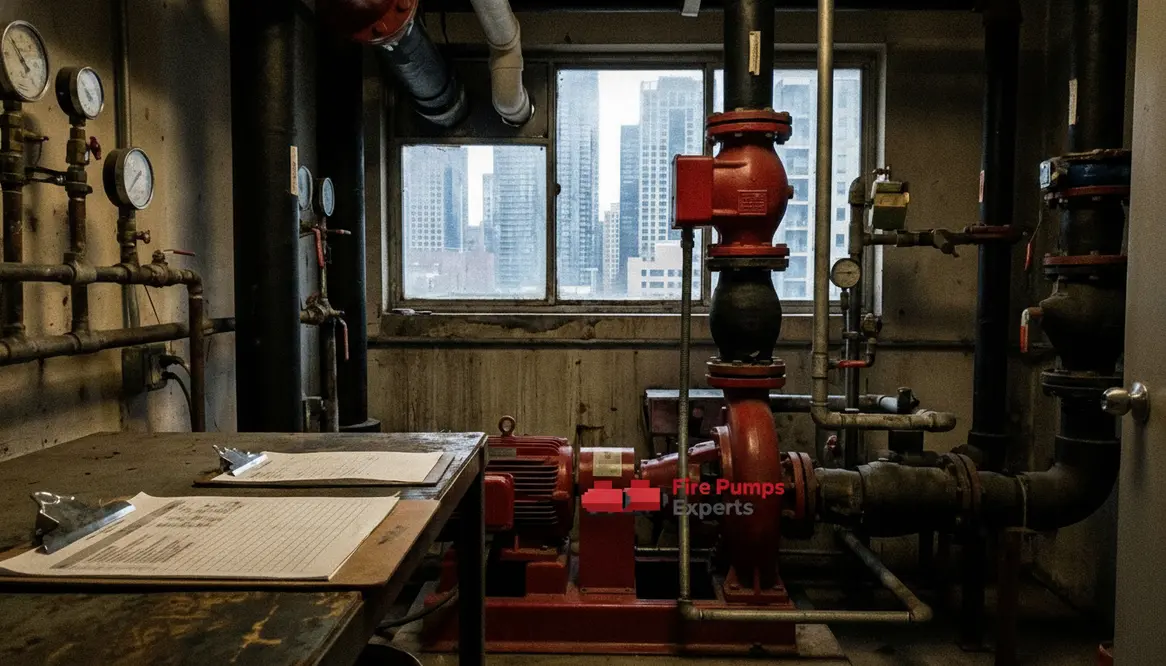
And let us not forget space. In dense downtown cores, I often work with tight mechanical rooms. It feels like trying to park a truck in a closet. So I design compact yet serviceable systems that still meet commercial demand without turning maintenance into a yoga class.
Why metro area fire pump compliance feels so different
Across major metros, the same NFPA 20 backbone gets dressed up in different local personalities. One city obsesses over seismic bracing, another over redundancy, another over noise or emissions. Keeping metro area fire pump compliance on track means treating each city like its own project language instead of assuming the last approved design is a universal template.
The trick is to blend national standards with local quirks so the system not only passes inspection but also performs reliably under that city’s specific stresses: aging mains, wild swings in demand, earthquakes, storms, or all of the above on a bad day.
Water supply realities in major metros
Water supply can make or break a system. In older East Coast cities, aging infrastructure sometimes limits pressure consistency. Because of that, I often specify stronger fire pumps and larger suction piping to stabilize performance.
On the other hand, newer Sunbelt metros may offer better baseline pressure, yet they bring rapid development that strains supply during peak demand. Consequently, I plan for future load, not just present needs.
Additionally, I pay close attention to testing requirements. Some cities require flow tests that feel more like a full production than a simple check. Picture a small crowd, clipboards in hand, watching water move like it is opening night on Broadway. It keeps you sharp.
Power, redundancy, and reliability expectations
In commercial and industrial facilities, downtime is not just inconvenient. It is expensive. Therefore, metro expectations for backup power shape my designs.
For instance, in areas prone to hurricanes or grid instability, I often include diesel driven pumps or dual power feeds. Meanwhile, cities with strict emissions rules may push me toward electric systems with robust generator support.
Moreover, redundancy is not just about equipment. It is also about layout. I separate critical components so a single failure does not take down the whole system. Think of it as not putting all your eggs in one basket, especially when that basket is on fire.
Metro area fire pump compliance and local code nuance
This is where things get interesting. metro area fire pump compliance lives in the details. While NFPA 20 provides the backbone, local amendments add personality. Sometimes that personality is charming. Sometimes it is a bit stubborn.
I have seen cities require specific controller types, unique alarm integrations, or even particular room ratings beyond national standards. Therefore, I always coordinate early with local reviewers. It saves time, money, and a few gray hairs.
In addition, inspection and testing protocols vary widely. Some jurisdictions demand frequent witnessed tests, while others rely more on documentation. So I build systems that not only perform well but also make compliance easier over the long run.
If you operate across several metros, this means your fire pump standard should be a living document. I revisit assumptions regularly so that what passes in Los Angeles, Chicago, or Houston does not quietly drift out of alignment with each city’s latest rules on controllers, testing intervals, or reporting formats.
Designing for high rise and large scale facilities
Vertical challenges
High rise buildings require careful zoning. I calculate pressure so lower floors do not get overwhelmed while upper floors still receive adequate flow. As a result, I often use pressure reducing valves and multiple pump stages.
Access and service
In tight metro buildings, I plan clear access paths for maintenance. Because if a technician cannot reach a valve without performing acrobatics, something went wrong in design.
System integration
I coordinate with fire alarms, building management systems, and emergency power. Everything must talk to each other. Otherwise, you get silence when you need a shout.
Future expansion
Large properties evolve. Therefore, I leave room for added capacity. It is like buying a suit with a little extra space. You might need it after a few business lunches.
What should I consider when planning a fire pump in a metro area?
I start with five key factors. First, I review local code amendments in detail. Next, I analyze water supply data beyond a single test. Then, I evaluate power reliability and backup options. After that, I plan for maintenance access and lifecycle costs. Finally, I coordinate early with all stakeholders, from engineers to inspectors.
Because of this approach, I avoid surprises. And in this field, surprises are rarely the fun kind. When I document these steps clearly, it becomes much easier to demonstrate metro area fire pump compliance during reviews, renewals, and future upgrades.
A good checklist forces you to account for water supply data quality, room ratings, controller placement, and the realities of access routes long before the final inspection. It is not glamorous work, but it is exactly the sort of discipline that keeps systems reliable year after year.
Bridging design, inspection, and long-term maintenance
Metro area fire pump compliance does not end when the pump passes its acceptance test. In many cities, weekly churn tests, detailed logs, and witnessed annual flows are where the real story gets written. If the design ignored maintenance realities, operators end up with a beautiful system on paper and a headache in practice.
That is why I treat inspection access, valve labeling, and clear test headers as core design elements, not afterthoughts. When everything is reachable, readable, and logically laid out, the system stays closer to its original intent and is far less likely to drift out of compliance over time.
If you want a sense of how this plays out in the real world, look at how a dedicated fire pump service team approaches testing, repairs, and documentation. Their routines highlight the same pain points designers should anticipate early on.
For example, services like fire pump inspection and maintenance support in large metros emphasize NFPA-driven schedules, reliable documentation, and 24/7 response for critical facilities. Building your design around that level of ongoing care makes it much easier to keep your system compliant and dependable, even as your building and your city change around it.
Conclusion
Planning fire pump systems in major U.S. cities takes more than technical skill. It takes awareness, flexibility, and a respect for local nuance. If you manage a commercial or industrial property, now is the time to review your system against current demands. Reach out, ask the right questions, and make sure your design stands up to your city. Because when it comes to fire protection, close enough is never good enough.
Ultimately, the real goal of metro area fire pump compliance is simple: when the worst day arrives, the system behaves exactly the way you promised it would. That outcome is earned long before an alarm ever sounds, in the way you read the city, document your assumptions, and keep the pump, controls, and power sources ready for whatever the local grid, water system, and skyline decide to throw at you.