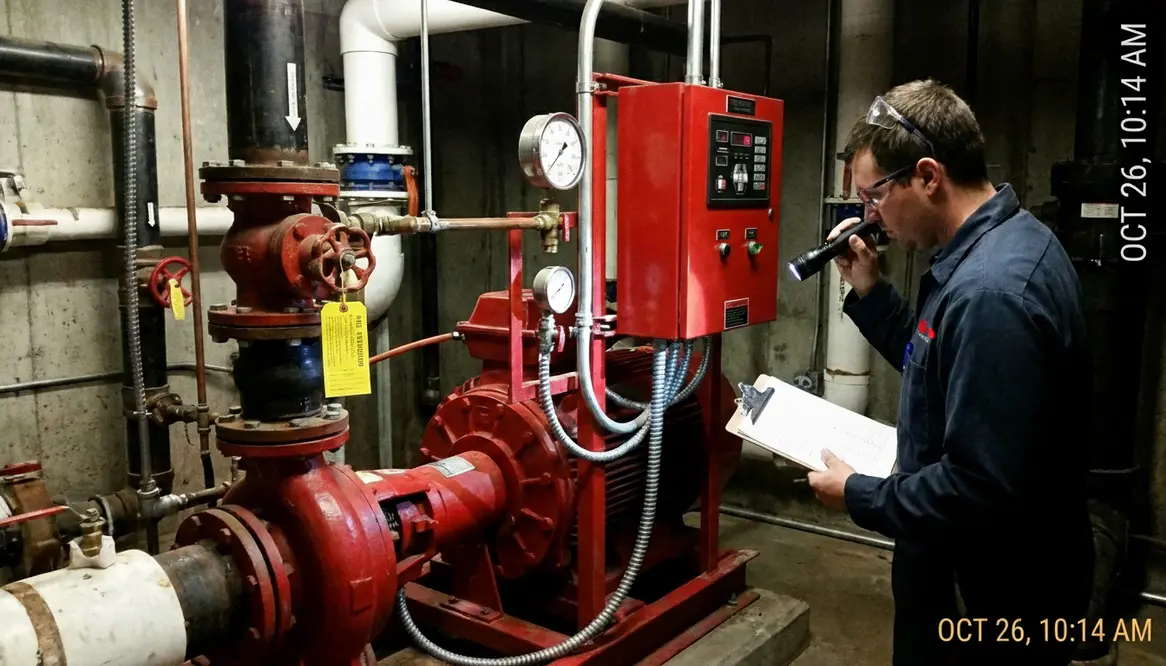
Monthly Fire Pump Inspection Guide for Reliability
I have always believed that the quiet heroes of any commercial or industrial facility are the systems you rarely think about until the moment you need them. Right at the top of that list sits the fire pump. And yes, a proper monthly fire pump inspection is what keeps that hero ready for action. It is not glamorous work. It will not win awards. But when alarms sound and pressure drops, this routine check becomes the difference between control and chaos. So let me walk you through it, calmly and clearly, with just enough wit to keep you awake.
What does a monthly fire pump inspection actually include
Let us get straight to it. When I run through a monthly check, I focus on performance, reliability, and early warning signs. I am not guessing. I am verifying.
First, I start the pump under no flow conditions. I listen closely. A healthy pump has a steady, confident hum. If it starts sounding like it is auditioning for a horror movie soundtrack, something is off.
Then I check:
- Pressure readings to confirm the system is holding steady
- Controller indicators to ensure no alarms are hiding in plain sight
- Fuel levels for diesel units, because an empty tank is not a strategy
- Valve positions to confirm everything is open and ready
Additionally, I verify that the churn test runs smoothly. It is quick, but it tells me a lot. Think of it as a heartbeat check. Simple, but essential.
How I approach a monthly fire pump inspection without missing anything
Consistency is everything. I do not rely on memory alone. Even the best of us forget things, especially before coffee.
Mechanical focus
- Inspect pump casing for leaks
- Check bearings and lubrication
- Confirm coupling alignment
- Look for unusual vibration
Electrical and control focus
- Review controller logs
- Test automatic start sequence
- Inspect wiring for wear
- Verify power supply stability
Meanwhile, I document everything. Not because I enjoy paperwork, but because trends matter. A small pressure drop today can become a big problem next month.
Why skipping inspections is a gamble you will lose
I have seen it happen. Someone delays a routine fire pump check because everything seems fine. Then, when the system is needed, it hesitates. That hesitation can cost more than money.
In large commercial and industrial properties, fire protection systems must perform instantly. There is no loading screen. No second attempt. Therefore, regular inspection is not just compliance. It is risk control.
Also, insurance providers and regulatory bodies expect documented proof of testing. If those records are missing, the consequences can escalate quickly. And let us be honest, explaining that you skipped a check because it felt unnecessary is not a winning argument.
Common issues I catch during routine checks
Over time, patterns emerge. Certain problems show up more often than others, and I keep an eye out for them.
- Air trapped in the system which affects pressure stability
- Battery failures in diesel pump starters
- Corroded components caused by moisture exposure
- Controller faults that go unnoticed without testing
However, the real value of a monthly routine is catching these early. Fixing a small issue now is far easier than dealing with a full system failure later. It is the difference between a quick tune up and a full blown crisis.
Can I rely on automation alone for fire pump reliability
Short answer. No.
Automation helps, but it does not replace human oversight. Sensors can fail. Alerts can be missed. And sometimes, systems behave perfectly until the exact moment they are pushed under real demand.
That is why I always recommend combining automated monitoring with hands on inspection. If you are managing a large facility, working with experienced professionals through a trusted resource like commercial fire pump system experts adds another layer of confidence.
Technology is powerful, but it still needs a watchful eye. Preferably one that knows what it is looking for.
FAQ about fire pump inspections
A monthly fire pump inspection raises a lot of practical questions, especially when you are balancing reliability, staffing, and compliance expectations. Here are a few of the questions I hear most often and the answers I give when someone is serious about keeping that pump ready for the worst day of the year.
Final thoughts that might just save your system
I see the monthly fire pump inspection as a quiet form of discipline. It does not demand attention, yet it delivers reliability when everything else is on the line. So take it seriously. Stay consistent. And if you need support, bring in professionals who understand large scale systems inside and out. Because when the moment comes, you do not want hope. You want certainty. And certainty is built one inspection at a time.