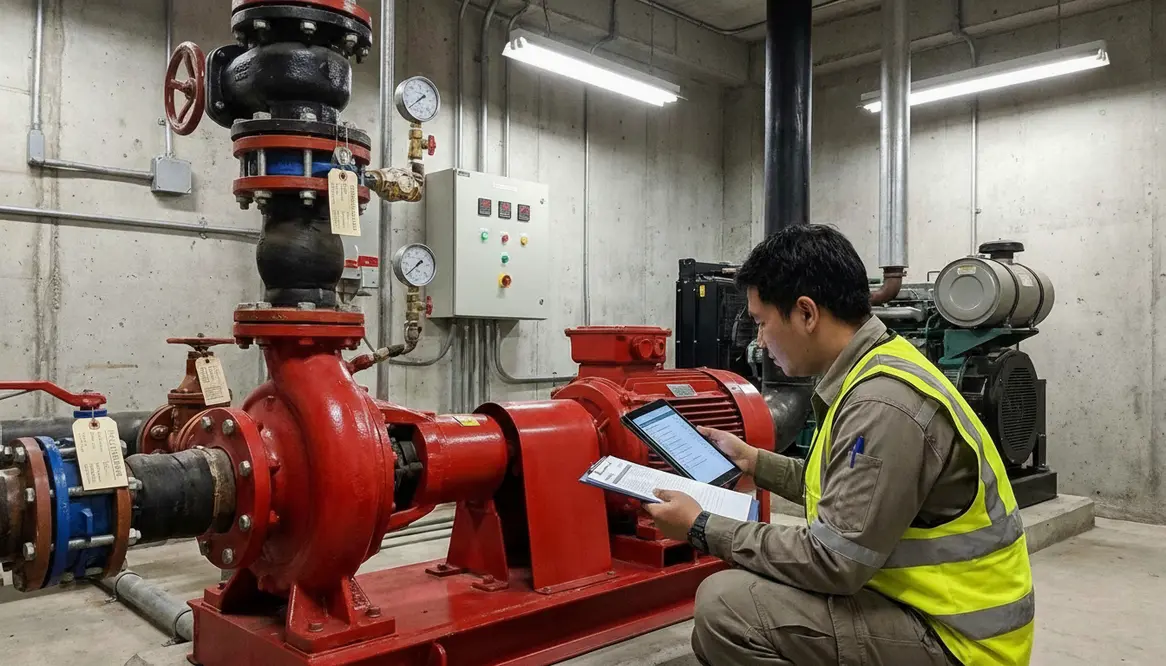
Monthly Fire Pump Testing for Commercial Readiness
Fire Pump Monthly Testing Requirements: What I Check to Keep Commercial Buildings Ready
When I talk about monthly fire pump testing, I am talking about one of the quiet heroes of fire safety. It does not get applause, and it rarely gets a spotlight, but when trouble shows up, this system has to perform like it trained for the big game. For commercial and industrial facilities, major properties, and tall buildings, monthly checks help confirm the pump will start, run, and deliver the pressure the system needs. I treat this task as both a code driven duty and a practical habit that keeps people, assets, and operations safer.
And yes, it sounds dull at first glance. But so does “check engine” until your car starts sounding like a cough from a film noir extra. A fire pump deserves better than hope.
What I Inspect During A Monthly Fire Pump Test
I begin with a full visual review. First, I check the pump room for leaks, damage, heat, strange sounds, and anything that blocks access. Then I confirm the controller looks normal and shows no active trouble signs. After that, I inspect suction and discharge valves, gauges, coupling guards, and the power source. If the pump uses electric power, I verify normal electrical conditions. If it uses diesel, I check fuel level, oil, coolant, battery charge, and jacket water heat. Each item tells me whether the system is ready or quietly begging for service.
I also look at the test arrangement itself. The valves, test line, and pressure reading points must work cleanly. Otherwise, I am not really testing the fire pump. I am just doing a dramatic rehearsal with a clipboard.
How I Run The Test Without Guesswork
Next, I start the pump and watch the sequence closely. I confirm the pump starts properly, and then I let it run long enough to verify stable operation. During the test, I record suction pressure, discharge pressure, pump speed if needed, and any sign of vibration or unusual noise. I also note whether the controller shifts as it should and whether the pump reaches expected pressure quickly.
For many commercial systems, I use a no flow or reduced flow monthly routine unless local rules call for a different setup. However, I never skip documentation. Written records matter because they show patterns over time. One weak reading might be a fluke. Three weak readings are the system waving a red flag like it is auditioning for a disaster movie.
Monthly Fire Pump Testing Requirements For Commercial Facilities
For commercial and industrial facilities, I focus on consistency, access, and proof of readiness. The test should confirm that the pump can start on demand, that pressure stays within acceptable range, and that controls respond as designed. I also verify that any alarms, trouble signals, or abnormal conditions get logged and addressed fast. A fire pump does not need to be perfect forever. It does need to be honest about its condition every month.
Below is a simple dual column view I use to keep the process clear:
What I Check
Start sequence, pressure, valves, controller status, fuel or power source, leaks, and vibration.
What I Record
Date, test result, readings, issues found, and repair notes.
Why It Matters
It shows whether the pump can support the fire protection system when the building needs it most.
Why It Matters
It creates a clear history for inspections, maintenance, and code compliance.
Monthly Fire Pump Testing keeps readiness honest
Once I see stable results, I treat it like a win, not a finish line. In a perfect world, everything stays steady. In the real world, parts age, settings drift, and conditions change.
That is why monthly fire pump testing matters 4 times minimum, every year, for systems that protect people on busy days.
When I work with major properties, I also make sure the test does not disrupt normal operations more than needed. That matters because nobody wants a pump room drama in the middle of a packed workday.
What I Look For After The Test
After the pump stops, I do not pack up and call it a day. I review the readings again and compare them with past results. I look for pressure drops, slow starts, seal leaks, packing wear, loose wiring, battery weakness, or fuel problems. Then I decide whether the issue needs immediate repair or closer follow up. This step keeps small problems from becoming expensive ones.
I also check that the system returns to normal standby mode. If the controller does not reset right, the pump may not be ready for the next emergency. That is the part where theory becomes reality, and reality does not care about excuses.
Fire Pump Testing Best Practices I Follow
I keep the schedule steady, use trained staff, and follow the same process every month. That way, the results stay easy to compare. I also make sure the pump room stays clean, dry, and easy to reach. Good housekeeping sounds simple, but it saves time and helps prevent failures. In the same spirit, I recommend regular service visits and deeper checks beyond the monthly routine when the system shows wear.
If you want a helpful reference for fire pump service and support, I suggest reviewing this fire pump service resource from Kord Fire. For local search relevance, you can also view los angeles fire pump service as an example of a focused service page. These resources support a stronger maintenance plan for commercial and industrial sites.
Extra Notes I Keep in Mind During Monthly Checks
Even with a solid routine, I pay attention to what could quietly change between months: renovations that alter access, seasonal temperature swings that affect diesel systems, or electrical work that shifts control behavior. That is why monthly fire pump testing is never just a calendar item.
From start to stop, I approach each run like a performance review. The goal is stable results month after month, not a surprise show when someone finally asks the pump to do its job.
FAQ
Monthly testing is not busywork. It is the steady check that keeps a critical system honest. If you manage a commercial or industrial building, I can help you stay ahead of failure, meet expectations, and protect what matters most. Reach out now to build a stronger fire pump maintenance plan, and let’s keep your system ready before it ever has to prove itself in the worst possible moment.