NFPA 75 Fire Pump Requirements for Data Centers
Fire Pump Requirements in Data Centers Under NFPA 75
I have spent enough time around mission critical facilities to know one simple truth. Data centers do not forgive mistakes. When we talk about NFPA 75 fire pump data center requirements, we are not just ticking boxes. We are protecting uptime, assets, and frankly, reputations. In this world, a few seconds of failure can cost millions. So today, I will walk you through what really matters, without the fluff, without the jargon, and maybe with a small chuckle or two along the way. Because if we cannot smile while talking about fire pumps, what are we even doing here?
Snapshot: Why Fire Pumps Matter
- Support uptime and protect IT assets
- Compensate for weak or unreliable city water
- Enable high performance sprinkler and preaction systems
- Align with NFPA 20 and NFPA 75 for code compliance
Understanding the Role of Fire Pumps in Data Centers
Let me paint the picture. A data center is not your average building. It is a dense ecosystem of power, cooling, and sensitive electronics. Water and electricity are not exactly best friends. Yet, when fire risk enters the chat, water based suppression systems still play a critical role.
That is where fire pumps come in. They ensure consistent pressure and flow when municipal supply falls short. And in large scale commercial or industrial facilities, relying on city pressure alone is a gamble I would not take.
According to NFPA 75, fire protection must support the unique hazards of IT environments. So, fire pumps must be reliable, redundant, and ready to perform under peak demand. No warm up lap. No second chances.
How NFPA 75 Ties Fire Pumps To Mission Critical Risk
The key idea behind NFPA 75 fire pump data center requirements is simple: treat IT spaces as mission critical, not generic office floors. That means:
- Providing dependable water at sufficient pressure, even when city mains are struggling
- Ensuring fire pumps survive and operate during the very emergency they are meant to handle
- Aligning fire protection with the facility’s uptime expectations, not just minimum code
NFPA 75 Fire Pump Data Center Requirements Explained Simply
If you asked me to sum it up quickly, I would say this. The system must deliver water when needed, at the right pressure, without interruption. However, the details are where things get interesting.
NFPA 20 + NFPA 75: Who Does What?
First, fire pumps must comply with NFPA 20. NFPA 75 does not replace it. Instead, it builds on it. Think of NFPA 20 as the engine manual, while NFPA 75 is the driver telling you when to hit the gas.
Second, redundancy is not optional. Data centers often require backup pumps or alternate water supplies. Because if your primary pump fails during a fire event, well, that is not a plot twist anyone enjoys.
Third, power supply matters. Fire pumps must connect to reliable power sources, often with emergency generators. And yes, those generators need protection too. It is a bit like protecting the bodyguard who protects the VIP.
Performance Expectations In Plain Language
When you zoom in on NFPA 75 fire pump data center requirements, a few performance themes keep showing up:
- The pump must start automatically and reliably when the system calls for water
- The water supply and pump capacity must match the actual hazard and system design
- The arrangement should tolerate failures without shutting down protection for the entire IT space
What Does NFPA 75 Expect from Fire Pump Design in Data Centers?
I get this question a lot, and the answer is refreshingly direct.
The design must account for system demand, hazard classification, and suppression type. In many cases, preaction sprinkler systems are used to reduce accidental discharge risk. That means the fire pump must respond quickly once activation conditions are met.
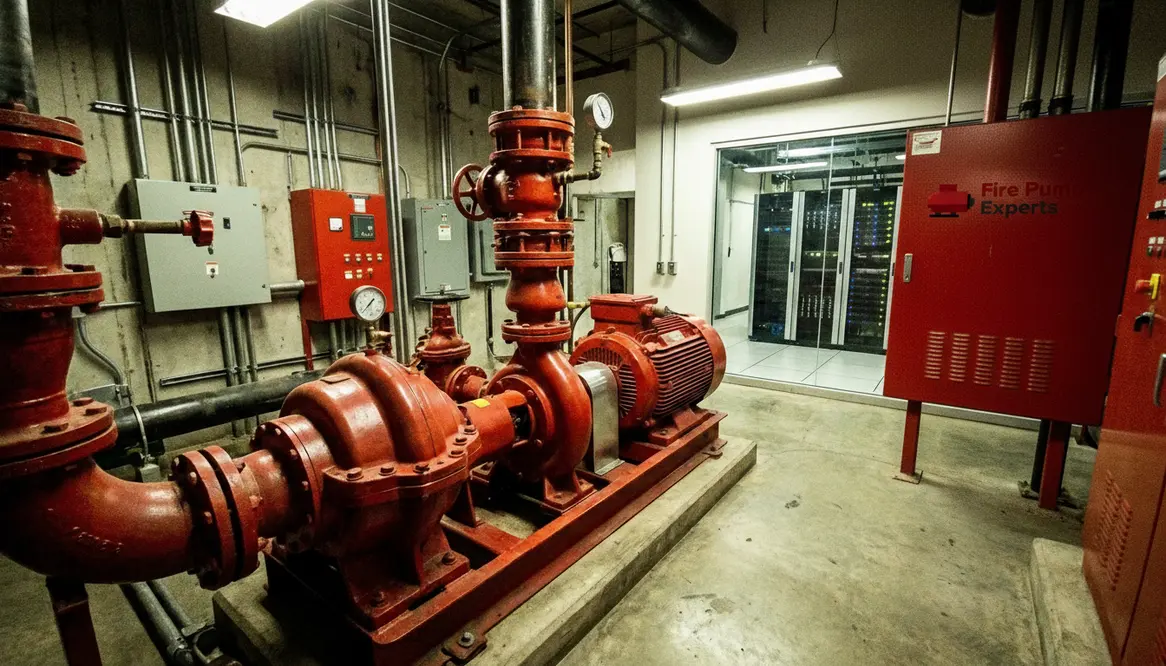
Additionally, layout plays a role. Fire pumps should sit in dedicated rooms with fire rated construction. Separation matters. You do not want your pump compromised by the very fire it is meant to fight.
Then there is monitoring. Modern data centers integrate fire pump status into building management systems. So, operators can see performance in real time. It is like having a fitness tracker, but for life safety equipment.
Key Design Elements
- Adequate pressure and flow capacity
- Redundant pump configurations where required
- Protected, dedicated pump rooms
- Integration with sprinkler and preaction systems
Operational Considerations
- Reliable normal and backup power sources
- Routine testing and maintenance
- Real time monitoring and alarming
- Compliance with NFPA 20 standards
Power Supply and Reliability Are Non Negotiable
Let me say this clearly. A fire pump without reliable power is just expensive decoration. And while that might look nice on a spreadsheet, it does not help in an emergency.
NFPA 75 emphasizes continuity. So, fire pumps in data centers often connect to dedicated feeders, backup generators, or even dual power sources. This ensures operation during outages, which, ironically, is when fire risk can increase.
Regular testing also comes into play. Weekly churn tests and periodic flow tests are not suggestions. They are essential. Because discovering a problem during an inspection is inconvenient. Discovering it during a fire is catastrophic.
Linking Power Strategy To NFPA 75 Fire Pump Data Center Requirements
In a true mission critical setup, the power strategy for fire pumps mirrors the philosophy behind the IT load: no single point of failure, clear separation between normal and emergency sources, and a plan for how the system behaves if part of the infrastructure goes dark.
Maintenance Practices That Keep Systems Ready
I like to think of maintenance as quiet insurance. You do the work now so you do not pay later.
Fire pumps require consistent inspection, testing, and servicing. In large commercial facilities, this often means partnering with specialists who understand both NFPA standards and the operational demands of data centers.
Moreover, documentation matters. Inspectors and authorities want proof that your system performs as designed. And honestly, so should you.
Even small issues like valve positions or sensor faults can compromise performance. So, attention to detail is not just helpful. It is essential.
A Simple Maintenance Rhythm
- Weekly churn tests to confirm automatic start and basic operation
- Periodic full flow tests to verify performance against design
- Routine inspection of valves, controllers, sensors, and power feeds
- Annual review of data center growth versus pump capacity
Common Mistakes I See in Data Center Fire Pump Planning
Now, let us talk about what not to do. Because sometimes, avoiding mistakes is half the battle.
First, underestimating demand. Data centers grow. Equipment loads increase. If your fire pump cannot keep up, you will face problems down the line.
Second, ignoring integration. Fire pumps do not operate in isolation. They must align with detection, suppression, and control systems.
Third, cutting corners on redundancy. I understand budgets exist. However, skipping backup systems in a mission critical facility is like removing the parachute to save weight. Technically lighter. Practically terrifying.
Design Red Flags To Watch For
- A single fire pump serving large, high density IT spaces with no backup plan
- No clear linkage between NFPA 75 fire pump data center requirements and the actual IT risk profile
- Pump rooms tucked into vulnerable locations without adequate fire rating or separation
- Monitoring points that do not report clearly to operators during an event
FAQ About Fire Pump Requirements in Data Centers
Conclusion
If you are responsible for a data center, understanding fire pump requirements is not optional. It is part of protecting your operation and your bottom line. At https://firepumps.org, the focus is on commercial and industrial facilities that cannot afford downtime. So, if you want systems that perform when it matters most, now is the time to act. Review your setup, partner with experts, and make sure your fire protection is ready before you need it.
When NFPA 75 fire pump data center requirements are treated as a strategic design tool instead of a checklist, you get more than compliance. You get a facility that can take a punch, keep running, and protect the information everyone is counting on.