Oman Commercial Fire Pump Requirements Guide
A clear, practical walk-through of what matters most when reviewing fire pump systems in Oman commercial buildings.
Oman Fire Pump Requirements for Commercial Buildings: What I Look For First
When I review Oman commercial buildings, I start with one simple idea: a fire pump is not a fancy extra. It is the muscle behind the whole fire protection system. If the water supply drops, the pump steps in and keeps pressure alive when it matters most. That matters in towers, malls, warehouses, hotels, and other major properties where a weak system can turn into a very expensive headline. And let’s be honest, nobody wants their building to play the role of the burning villain in a disaster movie.
In Oman, commercial and industrial facilities must plan fire pumps with care, because local conditions, building size, and fire risk all shape the right setup. So, I will walk through the main requirements, the design logic, and the checks that help keep a building ready. I will keep it clear, practical, and focused on commercial use only.
What fire pump requirements mean for Oman commercial projects
For me, fire pump requirements start with performance, not paper. A commercial fire pump must deliver enough pressure and flow to support the sprinkler system, hose reels, hydrants, and any other fire line that needs water fast. In an Oman commercial project, I always look at the building use, total height, floor area, and fire load first. A big showroom does not need the same setup as a high rise office, and a warehouse does not behave like a hotel. Common sense still has a seat at the table.
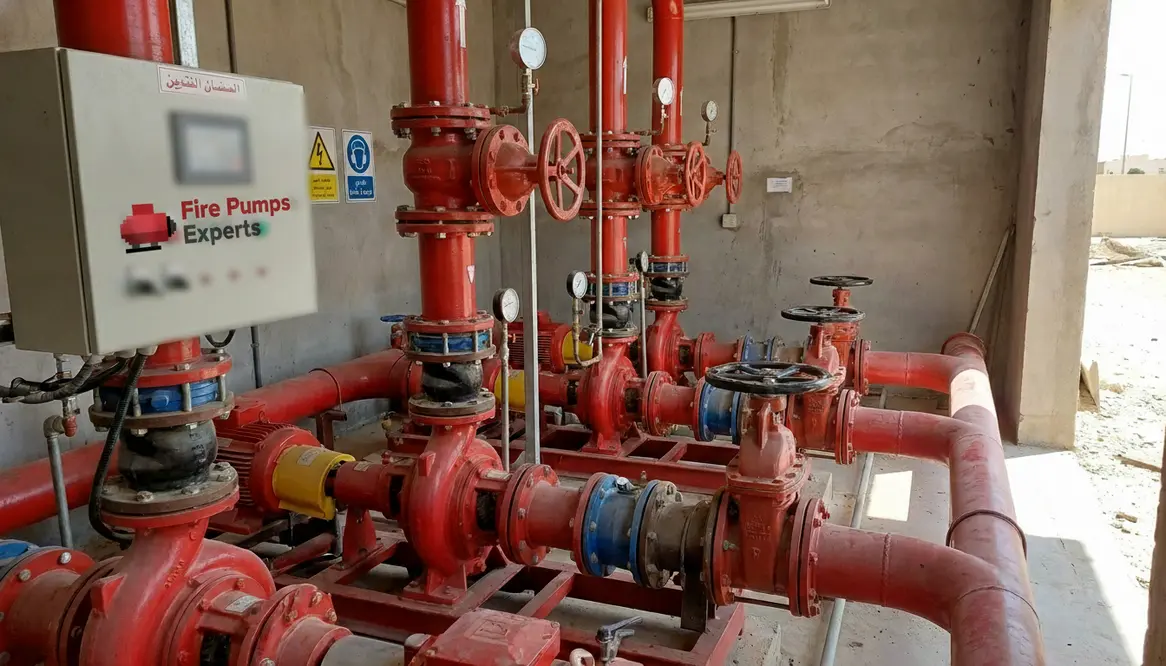
Most commercial systems use a main fire pump, a backup pump, and a jockey pump. The jockey pump keeps pressure steady. The main pump handles the fire demand. The backup pump takes over if the main one fails. That is not overkill. That is insurance with a hose attached.
How I size a commercial fire pump system
Size matters here, and I mean the fire pump kind, not the Hollywood kind. I size the system based on the hydraulic demand of the building. That means I check:
- Required flow rate for sprinklers and hydrants
- Minimum pressure at the most remote point
- Static and residual water supply conditions
- Elevation changes across the building
- Losses from pipes, valves, and fittings
Because Oman has a mix of large commercial zones, industrial estates, and tall buildings, I also pay close attention to water source reliability. If the public supply cannot hold the needed demand, I plan for a tank with enough stored water and a pump set that can move it without drama. In other words, the system should work even when the water authority is not in a generous mood.
Oman commercial fire pump room and equipment basics
I always treat the pump room like the control room of safety. It should stay accessible, protected, ventilated, and easy to inspect. A good room supports the pump, not the other way around. For Oman commercial buildings, I check these points carefully:
Dual column view
Left side
- Fire pump and standby pump
- Jockey pump
- Controllers and alarms
- Pressure gauges
Right side
- Test header or flow test line
- Isolation valves with clear labels
- Proper drainage
- Enough space for service access
I also make sure the room has power backup, because a fire pump without reliable power is like Batman without the Batmobile. Technically impressive, but not very useful at the worst moment.
Which standards and checks I use for compliance
For commercial and industrial properties, I look at the local civil defense expectations, the building design package, and the relevant fire protection standards used on the project. I also compare the design with the pump supplier data, because drawings and real equipment do not always tell the same story. That little mismatch can cause big trouble later.
Then I check testing and maintenance needs. A fire pump is not a one time hero. It needs routine flow testing, pressure checks, alarm checks, and weekly or monthly inspection based on the site plan. I want proof that the pump will start, run, and hold demand under real conditions. A silent pump room may look peaceful, but peace is not the goal. Readiness is.
If I need a practical reference point, I use a trusted industry guide such as commercial fire pump guidance for major buildings to compare system expectations for large facilities. That helps me keep the focus on commercial sites where system failure would carry real risk, real cost, and real panic.
Common mistakes I avoid in Oman commercial buildings
I see the same errors again and again, and they are usually avoidable. First, some teams undersize the pump because they trust a rough estimate. That shortcut can sink the whole system. Second, some projects forget the backup power path. That is a classic “we will deal with it later” move, and later is often too late.
Also, some designs place the pump room where access becomes difficult during an emergency. That creates delay, and delay is the enemy. Finally, some owners skip maintenance after handover. A fire pump does not age like a fine wine. It ages like a machine that needs care, service, and test runs. In any Oman commercial setup, ignoring that reality is a very expensive way to save a little time today.
Quick reference checklist for Oman commercial fire pumps
Key design and review points
- Confirm fire water demand for sprinklers, hydrants, and hose reels.
- Verify required pressure at the most remote and highest points.
- Check reliability of public water supply and need for storage tanks.
- Provide main fire pump, standby pump, and jockey pump where required.
- Ensure clear access to the fire pump room from outside the building.
- Plan reliable power supply and backup power arrangements.
- Document weekly, monthly, and annual testing procedures.
FAQ
Conclusion
If I want a commercial building in Oman to stay safe, I treat the fire pump system as a core asset, not a side note. Therefore, I size it correctly, place it wisely, and test it often. If you manage a commercial tower, warehouse, hotel, or industrial facility, now is the time to review your fire pump setup. I recommend taking action before a fire takes the lead. That is the calm, smart move, and frankly, the only one worth making.