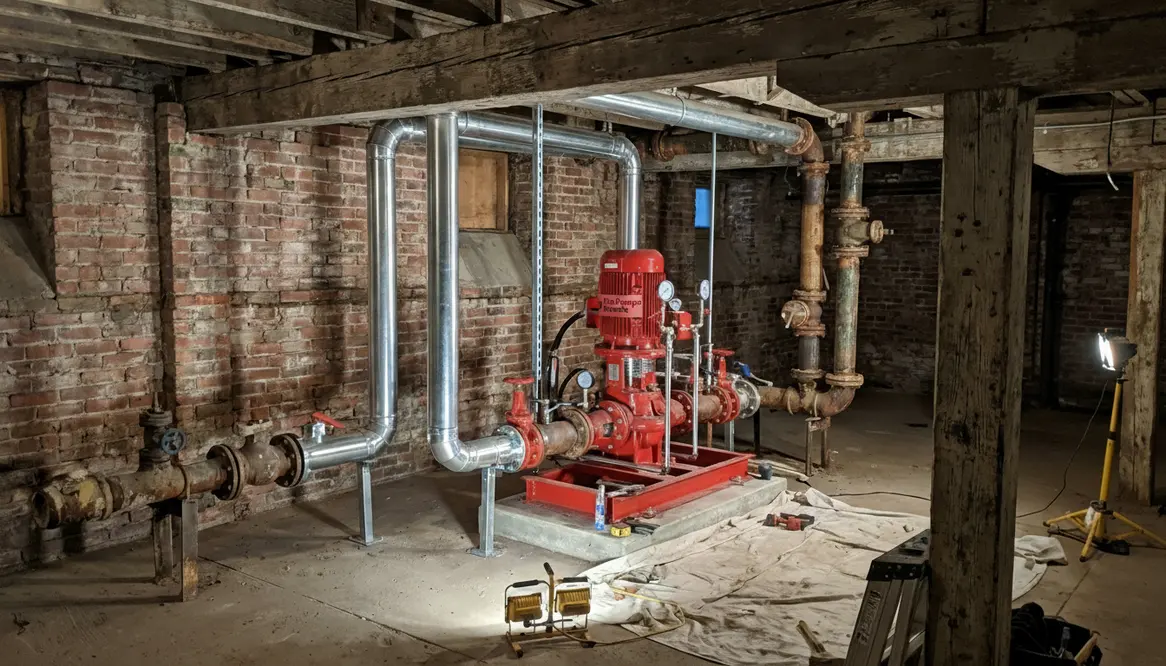
Residential Redevelopment Fire Pump Systems Guide
I have walked through more aging buildings than I can count, and each one tells a story. Brick by brick, beam by beam, they whisper their past. But when we breathe new life into these spaces, especially through residential redevelopment fire pump systems, we are not just preserving history. We are protecting its future. And yes, while fire pumps may not sound as exciting as a Hollywood reboot, they are the quiet heroes behind every safe adaptive reuse project.
So let me take you through what really matters when we rethink fire protection in these transformed spaces. Because behind every polished loft or converted mill sits a system that cannot afford to fail.
Why adaptive reuse changes everything
Adaptive reuse is not a simple renovation. It is a transformation. Old factories become apartments. Warehouses become mixed use spaces. However, these structures were never designed for modern fire protection demands.
As a result, I often see outdated piping, limited water supply, and structural constraints that challenge even the most seasoned engineer. Therefore, integrating modern fire pump solutions into these environments requires both creativity and precision.
And let us be honest, trying to fit a high performance pump system into a century old basement can feel like trying to install WiFi in a cave. It is doable, but it takes planning.
How do I size fire pumps for converted buildings?
This is the question I hear most, and the answer is never one size fits all.
First, I evaluate the building’s new occupancy classification. A former textile mill now housing residents demands a completely different fire flow than its original use. Next, I assess available water supply. Older infrastructure often falls short, so a properly sized pump becomes essential.
Then, I factor in system pressure losses. Long pipe runs, elevation changes, and retrofitted layouts all influence performance. Consequently, selecting the right capacity is less about guesswork and more about calculated precision.
When done right, residential redevelopment fire pump systems ensure consistent pressure where it matters most. When done wrong, well, let us just say the fire department will not be impressed.
Space constraints and creative installation strategies
Space is always tight in adaptive reuse projects. Mechanical rooms were not designed for modern equipment, and expanding them is often not an option.
So I get creative.
Common Challenges
- Low ceiling heights
- Limited access points
- Irregular floor layouts
- Structural load limits
Smart Solutions
- Compact pump configurations
- Vertical turbine setups
- Remote monitoring systems
- Custom skid assemblies
Moreover, I often coordinate closely with architects and structural engineers. Because in these projects, collaboration is not optional. It is survival.
Code compliance without compromising design
Designers want beauty. Engineers want function. I stand somewhere in between, making sure neither side wins at the expense of safety.
Adaptive reuse projects must meet current fire codes, even if the building itself predates them by decades. Therefore, upgrading fire protection systems is not negotiable.
However, I always aim to integrate systems without disrupting the aesthetic. Concealed piping, strategically placed pump rooms, and noise control measures all play a role.
Because nothing ruins a luxury loft vibe faster than a fire pump that sounds like a jet engine preparing for takeoff. And trust me, tenants will notice.
Reliability and long term performance in demanding environments
Older buildings come with quirks. Temperature fluctuations, moisture issues, and aging infrastructure all affect system performance.
So I prioritize durability. High quality components, corrosion resistant materials, and redundant systems help ensure reliability. Additionally, modern monitoring technology allows facility managers to track performance in real time.
This is where advanced residential redevelopment fire pump systems truly shine. They are not just installed and forgotten. They are actively managed, ensuring they perform when it matters most.
And let us face it, in fire protection, there are no second chances. This is not a movie where the hero gets a sequel.
Integration with broader building systems
Fire pumps do not operate in isolation. They interact with alarms, sprinklers, and building management systems.
Therefore, I always ensure seamless integration. Coordinated controls, synchronized alerts, and efficient power supply connections are essential. In many cases, backup power systems must also be upgraded to support modern pump requirements.
As a result, the entire building operates as a unified system. And that level of coordination is what separates a functional design from a truly resilient one.
FAQ: Quick answers you can actually use
Conclusion
Adaptive reuse is more than a trend. It is a commitment to preserving the past while building for the future. And when it comes to fire protection, there is no room for compromise. If you are planning a project, now is the time to invest in the right expertise and systems. Let us design a solution that protects your building, your occupants, and your vision with confidence and precision.