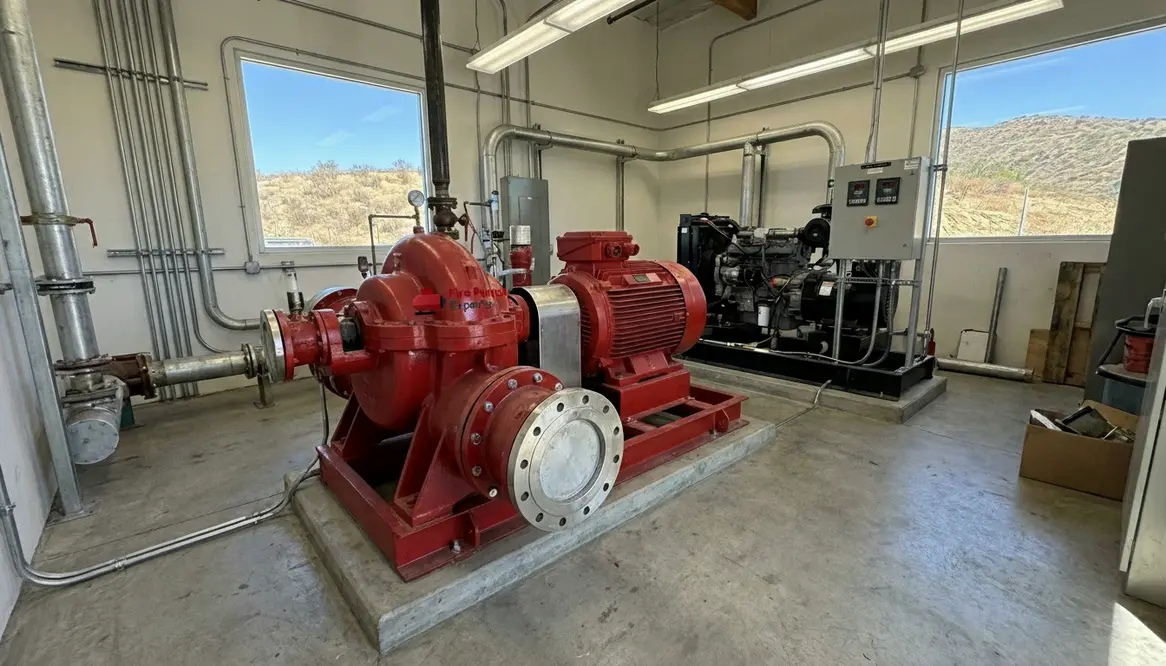
Scalable Fire Pump Systems Murrieta for Growth
I have spent years around commercial and industrial fire protection, and if there is one truth that keeps repeating itself, it is this: growth never asks permission. Facilities in Murrieta expand, tenant loads shift, and compliance standards tighten. That is exactly where scalable fire pump systems Murrieta come into play. They give buildings the quiet confidence to evolve without tearing everything apart later. And yes, while fire pumps are not exactly the Avengers of building systems, when things go wrong, they are the ones you want assembling first.
Understanding Fire Pump Types in Commercial Settings
First, let me ground this in reality. Not all fire pumps are created equal, and picking the wrong one is like casting the wrong lead in a blockbuster film. It might work, but everyone will feel the mismatch.
In commercial and industrial facilities, I typically work with a few core types:
Electric Fire Pumps
These are reliable, efficient, and ideal when power supply is stable. Moreover, they are easier to maintain and integrate into modern systems.
Diesel Fire Pumps
When power reliability is questionable, diesel steps in like that dependable old truck that never quits. They offer independence from the electrical grid, which matters in large scale operations.
Vertical Turbine Pumps
These shine when water sources sit below ground. Think industrial sites with wells or underground reservoirs.
Split Case Pumps
Designed for high capacity demands, these are common in large facilities where volume and pressure must stay consistent.
Each type plays a role, but the real magic happens when they are selected with future expansion in mind.
How Scalable Fire Pump Systems Murrieta Support Growth
I often tell clients that scalability is not a luxury. It is survival. Buildings rarely stay static, especially in Murrieta’s growing commercial landscape. Therefore, fire protection systems must stretch without breaking.
Scalable systems allow for phased expansion. Instead of replacing an entire pump setup, you can upgrade components, adjust capacity, or integrate additional units. As a result, downtime stays minimal and costs remain predictable.
Additionally, these systems align with evolving fire codes. Regulations shift, and when they do, a scalable setup adapts faster. It is like upgrading your phone software instead of buying a new phone every year. Except here, the stakes are much higher than missing a text.
What Makes a Fire Pump System Truly Scalable?
Let me answer this the way most facility managers ask me, straight and practical.
A scalable system is built with foresight. It includes:
- Modular design so components can be added without full replacement
- Flexible control systems that adjust to increased demand
- Oversized infrastructure planning like piping and space allocation for future pumps
- Smart monitoring technology that supports expansion and diagnostics
However, scalability is not just about hardware. It is also about strategy. I have seen facilities install powerful pumps with zero room for expansion. That is like buying a mansion and forgetting to install doors. Impressive, but not exactly practical.
Comparing Pump Types for Scalability in Large Facilities
Electric & Diesel Pumps
Electric Pumps
Easy to integrate with smart controls
Lower maintenance complexity
Best for facilities with reliable power grids
Diesel Pumps
Independent operation
Ideal for backup redundancy
Slightly more complex maintenance
Split Case & Vertical Turbine
Split Case Pumps
High flow capacity
Strong candidate for phased expansion
Common in industrial campuses
Vertical Turbine Pumps
Adaptable to unique water sources
Useful in specialized industrial setups
Scalability depends on site conditions
When I design systems, I rarely rely on a single type. Instead, I combine strengths. That approach creates resilience and flexibility, which are the backbone of scalable fire pump systems Murrieta.
The Role of System Design in Long Term Efficiency
Here is where things get interesting. A fire pump is only as good as the system around it. You can install the best pump money can buy, but if the layout ignores future demand, you are setting yourself up for expensive upgrades.
Good design considers flow demand increases, pressure requirements, and system redundancy. Furthermore, it accounts for real world scenarios like tenant turnover or production expansion.
I always emphasize planning for at least ten to fifteen years ahead. Not because it sounds impressive, but because it saves money. And in commercial environments, saving money while staying compliant is about as satisfying as landing the final scene in a perfect movie take.
Common Mistakes That Limit Scalability
I have seen patterns over the years, and some mistakes show up more often than they should.
- First, undersizing the system. It might save money upfront, but it creates a ceiling that is expensive to break later.
- Second, ignoring control system flexibility. Without adaptable controls, scaling becomes a technical headache.
- Third, poor spatial planning. If there is no room for additional equipment, expansion becomes a logistical puzzle.
- Finally, treating fire protection as a static system. Buildings evolve. Systems should too. Otherwise, you end up retrofitting under pressure, and that is never a fun place to be.
FAQ About Fire Pump Scalability
Scalability questions come up constantly while planning scalable fire pump systems Murrieta projects, especially when facilities are trying to balance budget, compliance, and future growth.
Conclusion
If your facility is growing or even thinking about it, now is the time to act. I design and implement systems that do more than meet today’s codes. They prepare you for tomorrow’s demands. With the right approach to scalable fire pump systems Murrieta, you gain flexibility, efficiency, and peace of mind. Reach out and let us build a system that grows with you, not against you.